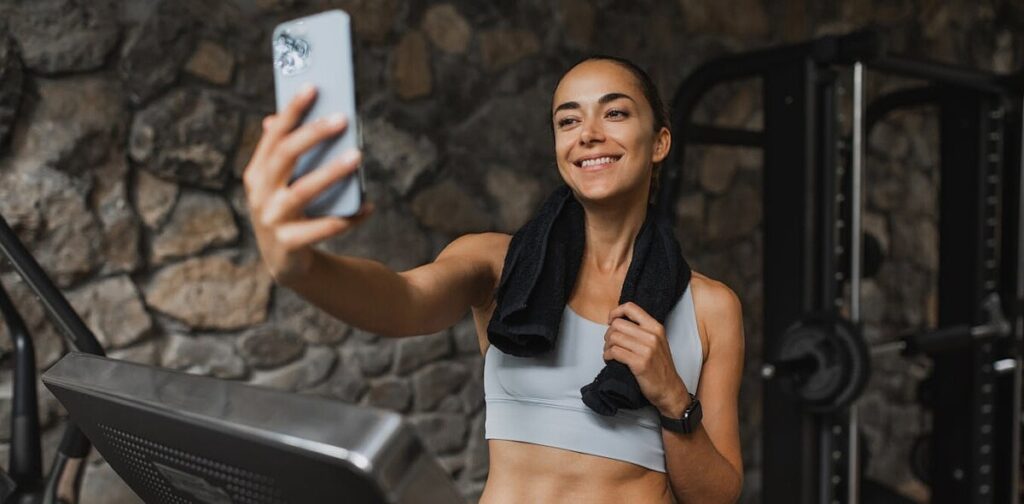
The beauty backfire effect: Being too attractive can hurt fitness influencers, new research shows
**The Beauty Backfire Effect: Why Attractiveness Can Undermine Fitness Influencers’ Success**
The age-old marketing adage “sex sells” has long been a staple in advertising, suggesting that attractive models and spokespeople can effectively capture attention and enhance product appeal. However, recent research challenges this notion, particularly in the realm of social media influencers, especially within the fitness sector. This phenomenon, termed the “beauty backfire effect,” reveals that extreme attractiveness may actually hinder engagement and relatability, two crucial elements for success in the influencer economy.
In a series of experiments, researchers presented study participants with mock Instagram posts from fictitious fitness influencers, varying only in the influencers’ attractiveness. The findings were compelling: highly attractive “fitfluencers” garnered fewer likes and follows compared to their moderately attractive counterparts. Participants reported feeling less relatable to the extremely attractive influencers, and in some cases, even experienced a dip in self-esteem after viewing their posts. This suggests that while striking visuals may initially draw attention, they can create a psychological barrier, making followers feel disconnected and discouraged in their fitness journeys. The study highlighted that relatability is key; audiences tend to engage more with influencers who seem like attainable versions of themselves.
Interestingly, the beauty backfire effect was less pronounced in other fields, such as finance, where appearance did not significantly impact perceived credibility. This discrepancy underscores the unique dynamics of the fitness industry, where physical appearance is often viewed as a marker of expertise. However, the research also found that the tone of communication could bridge the relatability gap. When highly attractive influencers adopted a humble approach, sharing their struggles and challenges, engagement levels improved, indicating that authenticity can resonate more deeply with audiences than mere physical perfection.
As social media platforms evolve, there is a growing shift towards authenticity and candid content over polished images. This trend suggests that influencers and brands may achieve greater success by prioritizing genuine connection over unattainable ideals. The implications extend beyond fitness, potentially impacting industries centered on appearance, such as fashion and beauty. Future research could explore how factors like gender and other visible traits influence audience perceptions and engagement. Ultimately, understanding these dynamics is essential for fostering healthier online interactions and promoting a more inclusive influencer culture.
https://www.youtube.com/watch?v=kizDk8idpT8
“Sex sells” has been a mantra in marketing
for decades
. As
researchers who study
consumer behavior
, we’ve seen plenty of evidence to support it: Attractive models and spokespeople have been shown to reliably
grab attention
,
boost clicks
and
make products seem more desirable
.
But our
new research
suggests that in a digital world full of influencers – trusted tastemakers with large online followings – being too attractive can actually backfire, particularly in the fitness space.
We call this the “beauty backfire effect,” and we put it to the test in a series of laboratory experiments.
We showed hundreds of study participants mock Instagram posts from fictitious fitness influencer accounts. The posts were identical in every way, except for one key difference: how attractive the influencer was. We judged this by asking independent raters to evaluate photos of real influencers ahead of time.
The results were striking: We found that extremely attractive fitness influencers – or “fitfluencers” – got fewer likes and follows than their moderately attractive peers.
Why? Because people viewed them as less relatable.
In fact, in one of our studies, people who saw an extremely attractive fitfluencer reported having lower self-esteem afterward. In contrast, seeing a moderately attractive fitfluencer gave some participants a small confidence boost, likely because the image felt more attainable.
Interestingly, the beauty backfire effect wasn’t as strong in other domains. When we ran the same experiment with
finance influencers
in the mix, appearance didn’t matter as much. That’s not entirely surprising, of course. For a financial coach, looks aren’t tied to credibility. Meanwhile, for a fitness coach, they’re central.
But the beauty backfire effect isn’t inevitable. In a final analysis, we explored whether self-presentation style could close the relatability gap.
When highly attractive influencers adopted a humble tone, sharing their struggles, training challenges or fitness plateaus, the engagement gap disappeared, we found. But when they adopted a prideful tone, boasting about their natural talent or exceptional dedication, the gap grew even larger.
This suggests that humility can be a powerful communication tool for influencers who might otherwise seem “out of reach.”
Why it matters
Fitfluencers depend on their appearance as a kind of credential. A sculpted physique signals expertise in health and wellness. But engagement isn’t just about how good someone looks on camera. It’s about whether followers feel they can connect with them.
This is where
relatability comes in
. Audiences connect with fitfluencers who feel like real, reachable versions of themselves. But extreme attractiveness does the opposite: It turns an attainable goal into an impossible ideal, and what should inspire instead alienates.
This effect aligns with classic
social comparison theory
. People judge themselves in relation to others. If the gap between self and fitfluencer seems too wide, comparisons become discouraging, not motivating. In other words, the more “perfect” the fitfluencer looks, the less followers believe they can realistically be like them – and the less likely they are to engage.
Social media platforms have been taking note. These days, TikTok, Snapchat and
other outlets
build their appeal on candid, authentic content over polished, airbrushed imagery. In this new landscape,
perfection can be a liability
.
Our research shows that extreme attractiveness might grab attention but can undermine connection, the true currency of the influencer economy. For brands and creators, the takeaway is clear: Success may depend less on looking flawless and more on sounding real.
What’s next
Our findings raise new questions about how beauty shapes influence online.
For instance, gender appears to matter. In a follow-up study, highly attractive female fitness influencers faced stronger backlash than equally attractive men, perhaps reflecting a broader social tendency to
judge women’s looks more harshly
. Future research could explore whether similar biases apply to other visible traits, such as race or disability.
The effect may also extend beyond fitness. Industries built around appearance – fashion, beauty or lifestyle content – could show the same pattern.
Finally, not all audiences respond alike. People new to fitness or younger users still forming their identities may be especially prone to negative comparisons with highly attractive fitfluencers. Understanding these differences could help creators and platforms foster healthier engagement online.
Justin Palmer
contributed research for this article as an undergraduate.
The authors do not work for, consult, own shares in or receive funding from any company or organization that would benefit from this article, and have disclosed no relevant affiliations beyond their academic appointment.


