How the US cut climate-changing emissions while its economy more than doubled
As global discussions on climate change have intensified over the past three decades, the world has grappled with rising greenhouse gas emissions and global temperatures. However, there are notable developments in the United States, historically the largest greenhouse gas emitter. Despite a 28% increase in population and a doubling of the economy since the early 1990s, U.S. emissions from major sectors like transportation, industry, and agriculture have remained relatively stable. The most significant progress has been seen in the electricity sector, where emissions have dropped nearly 30% since 1995, largely due to a shift from coal to natural gas for power generation. This transition has been facilitated by advancements in fracking and horizontal drilling, making natural gas a more cost-effective and efficient energy source compared to coal.
Renewable energy sources, particularly wind and solar, have also played a crucial role in reducing emissions. Since 1995, renewable electricity generation in the U.S. has nearly tripled, with costs for solar and wind energy plummeting to levels competitive with fossil fuels. As of 2024, fourteen states derive at least 30% of their power from renewable sources, showcasing a significant shift in the energy landscape. While wind power has been economically viable for over two decades, solar photovoltaic power has become increasingly competitive in the last decade. Moreover, innovative energy management strategies, such as demand management and virtual power plants, are helping to balance the intermittent nature of renewable energy generation. Battery storage technology is also advancing, making it more feasible to store energy for later use, which is essential for managing the growing demand from electric vehicles and other sectors.
Looking ahead, the U.S. faces uncertainties, particularly regarding the impact of burgeoning data centers that are expected to increase electricity demand significantly. As artificial intelligence and other technologies drive the construction of new data centers, the future of electricity consumption remains unclear. The transition from fossil fuels to electricity for heating and appliances is expected to further contribute to rising energy needs. While the U.S. has made progress in reducing emissions, the challenge remains to sustain and accelerate these efforts to meet the commitments outlined in the Paris climate agreement and to address the growing energy demands of a changing economy.
https://www.youtube.com/watch?v=Rabm9oBENHE
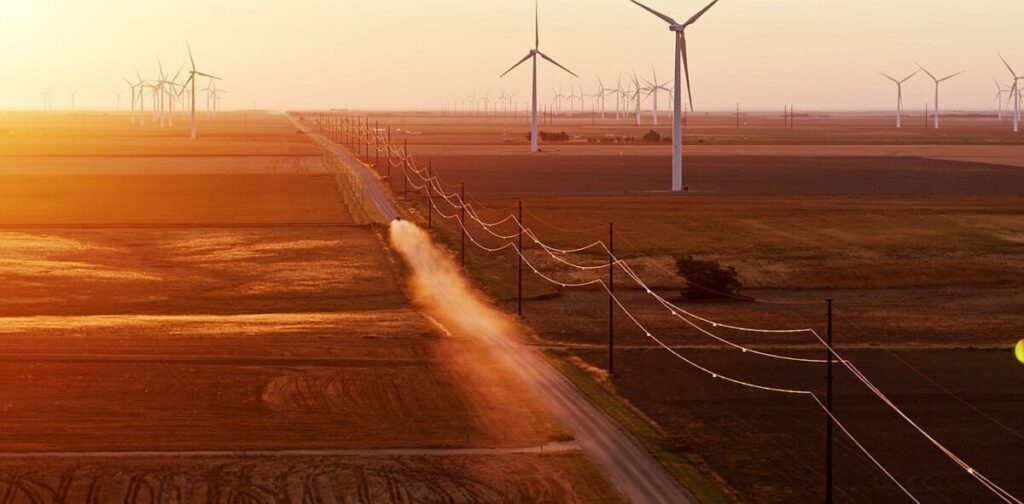
Wind power near Dodge City, Kan.
Halbergman/iStock/Getty Images Plus
Countries around the world have been discussing the need to rein in climate change
for three decades
, yet global greenhouse gas emissions – and
global temperatures
with them –
keep rising
.
When it seems like we’re getting nowhere, it’s useful to step back and examine the progress that has been made.
Let’s take a look at the United States, historically the
world’s largest greenhouse gas emitter
. Over those three decades, the
U.S. population soared by 28%
and the economy, as measured by gross domestic product adjusted for inflation,
more than doubled
.
Yet U.S. emissions from many of the activities that produce greenhouse gases – transportation, industry, agriculture, heating and cooling of buildings – have remained
about the same
over the past 30 years. Transportation is a bit up; industry a bit down. And electricity, once the nation’s largest source of greenhouse gas emissions, has seen its emissions drop significantly.
Overall, the U.S. is still among the countries with the highest
per capita emissions
, so there’s room for improvement, and its emissions haven’t fallen enough to put the country on track to meet
its pledges
under the 10-year-old
Paris climate agreement
. But U.S.
emissions are down
about 15% over the past 10 years.
Here’s how that happened:
US electricity emissions have fallen
U.S. electricity use
has been rising
lately with the shift toward more electrification of cars and heating and cooling and expansion of data centers, yet greenhouse gas emissions from electricity are down by almost 30% since 1995.
One of the main reasons for this big drop is that Americans are using less coal and more natural gas to make electricity.
Both coal and natural gas are fossil fuels. Both
release carbon dioxide
to the atmosphere when they are burned to make electricity, and that carbon dioxide traps heat, raising global temperatures. But power plants can
make electricity more efficiently
using natural gas compared with coal, so it produces less emissions per unit of power.
Why did the U.S. start using more natural gas?
Research and technological innovation in fracking and horizontal drilling have allowed companies to extract more oil and gas at lower cost, making it
cheaper to produce electricity
from natural gas rather than coal.
As a result, utilities have built more natural gas power plants – especially super-efficient
combined cycle
gas power plants, which produce power from gas turbines and also capture waste heat from those turbines to generate more power. More coal plants have been shutting down or running less.
Because natural gas is a more efficient fuel than coal, it has been a win for climate in comparison, even though it’s a fossil fuel. The U.S. has reduced emissions from electricity as a result.
Significant
improvements in energy efficiency
, from appliances to lighting, have also played a role. Even though tech gadgets seem to be recharging everywhere all the time today, household electricity use, per person,
plateaued over the first two decades of the 2000s after rising continuously
since the 1940s.
Costs for renewable electricity, batteries fall
U.S. renewable electricity generation, including wind, solar and hydro power, has
nearly tripled since 1995
, helping to further reduce emissions from electricity generation.
Costs for solar and wind power have fallen so much that they are now
cheaper than coal
and competitive with natural gas. Fourteen states, including most of the Great Plains, now get
at least 30% of their power
from solar, wind and battery storage.
While wind power has been cost competitive with fossil fuels for
at least 20 years
, solar photovoltaic power has only been competitive with fossil fuels for
about 10 years
. So expect deployment of solar PV to
continue to increase
, both in the U.S. and internationally, even as U.S.
federal subsidies disappear
.
Both wind and solar provide intermittent power: The sun does not always shine, and the wind does not always blow. There are a number of ways utilities are dealing with this. One way is to use
demand management
, offering lower prices for power during off-peak periods or discounts for companies that can cut their power use during high demand.
Virtual power plants
aggregate several kinds of distributed energy resources – solar panels on homes, batteries and even smart thermostats – to manage power supply and demand. The U.S. had an estimated
37.5 gigawatts of virtual power plants
in 2024, equivalent to about 37.5 nuclear power reactors.
Globally, the costs of solar, onshore wind and EV batteries fell quickly over the first two decades of the 2000s.
IPCC 6th Assessment Report
Another energy management method is battery storage, which is just now
beginning to take off
. Battery
costs have come down
enough in the past few years to make utility-scale battery storage cost-effective.
What about driving?
In the U.S., gasoline consumption has remained roughly constant but
fuel efficiency has generally improved
over the decades.
Sales of electric vehicle, which could cut emissions more, have been slow, however. Some of this could be due to the success of fracking: U.S.
petroleum production has increased
, and gasoline and diesel
prices have remained relatively low
.
People in other countries are switching
to electric vehicles more rapidly
than in the U.S. as the cost of EVs has fallen. Chinese consumers can buy an entry-level EV for
under US$10,000
in China with the help of government subsidies, and the country
leads the world in EV sales
.
In 2024, people in the U.S. bought
1.6 million EVs
, and global sales reached
17 million
, up 25% from the year before.
The unknowns ahead: What about data centers?
The construction of
new data centers
, in part to serve the explosive growth of artificial intelligence, is drawing a lot of attention to
future energy demand
and to the uncertainty ahead.
Data centers are increasing electricity demand in some locations, such as
northern Virginia
, Dallas, Phoenix, Chicago and Atlanta. The future
electricity demand growth from data centers is still unclear
, though, meaning the effects of data centers on electric rates and power system emissions are also uncertain.
However, AI is not the only reason to watch for increased electricity demand: The U.S. can expect growing electricity demand for industrial processes and electric vehicles, as well as the overall transition from using oil and gas for heating and appliances
to using electricity
that continues across the country.
Valerie Thomas receives funding from the US Department of Energy


