This tiny T. rex is actually a new species
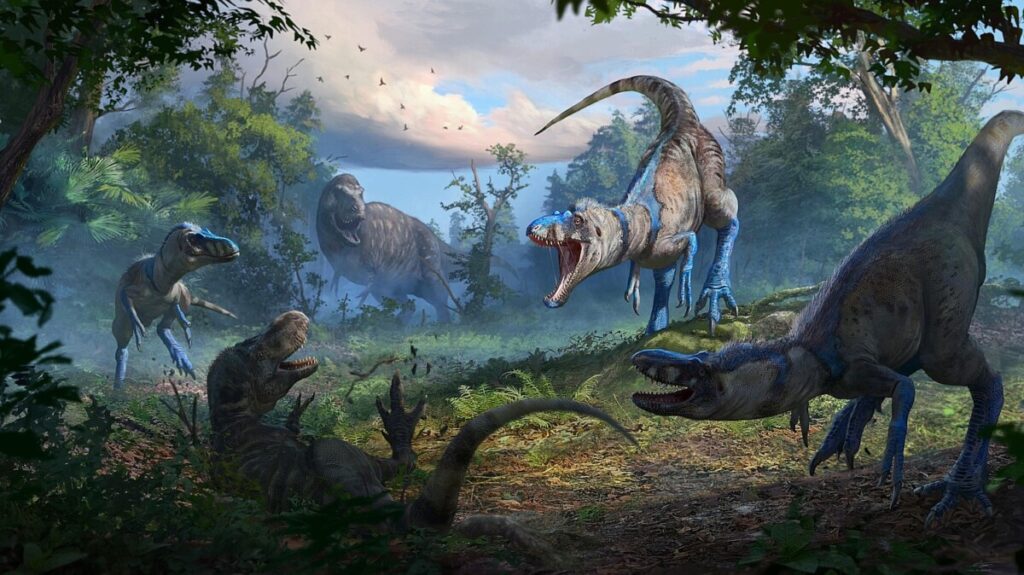
For decades, the paleontological community has been embroiled in a fierce debate over the classification of a small skull discovered in Montana’s Hell Creek Formation in 1946. Initially attributed to the species Gorgosaurus, some researchers later proposed that it belonged to a juvenile Tyrannosaurus rex. This contention sparked significant controversy, as the implications of recognizing this specimen as a distinct species could challenge the long-held view of T. rex as the sole tyrannosauroid in North America during the late Cretaceous period. However, a groundbreaking study published on October 30 in *Nature* by researchers from North Carolina State University and Ohio University has now settled the debate, confirming the existence of a diminutive relative of T. rex, named *Nanotyrannus lancensis*. This smaller predator, measuring around 18 feet in length and weighing approximately 1,550 pounds, showcases different anatomical features, such as unique nerve patterns and sinus structures, setting it apart from its larger cousin.
The research team, led by paleontologists Lindsay Zanno and Lawrence Witmer, made significant strides in resolving the classification issue by examining a newly discovered, well-preserved skeleton that dates back around 67 million years. Their morphological analysis indicated that the specimen was nearly fully grown, contradicting the notion that it was merely a juvenile T. rex. This led to the conclusion that *Nanotyrannus* not only existed but also had at least two distinct species, including *Nanotyrannus lancensis* and *Nanotyrannus lethaeus*. The study suggests that *Nanotyrannus* adapted differently than T. rex, evolving longer legs and strong arms for agility and speed, allowing it to ambush prey effectively. This discovery not only enriches our understanding of dinosaur diversity during the late Cretaceous but also implies that dinosaurs were thriving prior to the catastrophic extinction event, challenging the narrative of their decline.
The confirmation of *Nanotyrannus* adds a new chapter to the evolutionary story of tyrannosaurs, highlighting the complexity of their lineage. As Zanno and Witmer assert, their findings challenge a long-standing consensus among theropod specialists and correct a significant taxonomic error that has influenced decades of research. The implications of this study extend beyond mere classification; they reshape our understanding of the ecological dynamics of the time, suggesting that T. rex had company in its environment, thriving alongside its smaller relative. This exciting development in paleontology not only enhances our knowledge of these prehistoric creatures but also underscores the importance of continued research in unveiling the mysteries of our planet’s distant past.
For decades,
paleontologists
have argued about size. Specifically, whether or not certain fossils found in Montana belonged to a young
Tyrannosaurus rex
or a completely separate, smaller species. Researchers at North Carolina State University and Ohio University now say they can settle the debate.
Tyrannosaurus rex
did, in fact, have a diminutive relative in North America. While
Nanotyrannus lancensis
was comparatively small, a study published on October 30 in
Nature
makes it clear that they remained a fearsome Cretaceous era predator.
Tyrannosaurus rex
earned its “Tyrant King” status partly due to its enormous size. An
adult
T. rex
could easily grow over 42-feet-long and weigh more than nine tons.Even juveniles weighed in at around 4,000 pounds. With that in mind, it’s understandable why a small skull discovered in 1946 at Montana’s fossil-rich Hell Creek Formation has been such a controversial specimen. Initially described as a species of
Gorgosaurus
, some paleontologists later asserted it actually belonged to an entirely separate Tyrannosaur. This initial categorization was met with pushback by an opposing camp of researchers, who claimed the skull simply possessed a combination of immature
tyrannosaurid
and
T. rex
characteristics. The truth had larger implications—if
Nanotyrannus
was actually its own species, that would end
T. rex
’s reign as the only widely accepted tyrannosauroid roaming North America during the late Cretaceous.
The skull of Nanotyrannus differs from T. rex. Nanotyrannus has different nerve patterns, sinus structures, and more teeth. Credit: NC Museum of Natural Sciences
MATT ZEHER
“In the years since,
Nanotyrannus
has become a hot-button issue, and the debate has often been acrimonious,” paleontologists Lindsay Zanno and Lawrence Witmer
explained in their study
.
During an expedition back to the Hell Creek Formation, Zanno and Witmer’s team discovered an “exceptionally preserved, skeletally complete tyrannosauroid specimen.” After a close examination of the approximately 67-million-year-old remains, the study’s authors concluded that their find—as well as the 1946 skull—belong to
Nanotyrannus
.
The key piece of evidence came from the new specimen’s age. A morphological analysis of its bones indicates they were nearly fully grown. If they were a juvenile, then their skeleton would still be developing. Additional modelling also led the paleontologists to believe
Nanotyrannus
displayed different bone-growth trajectories than
T. rex
, further supporting the argument. With this in mind, the study authors reexamined the previously discovered specimens, and determined the
Nanotyrannus
genus possessed at least two distinct species:
Nanotyrannus lancensis
and
Nanotyrannus lethaeus
.
An NCMNS infographic of a T. Rex vs the Nanotyrannus. Credit: North Carolina Museum of Natural Sciences
In contrast to the
T. rex
, an adult
Nanotyrannus
only
grew to a length of around 18 feet and weighed about 1,550 pounds. Where its larger cousin evolved for brute strength with thick legs and a bone-crushing bite,
Nanotyrannus
took a different approach to hunting prey. Its longer legs and strong arms made it both agile and fast, allowing it to quickly ambush its targets.
The confirmation of
Nanotyrannus
’ existence means that
Tyrannosaurus
likely had some company for at least around one million years leading up to the
Cretaceous-Paleogene extinction event
. This further supports the theory that dinosaurs weren’t already on the decline prior to their demise.If anything, the diversity suggests that they were doing just fine.
“Our results undermine a nearly uniform consensus among theropod specialists and rectify a significant taxonomic error underpinning decades of research,” the authors wrote. “The impact is beyond our ability to summarize here.”
The post
This tiny T. rex is actually a new species
appeared first on
Popular Science
.


