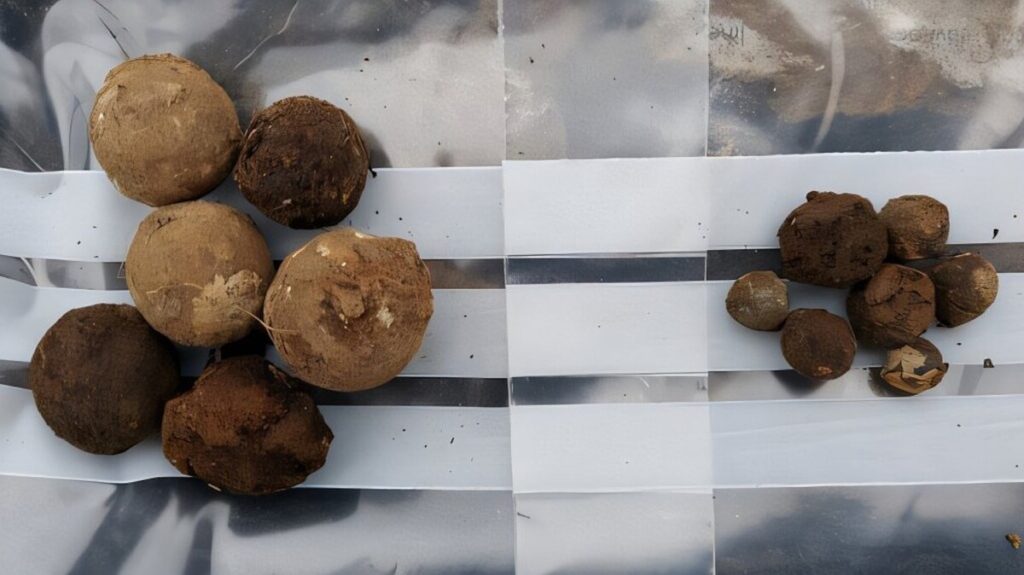
18th century lead ammo found in Scottish Highlands
Archaeologists in Scotland have made significant discoveries at the historic Battle of Culloden site, unearthing over 100 weapon projectiles, including cannon shots and lead musket balls. These finds, attributed to a recent excavation led by experts from the University of Glasgow and the National Trust for Scotland, promise to enhance our understanding of the battle that marked the end of the Jacobite uprising of 1745. The Battle of Culloden, fought on April 16, 1746, saw Charles Stuart’s forces, numbering around 6,000, clash with approximately 7,000 British loyalists. The confrontation resulted in a devastating defeat for the Jacobites, with estimates suggesting that between 1,500 and 2,000 of Stuart’s men were killed or wounded in under an hour.
The excavation utilized innovative techniques such as trial trenching and test pitting, which allowed archaeologists to efficiently assess the battlefield without extensive digging. Metal detectors were employed to pinpoint areas of interest, leading to the successful recovery of various munitions. Notably, the artifacts are believed to represent some of the final shots fired during the battle, particularly during a critical moment when Irish troops, allied with the Jacobites, made a valiant stand against British cavalry. Archaeologist Tony Pollard highlighted that these munitions likely originated from an Irish battalion under Lieutenant-Colonel Walter Stapleton, who bravely defended against mounted troops, enabling many Jacobites to escape the onslaught. This lesser-known aspect of the battle underscores the complex dynamics of the conflict and the bravery displayed by various participants, shedding light on the broader narrative of the Jacobite uprising.
Pollard emphasized that while the tactics of the battle have been extensively analyzed over the years, the recent findings provide tangible evidence that enriches our understanding of the events at Culloden. The recovery of these artifacts not only contextualizes the battle’s fierce fighting but also brings to light the contributions of individuals and groups often overlooked in historical accounts. As archaeologists continue to explore this iconic battlefield, the discoveries serve as a poignant reminder of the human stories intertwined with Scotland’s tumultuous past, inviting renewed interest in the legacy of the Jacobite cause.
Archaeologists in
Scotland
have excavated over 100 weapon projectiles, including cannon shot and lead musket balls from one of the country’s most
famous battlefields
. With these new finds, experts say they can better contextualize the
Battle of Culloden
, as well as highlight some of the conflict’s lesser known participants.
The Battle of Culloden
In July 1745, Charles Stuart arrived in Scotland seeking to return his father to the British throne. For the next nine months, Stuart proceeded to lead thousands of supporters, militiamen, and conscripted soldiers in a military campaign now known as the
Jacobite rising of 1745
. While short-lived, the uprising had far-reaching consequences across England and mainland Europe.
Stuart’s attempt to take the throne was ultimately doomed, and the Battle of Culloden proved his final attempt at the throne. On April 16, 1746, he and upwards of 6,000 fighters met around 7,000 British loyalists near Inverness in the Scottish Highlands. Between 1,500 and 2,000 of Stuart’s men were killed or wounded in less than an hour, forcing the Jacobites to retreat and effectively ending the revolt.
In the years since, the battle’s decisive tactics have been closely studied, but archaeologists from the University of Glasgow and the National Trust for Scotland recently discovered an array of physical relics from the deadly conflict.
Metal detecting was one of three different, but complementary, techniques used to investigate the area. Credit: National Trust for Scotland
Fighting (and digging) on boggy ground
Although previous surveys of the same section of battlefield failed to yield any artifacts, experts recovered the various ammunition using two strategies called trial trenching and test pitting. Both techniques allow archaeologists to quickly assess an area without the need to dig too deep into the ground. Metal detectors then helped pinpoint the likely locations for more extensive examinations. Experts believe the prior surveys likely failed because the boggy landscape was first forested in the 19th century, then recently cleared.
Archaeologist Tony Pollard said that initial analysis indicates their finds were some of the last shots fired during the skirmish.
“Musket balls fired by Jacobite and government troops, including pistol balls fired by government dragoons, likely relate to one of the last actions in the battle,” he
said in a statement
. “This fight took place between the initial battle lines, at a location where boggy ground slowed the Highland charge, and this in combination with heavy fire from Cumberland’s line helped to seal the fate of the Jacobite cause.”
‘Valiant action’
Pollard explained that the munitions likely didn’t come from the Jacobites themselves, but from an Irish battalion enlisted by their French allies.
“[The battalion] made a brave stand against hundreds of mounted men… advancing from the right of Cumberland’s line,” he recounted. “The job of these horsemen was to cut down the disordered Jacobites, and we have recovered some of the shot fired from their heavy pistols.”
Historical accounts say about 150 men under the command of Lieutenant-Colonel Walter Stapleton blocked these horsemen. After retreating behind the walls of Culloden Parks, the remaining fighters soon surrendered. However, Stapleton was not among them. He died at some point during the cavalry onslaught. As regular troops in French service, the British treated them as prisoners of war instead of Jacobite rebels, and eventually repatriated them to France.
“This valiant action helped thousands of Jacobites get away from the field, but it gets only brief mentions in most of the history books,” said Pollard.
The post
18th century lead ammo found in Scottish Highlands
appeared first on
Popular Science
.


