This Could Be How the Shutdown Ends
In the wake of an unprecedented government shutdown, millions of Americans are feeling the immediate impact, particularly those reliant on the Supplemental Nutrition Assistance Program (SNAP). Ethel Ingram, a 76-year-old resident of Sanford, Florida, exemplifies the struggles faced by many as she attempts to stretch $171 in federally funded food stamps to last an entire month. With her account balance now at zero due to the shutdown, Ingram is left with no choice but to turn to local food banks, which are experiencing record crowds and dwindling supplies. This situation marks the first time in the 61-year history of SNAP that payments have been halted, creating a significant gap in the social safety net for nearly 42 million beneficiaries. As Ingram notes, the shutdown has turned her monthly grocery shopping into a desperate search for food, compounded by the looming burden of other bills like utilities and car insurance.
The ramifications of the shutdown extend beyond individual hardship; they are prompting urgent discussions among lawmakers about the need to resolve the impasse. With one in eight Americans relying on SNAP, the stakes are high as families grapple with the rising costs of living, including food, housing, and childcare. Reports from food banks indicate that the demand for assistance is outstripping supply, with organizations like Second Harvest Food Bank warning of a potential crisis if the shutdown continues. Senate Majority Leader John Thune expressed cautious optimism about negotiations between Democrats and Republicans, as the emotional stories of families facing hunger push Congress toward a resolution. The urgency is compounded by the approaching Thanksgiving holiday, a time when food banks typically see a surge in demand.
The political landscape surrounding the shutdown is fraught with tension, as both parties navigate their priorities amidst the suffering of constituents. While President Trump has downplayed the severity of the situation, many lawmakers are beginning to recognize the necessity of bipartisan cooperation to address the immediate needs of those affected by the SNAP cuts. As discussions unfold, the fate of millions hangs in the balance, with advocates urging Congress to act swiftly to restore food assistance and prevent further hardship. For individuals like Ethel Ingram, the outcome of these negotiations is not just a political issue; it is a matter of survival, highlighting the urgent need for a resolution to this unprecedented crisis.
https://www.youtube.com/watch?v=kYiYDbwjdjI
O
n the
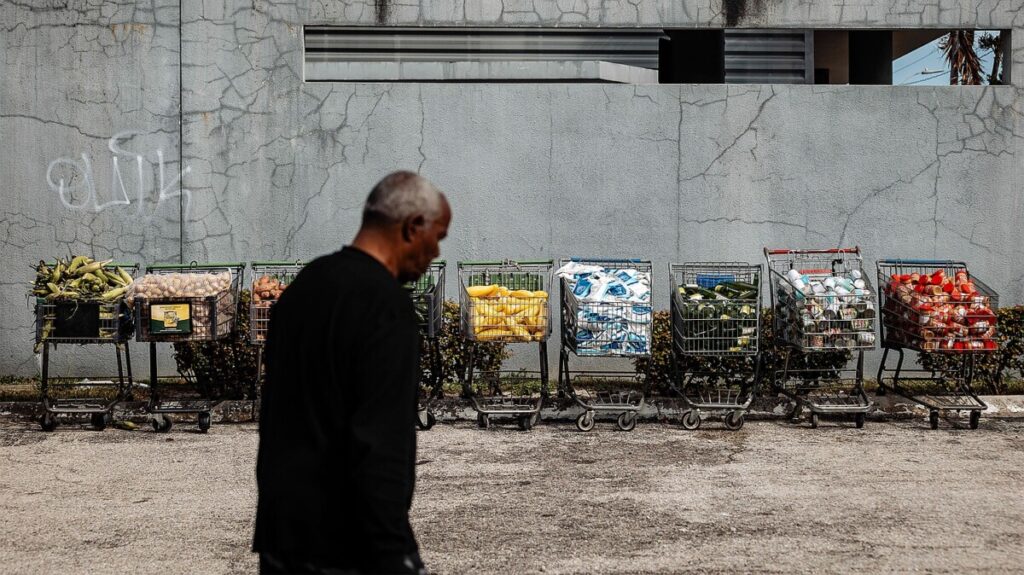
first day of every month, Ethel Ingram goes to the grocery store with $171 in federally funded food stamps and a nearly impossible mission: Buy enough food for the next 30 days. She usually fails. A couple of weeks into most months, she’s forced to pursue another goal: visiting enough food banks to stock her refrigerator until the month ends and her account reloads. But this month, the government shutdown cut off food assistance to her and millions of others. Now Ingram’s options to feed herself are dwindling. Her account balance remains zero, and the food banks she relies on are more crowded than she has ever seen them.
This is what happens when a record-long government shutdown affects millions of Americans who are already struggling with the high cost of food, housing, child care, and just about everything else. The Supplemental Nutrition Assistance Program has stopped issuing payments for the first time in its 61-year history, leaving a sudden gash in the social safety net. For the nearly
42 million
SNAP beneficiaries, November 1 was the day that the government shutdown became intensely personal.
“November’s going to be kind of rough,” Ingram, a 76-year-old resident of Sanford, Florida, told me. Last week, she visited a local church’s food drive, where she was able to get two pieces of meat she hopes will sustain her for the week. “I’ve got my other bills coming up. I’ve got my light bill; I’ve got my water bill; I’ve got car insurance. It’s going to be rough.”
Stories of overwhelmed food banks and hunger-stricken families have pushed members of Congress to finally begin serious discussions about bringing the 35-day shutdown to an end. Combined with snarled air traffic (Transportation Secretary
Sean Duffy said
today to expect “mass chaos” at airports if the government remains shut down next week), sudden closures of Head Start programs, and the risk of another missed paycheck for federal workers, the SNAP cuts could represent the most significant development yet in a shutdown that has at times felt invisible. As tens of millions of people begin to feel the impact of the largest anti-hunger program going dark, the government closure has begun to morph from a nuisance into an emergency.
O
ne in
eight Americans
relies on SNAP
to help make ends meet, a population that includes a large portion of children and seniors as well as parents hovering near the poverty line despite working full-time. Many of the beneficiaries live in Republican districts and voted for Donald Trump in the 2024 presidential election, which was dominated by cost-of-living issues. A year later, members of Congress are hearing emotional tales of mothers who are planning to skip meals so their children can eat, minimum-wage workers who are forced to rely on the kindness of strangers for sustenance, and families who are having to choose which bills to forgo in order to buy a little food.
Senate Majority Leader John Thune, a Republican from South Dakota, said yesterday that he is “optimistic” a resolution might be at hand, hinting that the quiet negotiations taking place between Democrats and Republicans in recent days may be making progress. Congress is set to go on a weeklong recess next week, so the coming days will be crucial in determining whether there is enough momentum to strike a deal or whether millions of Americans will approach Thanksgiving facing government-inflicted austerity.
Even food banks, which typically receive bountiful donations during the holidays, are
confronting concerns that demand may outstrip supply
if the shutdown does not end soon. Greg Higgerson, the chief development officer at Second Harvest Food Bank of Central Florida, told me that several of the nonprofits his organization partners with—such as the church Ingram visited—have called in recent days with dire warnings. They are “concerned about their food supply and how quickly they feel like they’re going to go through it in the next week or two,” he said. “Unfortunately, we don’t have a whole lot to tell them.” Despite serving some 300,000 meals each day, his organization is no match for the SNAP program’s reach, he said. For every meal provided by a food pantry, SNAP—which typically spends more than $8 billion a month on benefits—
has the capacity to provide nine
, according to Feeding America, a network of more than 200 food banks.
During past government shutdowns, the program has continued to issue assistance. The U.S. Department of Agriculture, which oversees SNAP, appeared to be following that precedent before abruptly changing course last month. A
detailed plan
for using contingency funds to cover SNAP was removed from the USDA website, which in October began featuring a series of partisan banner messages attacking “Radical Left Democrats” for the predicament. The most recent message on the
taxpayer-funded website
says “the well has run dry” for SNAP benefits and, without evidence, accuses Democrats of prioritizing “gender mutilation procedures” over hungry families. After a group of Democrat-led states and nonprofit organizations filed lawsuits challenging the Trump administration’s decision to cut off SNAP benefits, two federal judges last week ruled that USDA must use contingency funds to keep the program going.
The agency told the court yesterday that it would be able to fund only half of people’s normal benefits, and that the funds could take weeks or even months to arrive. USDA said it would not tap a separate emergency account that would have allowed the payment of full benefits this month. (That account, it said in court filings, is earmarked for children’s-nutrition programs and might not be backfilled by Congress should it be used for SNAP.) Trump, who has used the shutdown to punish his perceived political enemies and
shield those he sees as allies
, offered a partisan take when asked last week about the shutdown. “Largely, when you talk about SNAP, you’re talking about largely Democrats,” he told reporters on Friday. But Republican beneficiaries in rural parts of the country, where food insecurity and poverty affect millions of people, are being hit hard as well.
[
Read: The Project 2025 shutdown is now here
]
A
planned
food distribution at a site in Hohenwald, Tennessee, was canceled last Thursday because of a “lack of supply,” organizers posted on Facebook. The announcement led to a rush of concerned phone calls, emails, and Facebook messages from residents in a county that Trump carried last year with
82 percent of the vote
. “People are just very disappointed, and I think they’re scared,” Tonya Woodward, the CEO of Hope Hohenwald, a nonprofit that organizes the distributions, told me. “And sometimes they might not be completely out of food, but they’re scared they’re going to run out.” Jenny Bauer, who volunteers at a local food pantry and owns a discount grocery store in the area, told me that the SNAP cuts are hitting rural Tennessee especially hard. “Our community already struggles with food insecurities,” she said. “Along with the rising food and living costs, it can get pretty scary.”
Trump has
so far done little to publicly
treat the shutdown as an emergency. He told CBS News’s
60 Minutes
recently that
the country had not reached a breaking point
, asserting that “it’s been much worse” in the past. He has repeatedly said that he will not allow Democrats to “extort” him into cutting a deal on health-care subsidies in order to fund and reopen the government. Today, he
posted on Truth Social
that SNAP benefits had previously been offered to many undeserving people and will be restarted “only when the Radical Left Democrats open up government, which they can easily do, and not before!” (White House Press Secretary Karoline Leavitt clarified that the president is not planning to defy the court orders that require the payments to begin.)
In recent days, Trump has been calling for Congress to eliminate the filibuster and pass a funding bill along party lines, a proposal that has been rejected by GOP leadership. Democrats—and some Republicans—have said for weeks that Trump must engage in negotiations in order to bring an end to the shutdown. But with SNAP cuts hurting their constituents, some lawmakers appear ready to play a leading role in finding a solution that would fund the government.
Senate leaders are discussing pairing a vote to reopen the government with a commitment to hold a separate vote in the near future on health care, along with other concessions. A bipartisan quartet of House lawmakers
unveiled a proposal
yesterday to extend the Affordable Care Act subsidies for two years while instituting income caps and other changes. The plan, the legislators said in a statement, would “inspire bipartisan collaboration across Washington and help get Congress back to work for the American people.”
Some lawmakers have pointed to today’s elections as a pivotal moment in the shutdown. Both Democrats and Republicans have contended that allowing voters to have their say could offer an off-ramp after more than a month of debate and repeated failed votes. But Democrats remain divided over how far to advance their fight against Trump. Some told me in September that it was important to show that they would be willing to take extraordinary measures to challenge the president’s norm-breaking approach to governing. But few at the time predicted that their party—which typically has opposed government shutdowns—would be willing to withhold their votes on a funding bill for more than a month.
Democrats will be parsing the results in gubernatorial races in New Jersey and Virginia, and in New York City’s mayoral race. The mayoral race features two leading candidates—Zohran Mamdani and Andrew Cuomo—who represent the schism between the party’s activist base and its establishment wing. Mamdani has campaigned
relentlessly on affordability
and suggested that he would tackle food-insecurity problems in the city by opening municipally run grocery stores, a policy Cuomo has ridiculed as a “Soviet-style” pipe dream.
[
Read: The Blue State That’s Now a Bellwether
]
If Mamdani wins decisively, some Democratic lawmakers may feel emboldened to challenge Trump more aggressively on the cost-of-living challenges Americans are facing—including the rising health-care costs at the core of the shutdown debate. Jolene Mullins, the vice president of the South Florida Hunger Coalition, told me that when “people are worried about how they’re going to feed their kids,” lawmakers in Washington cannot simply follow the traditional political playbook. Still, she told me, she is worried about how much pain the shutdown is inflicting on vulnerable people—including thousands of parents losing child care as a result of Head Start closures.
“I don’t want the Democrats to budge and give up what they’re standing for with the ACA,” said Mullins, who met with lawmakers in Washington last week. “But there’s got to be some kind of conversation. We can’t be like this. This cannot be endless.”
For people like Ingram, ending the shutdown is a matter of existential urgency. In the meantime, she told me, she will continue trawling her community food banks, hoping they don’t run out.


