The Most Impractical Tool in My Kitchen
In a reflective exploration of culinary tools, the author recounts their journey with carbon-steel knives, beginning with a reluctant purchase at a high-end New York City knife shop. Initially met with skepticism from a clerk wary of selling high-maintenance knives to unprepared customers, the author fabricates a story about gifting the knife to assuage the salesman’s fears. Despite the clerk’s warnings about the knife’s propensity to rust and its need for careful maintenance, the author finds themselves enamored by the knife’s exquisite balance and sharpness after using it for a classic beef bourguignon. This experience sets the stage for a deeper examination of carbon-steel knives, which, while not essential for the average cook, symbolize a resistance to the fast-paced efficiency that dominates modern cooking culture.
The article highlights the unique demands of carbon-steel knives, which require not only diligent care but also the cultivation of patience and focus—qualities that are increasingly rare in today’s fast-casual dining landscape. The author notes that maintaining a carbon-steel knife involves developing a protective patina to prevent rust, which requires consistent attention and care. This nurturing process contrasts sharply with the convenience offered by stainless-steel knives, which are celebrated for their low maintenance and durability. However, the author argues that the effort invested in caring for carbon-steel knives fosters a more mindful cooking experience, encouraging cooks to engage deeply with their ingredients and the cooking process itself.
As the author reflects on their evolving relationship with these knives, they reveal how their collection has expanded over the years, including notable pieces like a French-made Sabatier and a Misono acquired to celebrate a significant career milestone. While the demands of parenting and a busy lifestyle have led to a reliance on more practical stainless-steel options during hectic weeknights, the author cherishes the moments spent with their carbon-steel knives, particularly on quiet weekends. These moments become a form of culinary meditation, where the act of cooking transforms into a pleasurable ritual, allowing the author to savor the simple joys of life. Ultimately, the article presents carbon-steel knives not just as tools, but as symbols of a slower, more intentional approach to cooking that stands in stark contrast to the rapid pace of contemporary food culture.
https://www.youtube.com/watch?v=ZSL_Q6Pe-Ao
My relationship with carbon-steel knives began with a lie. When I was in graduate school a few years ago, I walked into a schmancy New York City knife shop, determined to buy a lithe 210-millimeter Suisin Gyuto. But the clerk didn’t want to sell it to me. The poor man had quite evidently been traumatized by prior customers who had bought (and presumably returned) high-maintenance knives that they were not prepared to take care of. He seemed desperate to get me to buy a stainless-steel one instead.
But no, I wanted
that
knife. I had landed on it after countless hours poring over Reddit threads when I should have been writing my master’s thesis. “It will be a lot of work!” the salesman said. Then: “It will rust!” And: “It must be hand washed!” And: “Can I show you these knives over here?” His pleas became more and more plaintive until, eager to end both of our miseries, I exclaimed: “It’s a Christmas gift for a friend! He has other carbon-steel knives already!” The lie, at last, appeased him. Minutes later I was out in the cold, clutching my shopping bag, inside it my tall, thin “gift” wrapped in gold paper.
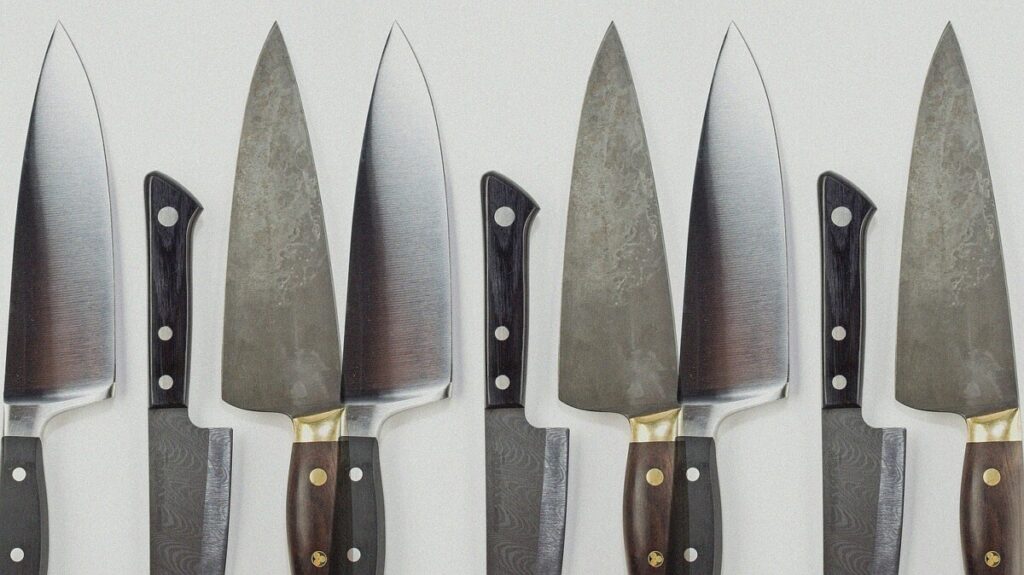
The salesman was, of course, right: Carbon-steel knives are a pain. They rust easily, react poorly when exposed to acidic ingredients such as tomatoes and lemons, and lose their shine almost immediately, taking on splotchy mottling that can charitably be described as “rustic.” Stainless steel, by contrast, embodies everything that modern, technological civilization esteems: It is low-maintenance, looks permanently brand-new, and can be purchased at a big-box store. Still, after I brought my Gyuto home to my small Queens kitchen and used it to slice and dice onions, carrots, and mushrooms for Julia Child’s beef bourguignon, I fell in love with the knife’s balance and humble beauty—and, yes, the fact that it was
sharp as hell
.
[
Read: Americans need to party more
]
A carbon-steel knife will not necessarily make you a better cook. Unless you work at a high-end sushi spot, you’re unlikely to really need one. Since the invention of modern stainless steel in 1913 and the widespread production of knives made of the material in the decades that followed, carbon-steel knives have been largely a relic of the past. But the case for adding carbon steel to your knife block is not about utility. It is a stand against the march of efficiency that has affected perhaps no sphere of American life more than our diets. They are noticeably out of place in a food culture that includes fast-casual restaurants, meal boxes by mail, 20-minute “weeknight recipes,” and Silicon Valley–approved meal replacements such as Soylent—and that’s exactly the point.
Carbon-steel knives also cultivate habits of mind—patience, focus, repetition—that the pace and shape of modern life make so hard to develop. As with carbon-steel pans, you must first work to cultivate a “patina,” a protective layer of oxidized metal on the knife’s surface that prevents rust from forming. (I break in my knives by cutting up a large chuck roast, which usually gives the blade a pleasant blueish-gray tint.) Even once the knife has a good patina, you cannot leave it unattended on the counter, covered in lime juice, while you scroll Instagram. If you are working with something acidic or using the knife for an extended period, it needs to be intermittently wiped down and dried to prevent rusting.
Most Japanese-style carbon-steel kitchen knives have asymmetric bevels, meaning that each side of the cutting edge is sharpened at a different angle. This means that the knives demand your diligence if you want to retain your fingers and maintain the blade. It also means that they should not be run through a standard-issue countertop electric knife sharpener, but must be either honed at home with a whetstone (less intimidating than it sounds) or sent off to a knife shop. The attention that carbon-steel knives require also makes them wonderful gifts, because they represent a show of confidence in the recipient:
I think you can take care of this without reducing it to a slab of rust
.
In the years since that first purchase, I’ve added more carbon-steel knives to my collection, including a French-made 12-inch Sabatier that I use to make quick work of overgrown Maine winter squashes, and my beloved 270-millimeter Misono, which I bought to celebrate getting my first professor job. As I’ve grown older and busier, and become a parent, I no longer reach for one of these every day. I keep a few stainless-steel numbers in the drawer for hectic weeknights. But I have few greater pleasures in my life than pouring a glass of wine, pulling out a well-loved carbon-steel knife on a quiet winter weekend, and feeling the blade glide through the ingredients of the day.


