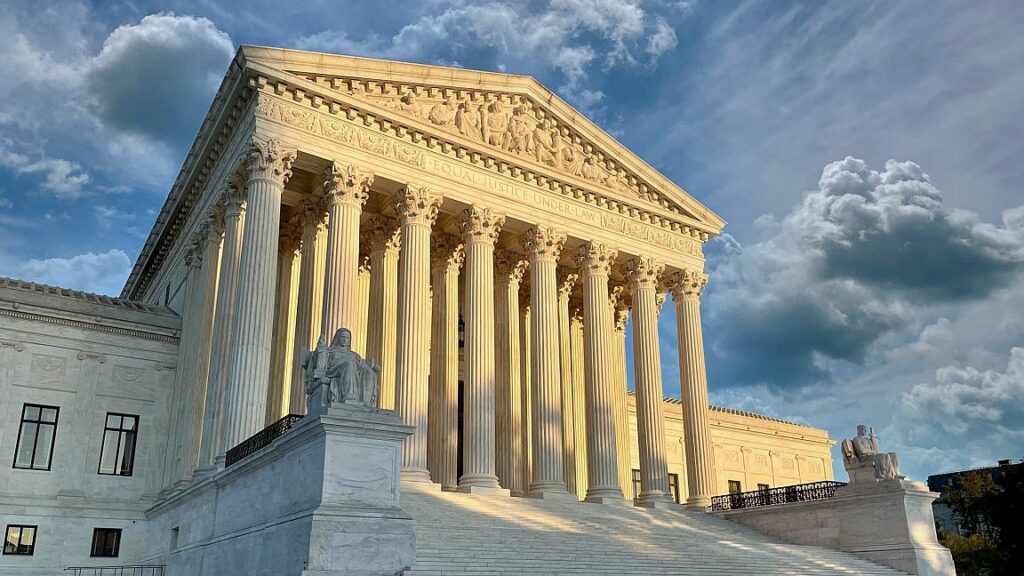
Supreme Court appears likely to approve Trump’s firing of FTC Democrat
In a pivotal case that could reshape the balance of power between the presidency and independent agencies, the Supreme Court’s conservative justices appear poised to overturn a nearly century-old precedent that restricts the president’s ability to dismiss Federal Trade Commission (FTC) members without cause. The case stems from former FTC Commissioner Rebecca Kelly Slaughter’s lawsuit against President Trump after he removed two Democratic commissioners from the agency in March 2020. Slaughter’s argument hinges on the landmark 1935 ruling in *Humphrey’s Executor v. United States*, which established that the president could only fire FTC commissioners for specific reasons such as inefficiency or malfeasance.
During the recent oral arguments, Chief Justice John Roberts expressed skepticism towards the relevance of *Humphrey’s Executor*, labeling it a “dried husk” of its former self. He pointed to the court’s 2020 decision in *Seila Law*, which suggested that the precedent no longer accurately reflects the contemporary role and powers of the FTC. This shift could significantly enhance presidential authority over not just the FTC, but potentially other independent regulatory bodies like the Federal Communications Commission (FCC). If the court rules in favor of Trump, it would mark a substantial departure from the established norm of protecting the independence of federal regulatory agencies from political influence, raising concerns about the implications for regulatory integrity and accountability.
The outcome of this case is particularly critical as it touches on broader themes of executive power and the autonomy of regulatory bodies. The Supreme Court’s willingness to reconsider long-standing precedents reflects a changing judicial landscape that could redefine the relationship between the executive branch and independent agencies. Legal experts warn that such a ruling could lead to increased politicization of regulatory agencies, which are designed to operate free from direct political pressures, thus potentially undermining their effectiveness and impartiality. As the justices deliberate, the implications of their decision will resonate far beyond the FTC, potentially altering the governance of independent agencies across various sectors.
https://www.youtube.com/watch?v=49jpsre0aXI
The Supreme Court’s conservative justices appear ready to overturn a 90-year-old precedent that said the president cannot fire a Federal Trade Commission member without cause. A ruling for Trump would give him more power over the FTC and potentially other independent agencies such as the Federal Communications Commission.
Former FTC Commissioner Rebecca Kelly Slaughter, a Democrat, sued Trump after he
fired both Democrats
from the commission in March. Slaughter’s case rests largely on the 1935 ruling in
Humphrey’s Executor v. United States
, in which the Supreme Court unanimously held that the president can only remove FTC commissioners for inefficiency, neglect of duty, or malfeasance in office.
Chief Justice John Roberts said during yesterday’s
oral arguments
that
Humphrey’s Executor
is a “dried husk” despite being the “primary authority” that Slaughter’s legal team is relying on. Roberts said the court’s 2020
ruling
in
Seila Law
made it “pretty clear… that
Humphrey’s Executor
is just a dried husk of whatever people used to think it was because, in the opinion itself, it described the powers of the agency it was talking about, and they’re vanishingly insignificant, have nothing to do with what the FTC looks like today.”
Read full article
Comments