Cotton moves to loosen rules to boost supply of household staple, ease affordability crunch
In a bid to address rising egg prices and enhance market availability, Senator Tom Cotton (R-Ark.) is set to introduce the “Lowering Egg Prices Act of 2025.” This proposed legislation aims to amend federal egg-handling regulations, allowing surplus broiler hatching eggs—fertile eggs intended for chicken production—to be redirected into the food supply as pasteurized liquid egg products. Cotton argues that current bureaucratic red tape forces farmers to discard millions of usable eggs, which contributes to both higher prices and shortages for consumers. By streamlining these regulations, the senator hopes to increase the number of eggs available in the market, ultimately lowering costs for consumers who have been grappling with affordability issues.
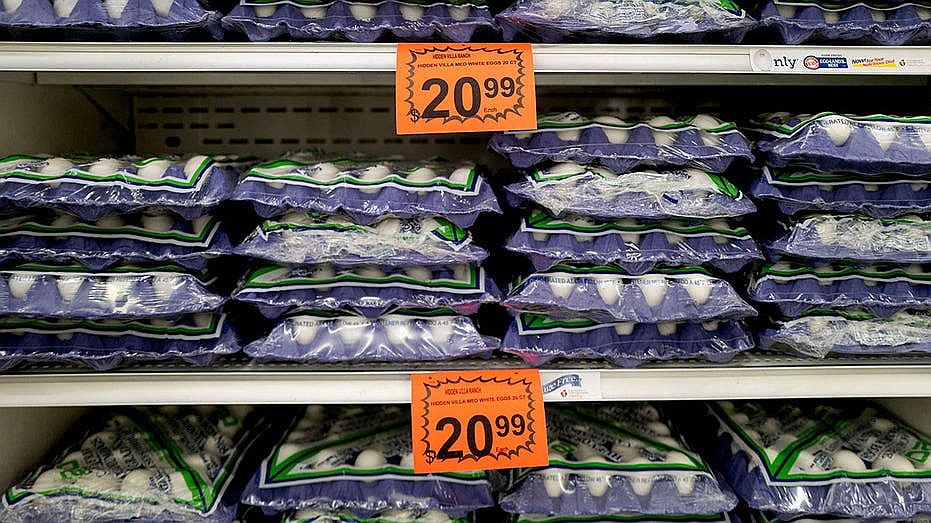
Egg prices have seen significant fluctuations in recent months, peaking at record highs of over $6 per dozen earlier this year due to various supply chain disruptions, including the impacts of avian flu. The USDA has implemented measures to combat these issues, including a $1 billion initiative launched by the Trump administration aimed at bolstering the egg supply chain through enhanced biosecurity and farmer support. Although prices have begun to decline, with recent USDA reports indicating a drop to an average of $1.91 per dozen for large white eggs, the effects of previous price-fixing lawsuits and state regulations—such as those in California—continue to complicate the landscape. Cotton’s proposed legislation represents a proactive step to alleviate the burden on consumers and stabilize egg prices, reflecting broader concerns regarding food affordability in the current economic climate.
https://www.youtube.com/watch?v=GJblxMMeXwE
FIRST ON FOX:
A Senate Republican wants to lower the costs of eggs by loosening certain regulations as the nation deals with growing affordability concerns.
Sen. Tom Cotton, R-Ark., plans to introduce a bill that would tweak
federal egg-handling rules
to allow more to enter the market in a bid to lower prices of the household staple.
Cotton’s bill, the Lowering Egg Prices Act of 2025, first obtained by Fox News Digital would update federal egg-handling rules to make it easier for surplus broiler hatching eggs — fertile eggs originally intended for broiler chicken production — to be diverted into the food supply as pasteurized liquid egg products.
BROOKE ROLLINS: YOUR THANKSGIVING DINNER COSTS LESS AND THAT’S A REASON TO GIVE THANKS
“Arkansas consumers have paid higher
egg prices
and faced egg shortages because of bureaucratic red tape that forces farmers to throw out hundreds of millions of usable eggs each year,” Cotton said in a statement to Fox News Digital. “My bill will cut these excessive regulations and lower egg prices.”
The legislation
would require that the Food and Drug Administration, in conjunction with the U.S. Department of Agriculture, rewrite its egg rules so that eggs intended to be hatched could also enter into the food supply as a liquid egg product, effectively creating a regulatory glide path to bolster the number of eggs in the supply chain.
TRUMP ADMINISTRATION LAWSUIT CRACKS DOWN ON CALIFORNIA’S EGG PRODUCTION REGULATIONS
Egg prices had steadily inched upward late last year into earlier this year, reaching record highs by March of more than $6 per dozen eggs. But the cost of eggs has since been steadily dropping, thanks in part to efforts by President
Donald Trump
and his administration to combat the effects of avian flu.
If the
virus is detected
in a hatchery, the entire flock is generally killed to halt its spread. Doing so can put a dent in the supply chain, and cause prices to creep up.
TRUMP INSISTS PRICES ARE ‘COMING DOWN,’ BLAMES BIDEN — BUT VOTERS SAY THEY’RE STILL GETTING SQUEEZED
Trump ordered the USDA earlier this year to dump $1 billion into a plan to bolster the egg supply chain against avian flu, with a focus on biosecurity measures, farmer relief, vaccine research and increasing imports.
There were a spate of lawsuits against egg producers for alleged price fixing this year and notably, the Trump administration sued the state of California for allegedly going against federal law and increasing egg prices with red tape.
But egg prices have trended downward since the record highs earlier this year. According to the USDA’s most recent
egg markets overview
, egg prices during the first week of December dropped overall, save in some markets like California. Large white eggs, for example, dropped by roughly 17% to an average of $1.91 per dozen egg.