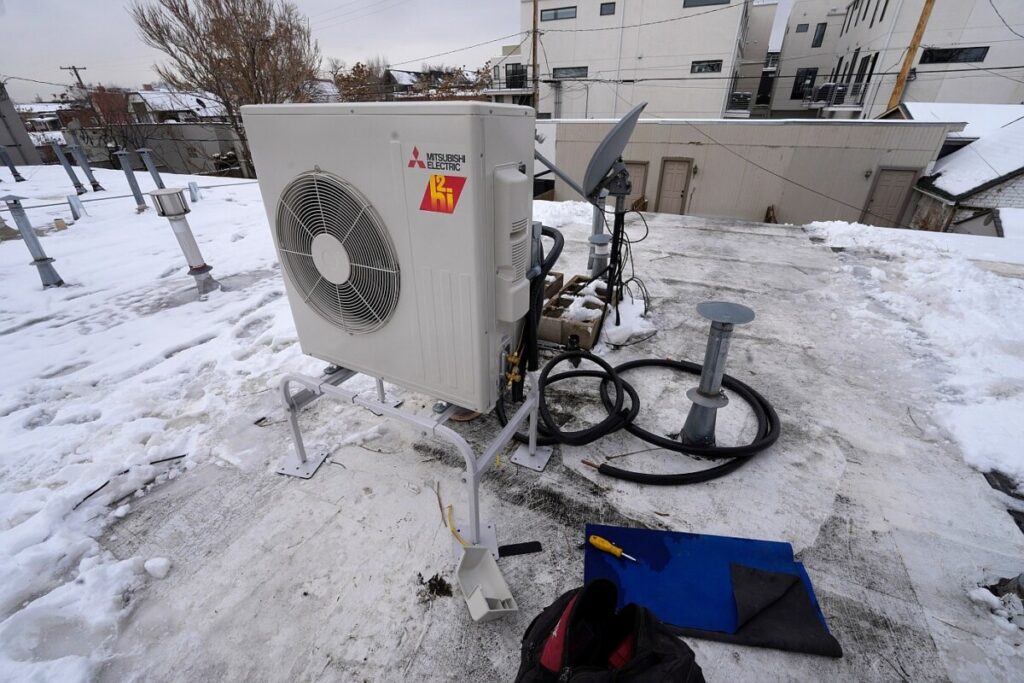
Towhey: Heat pump hype so much hot air in NE
The Biden administration’s ambitious push for New England residents to transition to electric heat pumps has sparked significant debate, especially among those accustomed to the harsh winters of the region. With a substantial investment of $450 million from the Inflation Reduction Act, the New England Heat Pump Accelerator aims to increase the market share of heat pumps to at least 65% of residential heating, cooling, and water heating sales by 2030. This initiative is particularly focused on five of the coldest states in the U.S.: Connecticut, Maine, Massachusetts, New Hampshire, and Rhode Island. The program plans to allocate $270 million to distributors, who will reduce prices for consumers, thereby encouraging the adoption of these systems. However, many residents are skeptical, citing high electricity costs and low winter temperatures as significant hurdles to making the switch.
Critics, including energy experts and analysts, argue that the economic feasibility of heat pumps in New England is questionable. For instance, a 2024 analysis from the American Gas Association revealed that natural gas heating remains more affordable than heat pumps in 41 states, including all of New England. The U.S. Energy Information Administration also forecasts that homes using natural gas will incur heating costs averaging $600 this winter, while those relying on electricity could face bills ranging from $1,054 to $1,133. Toby Rice from EQT Energy highlighted the paradox of high natural gas prices in New England, despite its proximity to cheaper sources in Appalachia, emphasizing the region’s unique energy challenges. Proponents of heat pumps argue that for homeowners transitioning from more expensive heating sources like oil or propane, significant savings could be realized—up to $1,000 annually, according to Rewiring America. However, the initial installation costs of heat pumps, which can range from $8,000 to $15,000, remain a significant barrier for many households.
To address these concerns, New England officials are advocating for a comprehensive approach to market transformation that aims to reduce costs at the distributor level, making heat pumps more accessible to consumers. James Fowler, a senior adviser at the Connecticut Department of Energy & Environmental Protection, emphasized the importance of aligning market goals with climate objectives and encouraging distributors to prioritize heat pump technology. Despite the potential benefits, critics warn that the ongoing costs of electricity for heating during frigid temperatures could outweigh the initial savings, casting doubt on the viability of heat pumps as a universal solution for New England’s heating needs. As the region grapples with the complexities of energy transition, the debate over the practicality and affordability of heat pumps continues to unfold.
The Biden administration wanted New Englanders to switch to electric heat pumps so badly, it spent $450 million on a program to subsidize sales across the region. The goal is “to have heat pumps make up at least 65% of residential heating, cooling, and water heating sales by 2030,” according to a 2024 news release.
Veterans of brutal northeastern winters think that’s a brain freeze. Their response: Our temperatures are too low, and our electricity costs are too high.
Five of the coldest states in the country — Connecticut, Maine, Massachusetts, New Hampshire and Rhode Island — are part of the New England Heat Pump Accelerator, an initiative designed to boost heat pump adoption by subsidizing equipment costs through a new “market hub.” The program will direct $270 million toward distributors, who will keep a “small percentage” and pass the rest along to consumers as price reductions.
The funding was part of the Inflation Reduction Act, supported by every Democrat in Congress.
Heat pumps, which run on electricity and move heat rather than generate it, are marketed as a cheaper, greener alternative to oil- and gas-fired heating. However, multiple analyses suggest that in much of New England, that claim is shaky.
“Heat pumps are the electric vehicles of home appliances,” said Ben Lieberman, senior fellow at the Competitive Enterprise Institute. “They make sense for some people; they don’t make sense for others. The hype right now that they’re the right choice for everyone is certainly not the case.”
A 2024 American Gas Association analysis found natural gas heating remained more affordable than heat pumps in 41 states, including all of New England.
Federal energy forecasts paint a similar picture. The U.S. Energy Information Administration estimates winter heating costs this year will average $600 for homes using natural gas, compared with $1,054 to $1,133 for homes heating with electricity.
And then there’s the fundamental math problem. New Hampshire residents pay among the highest electricity prices in the country. And those high costs are a self-inflicted economic wound, says Toby Rice of EQT Energy.
Rice spoke at the presentation of two new studies from the National Petroleum Council on how to streamline federal permitting and increase electricity reliability. He explained to reporters the math of New England and natural gas.
“The highest natural gas prices in the world are going to be paid this winter, not by Europe, not by Japan. The highest natural gas prices in the world will be paid in Boston and New York City,” Rice said.
What’s even more remarkable about that stat is that these areas are right next to Appalachia, where natural gas will be the least expensive.
Because natural gas is the region’s number-one source of electricity generation, the math still doesn’t work.
Heat-pump boosters disagree, arguing that homeowners switching from expensive legacy systems like oil or propane could still come out ahead.
“The average household in the United States can save $370 per year by switching to a heat pump,” according to Rewiring America. The group estimates families abandoning fuel oil or propane could save closer to $1,000 annually.
The International Energy Agency also touts heat pumps as a major climate tool, estimating they could cut global emissions by half a gigaton by 2030 — equivalent to Canada’s annual output.
However, even supporters acknowledge that heat pumps are pricey to install, with costs typically ranging from $8,000 to $15,000. For many homeowners in the Northeast, a heat pump alone isn’t enough.
The American Gas Association notes most households that adopt heat pumps in colder regions still rely on a backup heating source — usually natural gas, oil or electric resistance heat — reducing the projected savings and complicating the system.
With the Heat Pump Accelerator, New England officials hope that richer incentives — applied upstream at the distributor level — will make higher-efficiency models more widely available and reduce the cost burden on consumers.
“This is a holistic approach to market transformation that aims to lower costs higher up in the supply chain so customers are not burdened with extra work,” said James Fowler, senior adviser at the Connecticut Department of Energy & Environmental Protection.
He said the model is designed to “align market goals with climate goals” and encourage distributors to prioritize the technology. Consumers could also “stack” the new assistance with existing efficiency rebates to further reduce installation costs.
Critics respond that the key word is “cost.” The upfront cost of the heat pumps, and the continued cost of buying enough expensive electricity to heat homes during frigid temperatures.
“The climate change craze pushed for ending the use of natural gas for gas furnaces and having electric heat pumps,” Lieberman said. “The push for electrification doesn’t make sense.”
Jessica Towhey writes on education and energy policy for InsideSources.com.


