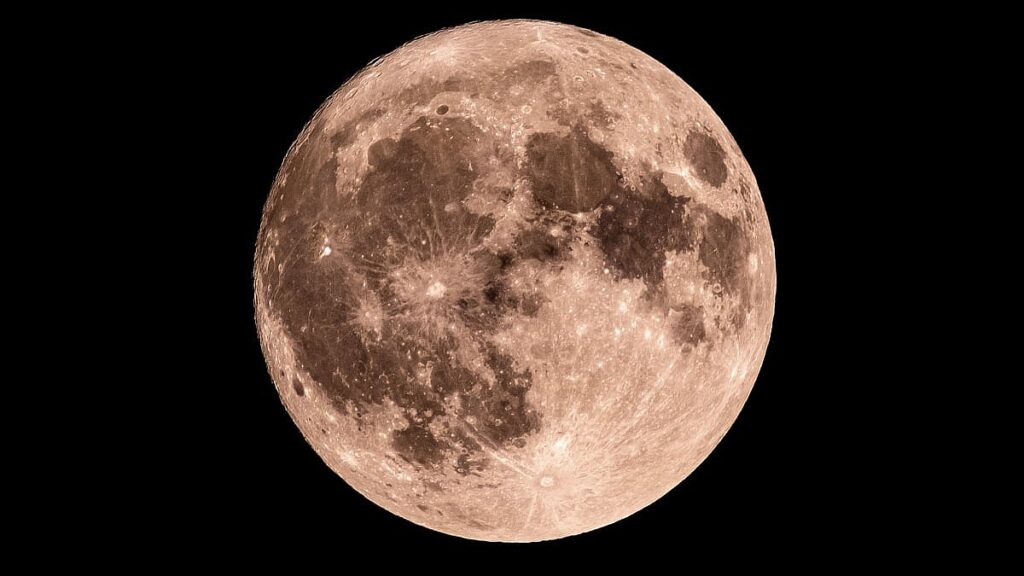
Moon phase today: What the moon will look like on December 10
As we journey through the lunar cycle, each night brings a unique display of our celestial neighbor, the moon. Today, December 10, marks Day 20 of this cycle, and the moon is currently in its Waning Gibbous phase. This means that approximately 64% of the moon’s surface is illuminated, creating an enchanting sight for stargazers and casual observers alike. According to NASA’s Daily Moon Observation, even without telescopes or binoculars, there are several notable features on the moon that can be spotted with the naked eye. Among these are the Mare Vaporum, known for its smooth surface, the prominent Copernicus Crater, and the Aristarchus Plateau, which all add to the moon’s rugged and mysterious landscape.
For those equipped with binoculars or telescopes, the viewing experience becomes even more rewarding. The Grimaldi Basin, a vast and ancient impact site, along with the Clavius Crater, one of the largest craters on the moon, can be observed in greater detail. Additionally, the Alps Mountains, a stunning mountain range on the lunar surface, become visible, offering a glimpse into the moon’s geological features. For the more fortunate stargazers with telescopes, even more breathtaking sights await, including the Caucasus Mountains and the Fra Mauro Highlands, as well as the Rima Ariadaeus, a series of sinuous rilles that add to the moon’s allure. With the next full moon approaching on January 3, now is an excellent time to appreciate the beauty and complexity of the moon as it transitions through its phases.
Understanding the moon’s phases is essential for appreciating these nightly changes. NASA explains that the moon undergoes a cycle of approximately 29.5 days, during which its appearance shifts as it orbits the Earth. Although we always see the same face of the moon, the sunlight that illuminates it varies, creating different phases: from the New Moon, when it is invisible, to the Waxing Crescent, First Quarter, Waxing Gibbous, Full Moon, Waning Gibbous, Third Quarter, and finally the Waning Crescent. Each phase presents a unique opportunity to observe the moon in its various states, making it a fascinating subject for both amateur astronomers and those simply looking to connect with the night sky. As the lunar cycle continues, take a moment to step outside tonight and marvel at the beauty of the Waning Gibbous moon illuminating our world.
https://www.youtube.com/watch?v=xce1SC2Xe3Y
The moon is changing each night as it moves through the lunar cycle. The lunar cycle is a series of eight phases of the moon’s visibility. Today, we’re on day 20 of the cycle. Keep reading to find out what this means for tonight’s moon.
What is today’s moon phase?
As of Wednesday, Dec. 10, the
moon
phase is Waning Gibbous. This means 64% of the moon is lit up tonight, according to
NASA’s Daily Moon Observation
.
If you don’t have any visual aids, don’t worry, there’s still lots for you to spot tonight. Features like the Mare Vaporum, Copernicus Crater, and Aristarchus Plateau should all be visible. If you have binoculars, you’ll also be able to see the Grimaldi Basin, Clavius Crater, and the Alps Mountains. For the lucky ones with a telescope, even more comes into sight, with potential glimpses of the Caucasus Mountains, Fra Mauro Highlands, and the Rima Ariadaeus.
When is the next full moon?
The next full moon will be on Jan. 3.
What are moon phases?
NASA
says the Moon goes through a cycle of about 29.5 days, and during that time we see its different phases. Even though we always see the same side of the Moon, the sunlight hitting it changes as it orbits Earth. That’s what makes it look full, half-lit, or sometimes completely hidden. The cycle has eight main phases:
New Moon – The moon is between Earth and the sun, so the side we see is dark (in other words, it’s invisible to the eye).
Waxing Crescent – A small sliver of light appears on the right side (Northern Hemisphere).
First Quarter – Half of the moon is lit on the right side. It looks like a half-moon.
Waxing Gibbous – More than half is lit up, but it’s not quite full yet.
Full Moon – The whole face of the moon is illuminated and fully visible.
Waning Gibbous – The moon starts losing light on the right side. (Northern Hemisphere)
Third Quarter (or Last Quarter) – Another half-moon, but now the left side is lit.
Waning Crescent – A thin sliver of light remains on the left side before going dark again.