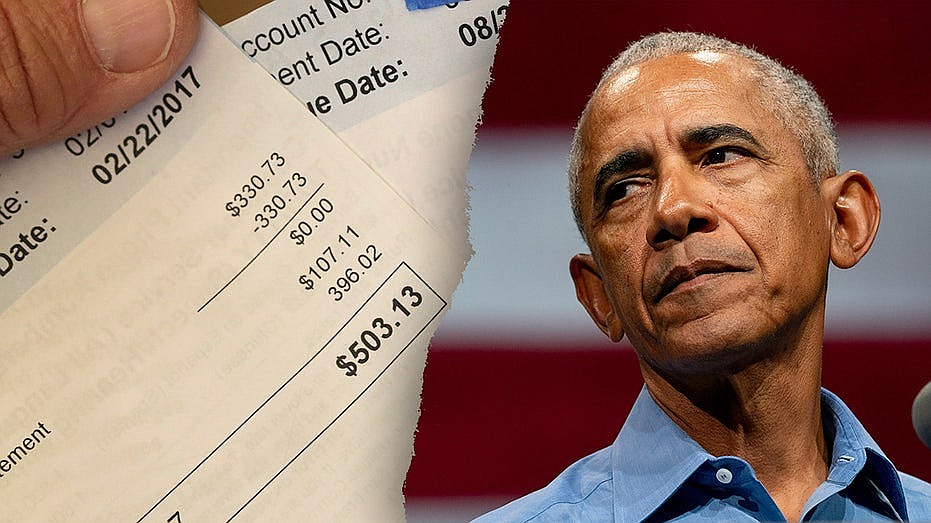
Republicans divided over whether to salvage Obamacare — or replace it — ahead of subsidy deadline
In recent discussions among Republican lawmakers, a palpable frustration is emerging regarding the rising costs associated with the Affordable Care Act (ACA), commonly known as Obamacare. As the party grapples with how to address these issues, divisions have surfaced on whether to reform the existing system or move toward a complete overhaul. Representative Harriet Hageman of Wyoming expresses skepticism about the feasibility of entirely eliminating Obamacare, emphasizing the need for “stability and certainty in the market.” Similarly, Rep. Mike Kennedy from Utah acknowledges some beneficial aspects of the ACA while advocating for reform that does not merely involve funneling more money to insurance companies. This sentiment reflects a cautious approach among some Republicans who recognize the complexities of healthcare reform and the potential repercussions of drastic changes.
On the other end of the spectrum, Rep. Randy Fine from Florida articulates a more hardline stance, labeling Obamacare as a failure and arguing that continuing on its current path could lead to national bankruptcy. This viewpoint underscores a growing concern among some Republicans about fiscal responsibility, particularly as they debate the extension of COVID-era subsidies that have provided critical financial support to millions of enrollees. The Committee on a Responsible Federal Budget estimates that continuing these subsidies could cost taxpayers upwards of $30 billion annually, prompting some Republicans to advocate for their expiration as a means to restore pre-COVID spending levels. This debate is further complicated by the fear that allowing subsidies to lapse could result in significant premium increases for approximately 90% of the 24 million individuals currently enrolled in Obamacare.
Amidst these discussions, several Republicans are exploring more substantive reforms aimed at making healthcare more affordable while maintaining the existing framework of the ACA. Rep. Eric Burlison from Missouri argues that merely “tinkering around the edges” won’t suffice; instead, he proposes creating a new alternative that could incentivize policyholders to leave Obamacare voluntarily. This perspective highlights a strategic shift toward fostering competition in the healthcare market, which some believe could drive down costs. Rep. Rich McCormick from Georgia echoes this sentiment, suggesting that enhancing competition in the healthcare sector, similar to what has occurred in non-insured services like LASIK eye surgery, could lead to better outcomes without necessitating a full repeal of Obamacare. As the GOP navigates these complex issues, the challenge remains to find a balance between reforming healthcare effectively and addressing the fiscal concerns that many lawmakers share.
Republicans
across the board harbor deep frustrations with the rising costs of the Affordable Care Act, better known as Obamacare. But while some lawmakers believe it’s time to scrap the system, others fear a wholesale change may do more harm than good.
Rep. Harriet Hageman, R-Wyo., said she struggles to imagine what that change would have to look like.
“I don’t know that you can completely remove it,” Hageman said. “We have to have stability and certainty in the market.”
SCALISE ANNOUNCES GOP HEALTHCARE OVERHAUL COMING IN ‘NEXT FEW WEEKS’ AMID BATTLE OVER EXPIRING SUBSIDIES
Rep. Mike Kennedy, R-Utah, agrees with Hageman.
“It’s not going away anytime soon. I think there are some parts of the Obamacare policies that are positive,” Kennedy said.
”
I don’t think people want to see [it] go away. But there are ways to reform this, and it’s not just sending more money to insurance companies.”
On the other hand, lawmakers like Rep. Randy Fine, R-Fla., had a quick answer ready for whether Republicans should consider finding an alternative.
“Well, yeah! Obamacare is a failure,” Fine said. “That much is very clear.”
“Borrowing money from your kids and grandkids to hide what something actually costs doesn’t lower costs. That’s just lying about what they are. I don’t think we have a choice because if we stay on the Obamacare path, we will bankrupt the country.”
Amid other healthcare-related questions, the GOP’s divisions over Obamacare come as Republicans consider whether to extend COVID-era emergency
Obamacare subsidies
or let the assistance expire at the end of the month.
Republicans concerned about the country’s fiscal picture hope the elimination of the federal assistance will help bring the country closer to its pre-COVID spending levels. Democrats, by contrast, worry that letting the subsidies expire
could leave
90% of the 24 million Obamacare enrollees with higher premiums overnight.
REPUBLICAN PITCHES HEALTH SAVINGS ACCOUNTS ‘ON STEROIDS’ THAT AMERICANS COULD USE TO BUY INSURANCE — AND STEAK
According to the Committee on a
Responsible Federal Budget
, a nonpartisan fiscal policy think tank, continuing the subsidies could cost upwards of $30 billion a year.
As a part of those conversations, Republicans have explored how they can reform Obamacare to make it more affordable. To Rep. Eric Burlison, R-Mo., the change
can’t be marginal.
“I would say we can’t be tinkering around the edges here. Like if we tinker, we’re really not gonna fix this problem,” Burlison said.
In some ways, Burlison believes replacing Obamacare shouldn’t be the focus of the GOP. By creating a better alternative, he believes Republicans can encourage policyholders to walk away from Obamacare voluntarily.
“I think we need to do a new option and introduce that. And honestly, I think that this option will be so great no one will want to be in Obamacare anymore,” Burlison said.
SCHUMER UNVEILS DEMOCRATS’ OBAMACARE FIX PLAN, LIKELY DEAD IN THE WATER
Other Republicans would like to explore more substantive reforms — perhaps even scrap the program — but are skeptical of large-scale change in the face of current political realities.
“The question is, can you pass it? Sixty votes in the Senate. Not gonna happen. That’s just not realistic. So, let’s talk about things we can pass,” Rep. Rich McCormick, R-Ga., said when asked about whether Republicans should be looking for an alternative.
To advance most legislation, Senate Republicans need 60 votes. They hold just 53 seats in the chamber.
Instead, McCormick believes Republicans can make changes that make the healthcare space more competitive to drive down costs — even if Obamacare remains in place.
“The reason that you have a competitive market in non-insured products such as LASIK eye surgery, which now is about the same as it was 40 years ago, 50 years ago. Why? Because it’s competitive. Even despite all the inflationary costs to everything else, it didn’t increase. Because we have better competition, because it’s not paid for by insurance,” McCormick said.
“When insurance gets involved, when government gets involved, it becomes more expensive by design,” McCormick said.