Trump Is Making the Same Mistake as Biden
In the evolving landscape of American politics, the economic narrative has taken center stage, with both President Joe Biden and former President Donald Trump grappling with the challenges posed by inflation and the cost of living. Biden initially sought to frame his economic policies as a triumphant recovery from the pandemic, coining the term “Bidenomics” to highlight the creation of 13 million jobs and wage growth during his tenure. However, despite these achievements, the public’s sentiment remained largely negative due to soaring inflation rates, which rose significantly post-pandemic, leading to a cost-of-living crisis. By the summer of 2023, when Biden addressed workers at the Philly Shipyard, inflation had surged to 21% higher than when he took office, and Americans were increasingly frustrated with their economic realities. Biden’s attempts to downplay the situation and promote his administration’s successes only alienated voters further, allowing Trump to capitalize on the discontent by painting Biden as ineffective in addressing the economic struggles of working families.
As Trump launched his 2024 presidential campaign, he positioned himself as the solution to the affordability crisis, promising to “make America affordable again.” Yet, despite his fervent proclamations, Trump’s economic policies have not yielded the desired results. Inflation levels have remained high, and job growth has stagnated, leading to a decline in public approval ratings for both Trump and Biden. In recent elections, such as a special congressional race in Tennessee, candidates who focused on inflation and healthcare costs made significant strides, signaling a potential shift in voter sentiment. Trump’s dismissive remarks regarding the affordability issue, labeling it a “Democrat scam,” reflect a troubling disconnect from the realities faced by everyday Americans. As the political climate heats up ahead of the midterm elections, both leaders are confronted with the challenge of acknowledging and addressing the economic concerns that resonate deeply with voters, lest they risk repeating the same mistakes that have plagued their predecessors.
Ultimately, as the nation approaches critical elections, the economic narrative will be pivotal in shaping voter perceptions. With inflation and the cost of living as pressing issues, both Biden and Trump must navigate the delicate balance between promoting their policies and responding to the genuine concerns of American families. The outcome of these electoral battles may hinge on their ability to connect with constituents on economic realities rather than relying solely on political rhetoric.
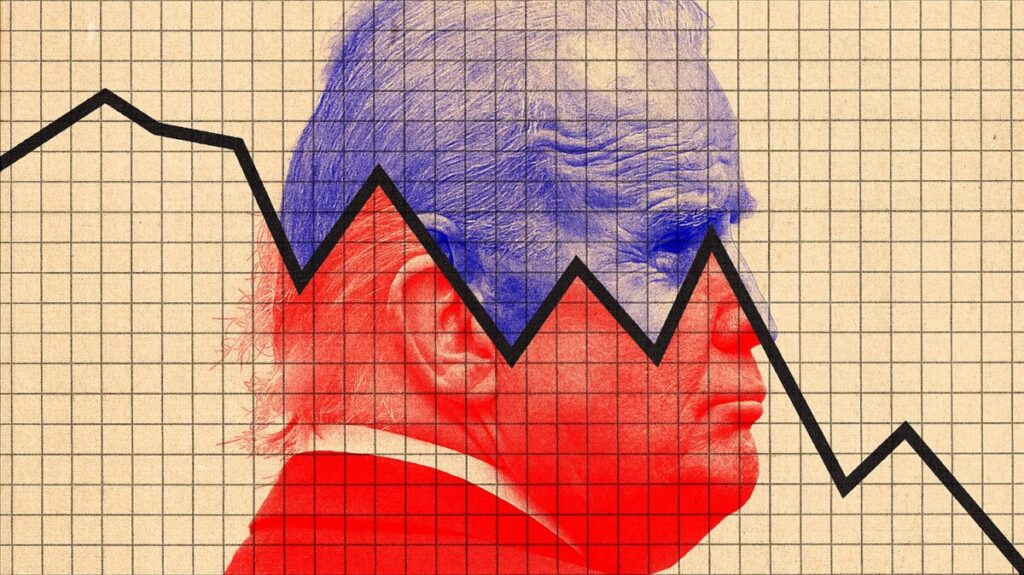
Donald Trump recaptured the White House in part by relentlessly exploiting Joe Biden’s failure to heed widespread concerns about the rising cost of living. Now, bizarrely, President Trump is walking himself—and his party—into the same perilous trap by denying the economic reality that working families are living.
In the summer of 2023, as he geared up his ill-fated race for reelection, Biden mounted a campaign to convince the public that his policies had delivered the economy and American workers from the depths of the pandemic to renewed prosperity. “Our plan is working—Bidenomics,” the president
declared
during a rally at the Philly Shipyard.
Biden had some legitimate claims. An impressive 13 million jobs had been created on his watch, and growth was relatively strong. He had pushed through policies that had begun to lift wages. Still, Americans were not nearly as enthusiastic as the president about an economy he had ill-advisedly branded with his name.
Inflation spiked as the pandemic waned, fueled by pent-up demand and exacerbated by the massive stimulus program that Biden had enacted during the COVID crisis. Americans now felt a cost-of-living crisis. The day that Biden spoke to shipyard workers in Philadelphia, the cost of goods was about 17 percent higher than when he had entered office; it would rise to 21 percent by the end of his term. In polls, Americans consistently listed the economy and inflation as their top concerns and gave Biden dismal grades for his handling of them.
[
Annie Lowrey: The cost-of-living crisis explains everything
]
Yet instead of fully acknowledging the pain that rising costs were placing on Americans and shifting his focus to the fight to stem inflation, the president, who had made empathy for working Americans his calling card over a half century in politics, resolved to jawbone them into embracing his sunnier view.
“While we have more, inflation has slowed every single month in the last 12,” Biden said in Philly. “It’s the lowest point—inflation—the lowest point in over two years.” This wasn’t inaccurate, but that decline came after Biden had presided over the steepest yearly increase in inflation in
four decades
. “The U.S. has the lowest inflation rate of any major economy in the world—the so-called G7,” the president added, a data point he would offer many times in the months ahead on what turned out to be his path to forced retirement. Although this fact, too, was true, it seemed entirely irrelevant and a little obtuse to Americans for whom price hikes were still a day-to-day concern.
The more Biden downplayed the cost crisis and insisted on claiming credit for economic success, the more his standing with Americans suffered. And no one made a bigger point of this than Trump, who hammered “Sleepy Joe” for fecklessness and economic failure.
Addressing the affordability crisis became a centerpiece of Trump’s 2024 presidential campaign. “Starting the day I take the oath of office, I will rapidly drive prices down, and we will make America affordable again!” Trump
said
at a rally in Wilkes-Barre, Pennsylvania, in August 2024. That was his mantra and, arguably, his most compelling offer to voters, who, in the end, viewed him as a better bet than Biden’s vice president, Kamala Harris, to address their economic concerns.
But Trump has not delivered on that promise. Inflation is
as high today
as it was the day he took office. His signature economic initiative—the steepest tariffs on imported goods since the Great Depression—has, predictably,
increased costs
for American consumers. Job growth has slowed this year. Now
public-approval ratings
of the economy and Trump’s management of it mirror Biden’s anemic numbers. By large margins, Americans believe that Trump’s policies have made the economy worse, and cost-of-living concerns were the principal driver behind major Democratic gains in state and local elections across the country this fall.
[
James Surowiecki: Trump doesn’t understand inflation
]
Since those elections, Trump has made intermittent attempts to address the affordability issue. “I AM THE AFFORDABILITY PRESIDENT. TALK LOUDLY AND PROUDLY,” he commanded Republicans in a social-media
post
last weekend. But for the most part, he is making the same fundamental mistake as Biden did: blundering down a highway of defiance, denial, and self-puffery. In speeches, interviews, and Truth Social posts, he lavishly promotes his record as an unalloyed success—an “economic
miracle
”—even as he tacitly acknowledges otherwise by blaming Biden, out of office for almost a year, for the economic discomfort that Americans feel.
On Tuesday, Aftyn Behn, a Democratic candidate for Congress, threw a scare into Republicans in a special election in Tennessee. Behn made inflation and the cost of health care the focus of her race and came far closer than any Democrat had reason to expect to in the ruby-red district where she ran. It was just the latest warning flare for Trump and his party, less than a year before the midterm elections could wrest one-party control away from the president.
As voters in Tennessee’s Seventh Congressional District trudged to the polls, Trump convened his Cabinet for a now-customary round-robin of fawning praise. But the president, who appeared to drift in and out of sleep during the tributes, became feisty when reporters inquired about the power of the affordability issue. A “Democrat scam” and “con job,” he grumbled. A “fake narrative” concocted to win elections. Coming from a president who has made a palatial new White House ballroom an urgent priority, Trump’s acid words and attitude were so dismissive as to make Biden’s denialism seem almost politically adroit.
Trump will never be on a ballot again. But he desperately wants to ensure that, against the odds, he can hang on to a supine and sycophantic Congress next year. Public attitudes about him and the economy will have a lot to say about the outcome of those elections. He should consult with his old nemesis about the wisdom of asking voters, who confront the reality of rising costs every time they go to the store or pay their bills, to believe him over their lying eyes.


