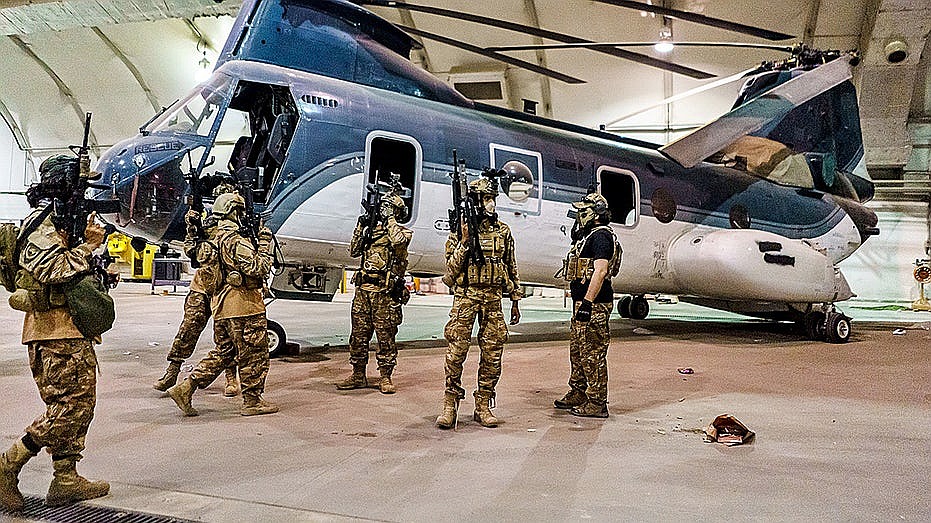
Afghan watchdog: US taxpayer-funded weapons left behind have formed ‘core of the Taliban security apparatus’
The recent report from the Special Inspector General for Afghanistan Reconstruction (SIGAR) has raised serious concerns regarding the aftermath of the U.S. withdrawal from Afghanistan in August 2021. The 137-page document highlights that the extensive U.S. investment in Afghanistan—amounting to approximately $144.7 billion between 2002 and 2021—failed to achieve its primary objectives of establishing stability and democracy in the region. Instead, much of the military equipment, weapons, and facilities that were left behind have now become integral to the Taliban’s security apparatus. SIGAR estimates that around $7.1 billion worth of material and equipment that had been provided to the Afghan National Defense and Security Forces (ANDSF) was abandoned during the chaotic retreat, with remaining facilities likely under Taliban control. This alarming transition underscores the unintended consequences of the U.S. military’s exit and raises questions about the effectiveness of the reconstruction efforts.
The SIGAR report, authored by acting inspector general Gene Aloise, points to multiple factors that contributed to the failure of U.S. reconstruction efforts. One significant issue was the decision to ally with corrupt powerbrokers who undermined the mission’s goals of fostering democracy and good governance. Despite nearly $90 billion allocated for security-sector assistance, the ANDSF’s reliance on U.S. military support proved detrimental when that support was abruptly withdrawn. The report indicates that the design of the ANDSF mirrored U.S. military structures, which created dependencies that ultimately led to a rapid collapse of Afghan security forces following the U.S. exit. Aloise’s findings suggest that the moral and operational integrity of the Afghan military was severely compromised, and the lack of sustained U.S. presence destroyed the morale of Afghan soldiers and police.
Even in the wake of the Taliban takeover, the United States remains the largest donor to Afghanistan, having disbursed over $3.83 billion in humanitarian and development assistance since the withdrawal, with $120 million allocated in just the first quarter of 2025. This ongoing support highlights the complex and challenging nature of U.S. involvement in Afghanistan, where efforts to provide humanitarian aid continue amid a turbulent political landscape. The SIGAR report serves as a sobering reminder of the consequences of foreign intervention and the complexities of nation-building, particularly in regions with deep-seated issues of governance and stability. As the situation in Afghanistan evolves, the implications of these findings will likely influence U.S. foreign policy and aid strategies moving forward.
https://www.youtube.com/watch?v=1v5Egpm6PFk
The final report from a government watchdog tasked with overseeing
Afghanistan reconstruction
efforts declared that “U.S. taxpayer-funded equipment, weapons, and facilities” left behind during the chaotic 2021 U.S. withdrawal have now “formed the core of the Taliban security apparatus.”
The
137-page document
released this week from the Special Inspector General for Afghanistan Reconstruction (SIGAR) states that Congress provided approximately $144.7 billion for Afghanistan reconstruction between 2002 and 2021 as part of a mission promising to bring stability and democracy to the country, “yet ultimately delivered neither.”
“Due to the
Taliban takeover
, SIGAR was unable to inspect any of the equipment provided to, or facilities constructed for, the Afghan National Defense and Security Forces (ANDSF) following the Afghan government’s collapse,” the report said. “However, DOD determined that the United States left behind approximately $7.1 billion in material and equipment it had given to the ANDSF.
“Similarly, any remaining ANDSF facilities that were not destroyed, can be assumed to be under Taliban control. These U.S. taxpayer-funded equipment, weapons, and facilities have formed the core of the Taliban security apparatus.”
TALIBAN KILLS INTERNET ACROSS AFGHANISTAN, CITING MORALITY CONCERNS AS UN PROTESTS
The
U.S. military
withdrawal from Afghanistan concluded in August 2021 under the Biden administration.
A
Pentagon watchdog
found the following year that “Afghan forces had 316,260 weapons, worth $511.8 million, as well as ammunition and other equipment in their stocks when the former government fell, though the operational condition of these items was unknown.”
“The DoD reported that the U.S. military removed or destroyed nearly all major equipment used by U.S. troops in Afghanistan throughout the drawdown period in 2021,” the Pentagon watchdog
said at the time.
SENATE REPUBLICANS DEMAND VETTING OVERHAUL AFTER SHOOTING OF NATIONAL GUARD MEMBERS
In the SIGAR report released this week, Gene Aloise, the acting inspector general for Afghanistan reconstruction, wrote, “Multiple factors contributed to the failure of the U.S. effort to transform a war-torn, underdeveloped country into a stable and prosperous democracy.
“For example, early and ongoing U.S. decisions to ally with corrupt, human-rights-abusing powerbrokers bolstered the insurgency and undermined the mission, including U.S. goals for bringing democracy and good governance to Afghanistan,” he wrote in a letter attached to the report.
“Efforts to improve Afghanistan’s economic and social conditions also failed to have a lasting impact. And, despite nearly $90 billion in U.S. appropriations for security-sector assistance, Afghan security forces ultimately collapsed quickly without a sustained U.S. military presence.”
The SIGAR report said the “ANDSF remained reliant on the U.S. military in part because the United States designed the ANDSF as a mirror image of U.S. forces, which required a high degree of professional military sophistication and leadership.
“This created long-term ANDSF dependencies. As a result of those dependencies, the decision to withdraw all U.S. military personnel and dramatically reduce U.S. support to the ANDSF destroyed the morale of Afghan soldiers and police,” the watchdog said.
“Despite Afghanistan falling to the Taliban in 2021, the United States continued to be the nation’s largest donor, having disbursed more than $3.83 billion in
humanitarian and development assistance
there since,” it also revealed. “In the March 2025 quarter alone, disbursements totaled $120 million.”