Vaccine committee votes to scrap universal hepatitis B shots for newborns despite outcry from children’s health experts
In a significant shift in public health policy, the Advisory Committee on Immunization Practices (ACIP) voted on December 5, 2025, to discontinue the longstanding recommendation for universal hepatitis B vaccination at birth for all newborns in the United States. This decision reverses a 34-year strategy that has been instrumental in reducing early childhood hepatitis B infections by an impressive 95%. Prior to the implementation of this vaccination program in 1991, approximately 18,000 children contracted the virus annually before reaching their tenth birthday, with about half of those infections occurring at birth. The CDC’s recommendation has since led to fewer than 1,000 cases of hepatitis B in children and adolescents each year, and fewer than 20 infants are reported to be infected at birth.
The new guidelines now suggest that infants born to mothers who test negative for hepatitis B should consult with their healthcare providers regarding vaccination, introducing a level of uncertainty that has not been present in previous recommendations. While the committee maintains that infants born to mothers who are hepatitis B positive should still receive the vaccine, this change raises concerns among healthcare professionals, including pediatricians, who fear that it could lead to delays in vaccination and increased vulnerability among newborns. The hepatitis B vaccine has an excellent safety record and is crucial for preventing chronic infections, which can lead to severe health issues, including liver cancer and cirrhosis. With the vaccine’s efficacy in protecting against perinatal transmission—where 70% to 90% of infants born to infected mothers become infected themselves—the potential consequences of this policy change could be dire.
Critics of the new recommendation argue that it undermines decades of progress in hepatitis B prevention. The ACIP’s decision appears to stem from a broader shift in vaccine policy under the leadership of Secretary of Health and Human Services Robert F. Kennedy Jr., who has altered the committee’s traditional methods of evaluating vaccine evidence. This has led to confusion among parents and healthcare providers alike, as evidenced by a pediatrician’s experience with parents who mistakenly believed that hepatitis B was primarily a sexually transmitted infection. The introduction of shared clinical decision-making in vaccination choices may leave some children unprotected during a critical window of vulnerability, where the risk of infection is highest. As the U.S. grapples with this pivotal change in public health policy, the importance of clear, evidence-based guidelines remains paramount to safeguarding the health of future generations.
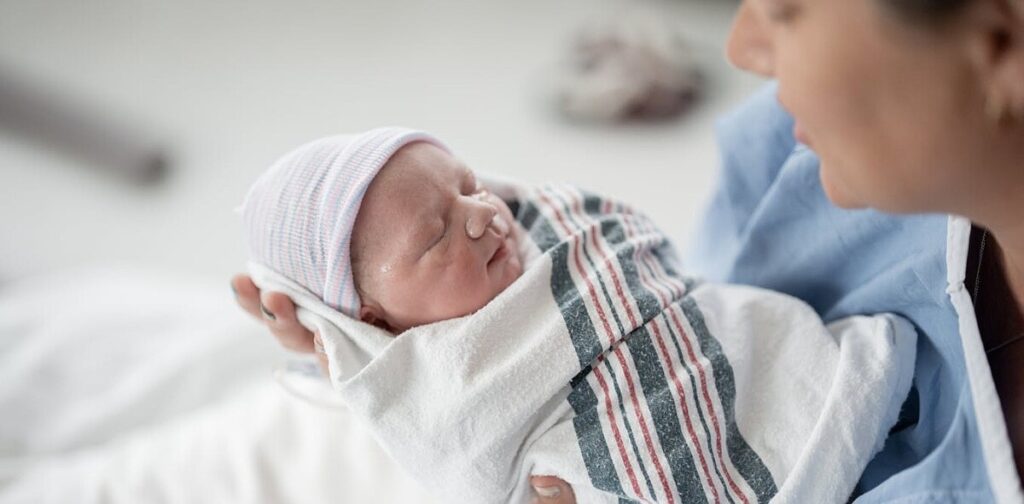
For the past 34 years, the Centers for Disease Control and Prevention has recommended that all babies receive their first hepatitis B vaccine at birth.
FatCamera/E+ via Getty Images
The committee advising the Centers for Disease Control and Prevention on vaccine policy voted on Dec. 5, 2025, to
stop recommending that all newborns be routinely vaccinated
against the hepatitis B virus – undoing a 34-year prevention strategy that has nearly eliminated early childhood hepatitis B infections in the United States.
Before the U.S. began vaccinating all infants at birth with the hepatitis B vaccine in 1991, around
18,000 children every year contracted the virus before their 10th birthday
– about half of them at birth. About 90% of that subset developed a chronic infection.
In the U.S., 1 in 4 children chronically infected with hepatitis B will
die prematurely from cirrhosis or liver cancer
.
Today,
fewer than 1,000
American children or adolescents contract the virus every year – a 95% drop.
Fewer than 20 babies each year
are reported infected at birth.
I am a
pediatrician and preventive medicine specialist
who studies vaccine delivery and policy. Vaccinating babies for hepatitis B at birth remains one of the clearest,
most evidence-based ways to keep American children free
of this lifelong, deadly infection.
What spurred the change?
In September 2025, the
Advisory Committee on Immunization Practices, or ACIP
, an independent panel of experts that advises the CDC, debated changing the recommendation for a dose of the hepatitis B vaccine at birth, but ultimately delayed the vote.
This committee regularly reviews vaccine guidance. However, since Secretary of Health and Human Services Robert F. Kennedy Jr.
disbanded the entire committee
and handpicked new members, its activity has drastically departed from business as usual. The committee has long-standing procedures for evaluating evidence on the risks and benefits of vaccines, but these
procedures were not followed
in the September meeting and were not followed
for this most recent decision
.
The committee’s new recommendation keeps the hepatitis B vaccine at birth for infants whose mothers test positive for the virus. But the committee now advises that infants whose mothers test negative should consult with their health care provider. Parents and health care providers are instructed to weigh vaccine benefits, vaccine risks and infection risks using “individual-based decision-making” or “
shared clinical decision-making
.”
The hepatitis B vaccine has an outstanding safety record and has been administered to billions of infants at birth.
On the surface, this sounds reasonable. But while parents have always been free to discuss benefits and risks with their health care providers to make a decision on what’s best for their child, this change is not based on any new evidence, and it introduces uncertainty into a recommendation that has long been clear.
As a doctor, I am already seeing this uncertainty play out in the clinic. I recently had new parents ask to postpone the hepatitis B vaccine until adolescence because they believed federal health leaders had evidence that people only become infected through sexual activity or contaminated needle use.
After a brief conversation, they came to understand that this was inaccurate — children can be infected not only at birth but also through
routine household or child care exposures
, including shared toothbrushes or even a bite that breaks the skin. In the end, they chose to vaccinate, but this experience highlights how easily well-intentioned parents can be misled when guidance is not clear and consistent.
Why the CDC adopted universal hepatitis B shots
Hepatitis B is a virus that infects liver cells, causing inflammation and damage. It is spread through
blood and bodily fluids
and is easily transmitted from mother to baby during delivery.
The hepatitis B vaccine has been
available since the early 1980s
. Before 1991, public health guidance recommended giving newborns the hepatitis B vaccine
only if they were at high risk of being infected
– for example, if they were born to a mother infected with hepatitis B.
That targeted plan failed. Tens of thousands of infants were still infected each year.
Some newborns were exposed when their mothers weren’t screened; others were exposed after their mothers were infected late in pregnancy, after their initial screening. And like any lab test, the screening can have false negative results, be misinterpreted or not be communicated properly to the baby’s care team.
Recognizing these gaps, in 1991 the CDC recommended hepatitis B vaccination
for every child starting at birth
, regardless of maternal risk.
The U.S. adopted a policy of vaccinating all babies from birth because the number of people with hepatitis B infections was, and remains, relatively high, and because many mothers do not receive prenatal care, so their infections go undetected.
Meanwhile, in some European countries, like Denmark, only babies with certain risk factors receive the vaccine at birth. That’s because in those countries, hepatitis B infections
are much less prevalent and pregnant mothers are more widely tested
due to universal health care. Due to these differences, that approach is not effective in the United States. In fact, most World Health Organization member countries
do recommend a universal birth dose
.
Vaccinating at birth
The greatest danger for infants contracting hepatitis B is at birth, when contact with a mother’s blood can transmit the virus. Without preventive treatment or vaccination, 70% to 90% of infants born to infected mothers will become infected themselves, and
90% of those infections will become chronic
. The infection in these children silently damages their liver, potentially leading to
liver cancer and death
.
Children are most likely to get infected by hepatitis B at birth, when contact with their mother’s blood can transmit the virus.
Ekkasit Jokthong/iStock via Getty Images Plus
About
80% of parents choose to vaccinate their babies at birth
. If parents choose to delay vaccination due to this new recommendation, it will leave babies unprotected during this most vulnerable window, when infection is most likely to lead to chronic infection and silently damage the liver.
A research article published on Dec. 3, 2025, estimates that if only infants born to mothers infected with hepatitis B received the vaccine, an
additional 476 perinatal hepatitis B infections
would occur each year.
The hepatitis B vaccines used in the U.S. have an outstanding safety record. The only confirmed risk is an allergic reaction called anaphylaxis
that occurs in roughly 1 in 600,000 doses
, and no child has died from such a reaction. Extensive studies show no link to
other serious conditions
.
How children get exposed to hepatitis B
Infants and children continue to be vulnerable to hepatitis B long after birth.
Children can become
infected through household contacts
or in child care settings by exposures as ordinary as shared toothbrushes or a bite that breaks the skin. Because hepatitis B can
survive for a week
on household surfaces, and many carriers are unaware they are infected, even babies and toddlers of uninfected mothers remained at risk.
Full protection against hepatitis B
requires a three-dose vaccine series
, given at specific intervals in infancy. Anything short of the full series leaves children vulnerable for life.
In addition to changing the birth dose recommendation, the committee is now advising parents to consult with their health care provider about checking children’s antibody levels after one or two doses of the vaccine to determine whether additional doses are needed. While such testing is sometimes recommended for people in high-risk groups after they get all three doses to confirm their immune system properly responded to the vaccine, it is
not a substitute for completing the series
.
The recommendation for all babies to receive the vaccine at birth and for infants to complete the full vaccine series is designed to protect every child, including those who slip through gaps in maternal screening or encounter the virus in everyday life. A reversion to the less effective risk-based approach threatens to erode this critical safety net.
Portions of this article originally appeared in a previous article published on
Sept. 9, 2025
.
Dr. Higgins is affiliated with the American Academy of Pediatrics, Immunize Colorado, and Colorado Chooses Vaccines. These are volunteer roles.


