Live Nation Shares Up 6%, Spotify Down 6% as Music Stocks Fall Yet Again
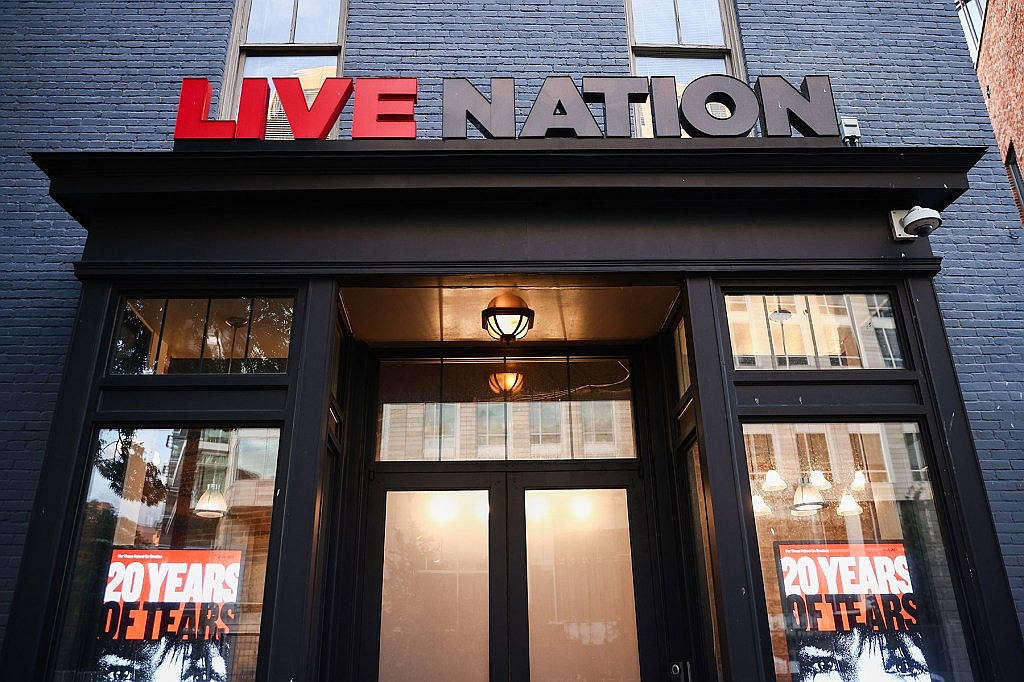
In the week ending December 5, Live Nation emerged as a notable performer in the music stock sector, witnessing a modest 6.0% increase in its share price, reaching $139.33. This uptick is particularly impressive given the backdrop of significant legal challenges facing the company, including an antitrust lawsuit from the U.S. Department of Justice, another lawsuit from the Federal Trade Commission, and a class-action suit brought forth by fans of pop superstar Taylor Swift. Despite these hurdles, Live Nation’s Ticketmaster division has managed to maintain a stronger market position compared to its competitors in the secondary ticketing market. For instance, StubHub’s shares have plummeted by 47.1% since its IPO in mid-September, while Vivid Seats has seen a staggering 91.8% decline this year. Ticketmaster has taken proactive measures by encouraging artists to raise primary ticket prices, aiming to capture revenue that would otherwise go to scalpers, thus positioning itself favorably in a challenging environment.
However, the broader music industry is struggling, as evidenced by the Billboard Global Music Index (BGMI), which fell 2.1% to 2,542.64, marking its ninth decline in 11 weeks and now sitting 18.4% below its all-time high set in June. Major players in the industry, including Universal Music Group and Spotify, have also experienced significant share price drops, with Spotify plummeting 23.1% in the same timeframe. This underperformance is starkly contrasted by the resilience of other stock indexes; for example, the Nasdaq composite has risen 4.2% since mid-September. The BGMI’s decline highlights the ongoing struggles within the music sector, suggesting that while individual companies like Live Nation may show resilience, the overall market sentiment remains cautious amid legal uncertainties and shifting consumer behaviors.
In other notable market movements, MSG Entertainment saw a 4.7% rise in its stock price, buoyed by the success of its “The Wizard of Oz” motion picture, which grossed over $200 million since its debut. Conversely, sister company Sphere Entertainment Co. experienced a slight dip of 0.3%. Other players in the music industry also had mixed results, with SiriusXM gaining 3.6% and Warner Music Group edging up 1.3%, while Universal Music Group and iHeartMedia faced declines of 1.3% and 5.6%, respectively. As the music industry navigates these turbulent waters, the coming weeks will be crucial in determining how these legal challenges and market dynamics will shape the future of music stocks.
Live Nation was the standout music stock for the week ended Dec. 5, though it rose only a modest 6.0% to $139.33. Its share price was up even as the company faces a barrage of legal issues, including
an antitrust lawsuit
by the U.S. Department of Justice,
another lawsuit
filed by the U.S. Federal Trade Commission and
yet another
brought by
Taylor Swift
fans. At the same time, though, Ticketmaster isn’t suffering as much as its peers in the secondary market. Amid efforts to cap profits on ticket resales, StubHub shares are down 47.1% from the company’s Sept. 16 IPO price, and Vivid Seats shares have fallen 91.8% this year. Ticketmaster operates a secondary market, but the company encourages artists to raise the price of primary tickets to capture revenue that would otherwise go to scalpers.
This week, the 19-company Billboard Global Music Index (BGMI) added to its woes by falling 2.1% to 2,542.64, marking its ninth decline in the last 11 weeks. The BGMI now stands 18.4% below its all-time high of 3,117.20 set the week ended June 30 and sits at the same level it reached in April.
Related
Taylor Swift Fans Score Initial Win in Lawsuit Over Ticketmaster’s Eras Tour ‘Disaster’
DJ Quik’s Son Convicted of Murder, Facing 40 Years in Prison
Weezer Bassist Scott Shriner’s Wife Files For Divorce Eight Months After LAPD Shootout
Elsewhere, the U.K.’s FTSE 100 fell 0.6% to 9,667.01, lowering its year-to-date gain to 17.5%. South Korea’s KOSPI composite index, which has gained 67.9% in 2025, rose 4.4% to 4,100.05. China’s Shanghai Composite Index rose 0.4% to 3,902.81, raising its year-to-date improvement to 21.5%.
Music is underperforming other indexes as stocks have remained resilient in the face of tariff uncertainty and job losses. Since the week ended Sept. 12, the Nasdaq composite index is up 4.2% and the S&P 500 has risen 3.1%. The BGMI, on the other hand, has fallen 18.0% over those 11 weeks through the week ended Dec. 5. Many of the index’s largest components have sank over those 11 weeks, including Universal Music Group (down 7.3%), Warner Music Group (down 14.7%), Live Nation (down 14.9%) and Spotify (down 23.1%).
The previously high-flying Spotify fell another 5.7% to $564.93 this week, making the Stockholm-based company the second-worst performer behind French music streamer Deezer, which dropped 6.0% to 1.03 euros ($1.20 ). Spotify shares have fallen 22.4% since the company’s Sept. 30 announcement that CEO and co-founder
Daniel Ek
would step down as CEO and assume the role of executive chairman at the end of the year. And although Spotify is still up 21.1% in 2025 — besting the Nasdaq’s 20.2% gain and the S&P 500’s 15.6% improvement — its share price has dropped 28.0% from its 52-week high of $785.00.
MSG Entertainment was the week’s second-greatest gainer after rising 4.7% to $51.79, while sister company Sphere Entertainment Co., which has capitalized on the success of
The Wizard of Oz
, fell 0.3% to $84.31. The company announced on Tuesday (Dec. 2) another milestone for its
Oz
motion picture: Through Monday (Dec. 1),
Oz
grossed more than $200 million in sales from over 1.5 million tickets sold since debuting on Aug. 28. Unlike previous milestones, however, this latest threshold didn’t goose the stock price.
Other notable movements included SiriusXM (up 3.6%), Warner Music Group (up 1.3%), Universal Music Group (down 1.3%), CTS Eventim (down 3.6%) and iHeartMedia (down 5.6%).