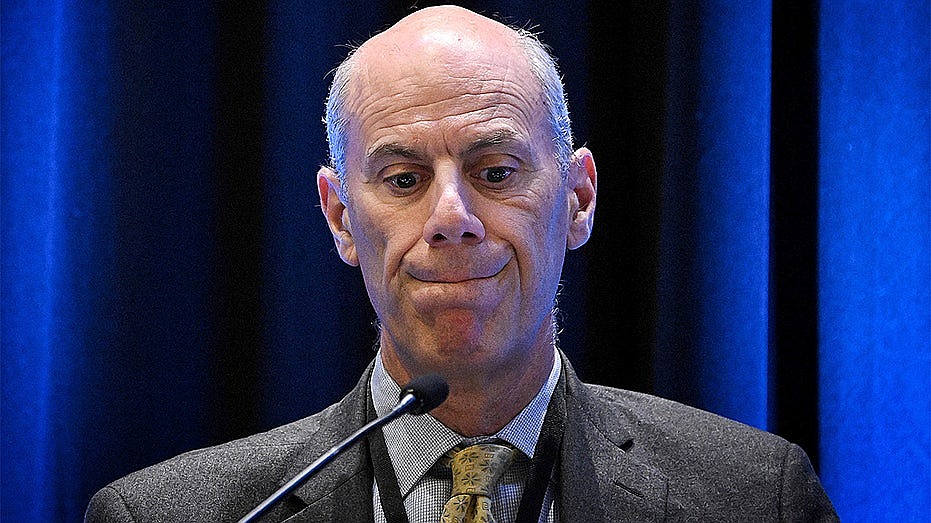
Fresh Trump-linked case puts Boasberg back in GOP crosshairs
U.S. District Judge James Boasberg is once again under scrutiny, particularly from Republican lawmakers, following the assignment of a high-profile lawsuit involving California Rep. Eric Swalwell against a senior Trump housing official. This lawsuit, which accuses the official of serious misconduct, has reignited discussions about Boasberg’s judicial assignments, particularly in relation to cases involving former President Donald Trump. Critics have pointed to Boasberg’s previous involvement in significant Trump-related cases, including one where he blocked the removal of Venezuelan migrants to El Salvador and his oversight of the “Signalgate” lawsuit, which questioned the Trump administration’s handling of sensitive information. However, it’s important to note that the assignment of cases in the D.C. District Court is determined by a randomized computer system, a process that has been defended by legal experts as fair and impartial.
Boasberg’s judicial history, particularly his prior service on the FISA Court and his rulings during the Trump administration, have made him a focal point for criticism from Trump and his allies. For instance, Boasberg notably sentenced former FBI attorney Kevin Clinesmith to probation for altering a document related to the surveillance of a Trump campaign advisor, a decision that drew mixed reactions. Critics argue that Boasberg has an outsized share of high-profile cases related to Trump, but former judges emphasize that the D.C. District Court naturally handles a significant number of cases involving government actions due to its location. The current scrutiny reflects broader tensions between the judiciary and the executive branch, particularly as Trump continues to label judges who rule against him as “activist.”
The ongoing debate over Boasberg’s case assignments is emblematic of the challenges faced by judges in politically charged environments. As the D.C. District Court deals with a variety of cases that include lawsuits against government agencies and administrative actions, the perception of bias can arise, especially in high-stakes political cases. Recent letters from Republican lawmakers seeking clarity on the case assignment process suggest a continued effort to challenge the integrity of judicial proceedings involving the Trump administration. Ultimately, the random assignment system, designed to ensure an equitable distribution of cases among judges, remains a critical aspect of the judicial process, even as it faces scrutiny in the politically fraught landscape of contemporary American governance.
https://www.youtube.com/watch?v=zJAnyer8qHQ
U.S. District Judge James Boasberg is again facing scrutiny for his assigned cases after California Rep. Eric Swalwell’s high-profile lawsuit accusing a senior Trump housing official of brazen misconduct landed in his court.
Some Republicans have criticized Boasberg’s docket, given his assignment to an earlier legal challenge involving President
Donald Trump
‘s removal of hundreds of Venezuelan migrants to a Salvadoran prison in March and his role in presiding over the so-called “Signalgate” lawsuit, which, as of this writing, is all but mooted. But like other federal courts, the D.C. District Court assigns its cases to judges via a randomized computer system — a process that former federal judges outlined to Fox News Digital in a series of recent interviews.
A Fox News Digital review of the cases assigned to judges in the U.S. District Court in Washington, D.C., showed the same — putting Boasberg on the lower side of
Trump-related case assignments
compared to some of his colleagues in the district.
Judges are “totally reactive” by design, Philip Pro, a former U.S. district judge and Reagan appointee, said last month about the cases judges are tasked with hearing.
SHELTERS, JESUS, AND MISS PAC-MAN: US JUDGE GRILLS DOJ OVER TRANS POLICY IN DIZZYING LINE OF QUESTIONING
“We’re sitting in our districts. The cases are randomly assigned,” Pro said. “There is nothing ‘rogue’ about these decisions.”
Boasberg’s earlier work on the FISA Court — and his rulings in cases tied to the Trump era — have long made him a focal point for Trump’s criticism.
In 2014, Supreme Court Chief Justice John Roberts appointed him to serve a seven-year term on the U.S. Foreign Intelligence Surveillance Court, or FISA Court — a court composed of 11 federal judges hand-selected by the chief justice.
After returning full-time to the federal bench, Boasberg oversaw the sentencing of former FBI attorney Kevin Clinesmith, who pleaded guilty to doctoring a 2017 email asking to extend surveillance permissions for the wiretap of former Trump campaign advisor Carter Page. Boasberg declined to sentence Clinesmith to prison time and instead ordered him to 12 months of probation and 400 hours of community service — a notable decision, given his own background on the FISA Court.
He said in his sentencing decision that he believed Clinesmith’s role at the center of a years-long media “hurricane” had provided sufficient punishment.
Trump has since zeroed in on Boasberg, now the chief judge of the U.S. District Court in Washington, D.C., as he continues to rail against so-called “activist judges” — though Boasberg is far from the only district judge to draw the former president’s ire.
U.S. District Judge Ana Reyes, for example, has presided over cases involving the Trump administration’s attempt to restrict or ban transgender U.S. service members, and an early challenge to Trump’s National Guard deployment.
U.S. District Judge Jia Cobb in November sought to temporarily block the continued deployment of National Guard troops in D.C. Cobb also issued a temporary order in September blocking Trump from immediately firing Federal Reserve Governor Lisa Cook.
Other challenges heard by judges in the district involve mass layoffs at government agencies in the early months of the Trump administration, efforts to reshape U.S. international aid programs — including funding previously allocated by Congress — and one of the consolidated tariff cases appealed to the
Supreme Court
.
Still, the notion that Boasberg has an outsize share of the cases persists. This is likely due in part to the longevity of the J.G.G. v. Trump litigation, which centered on the Trump administration’s use of a 1798 Alien Enemies Act statute to
quickly deport hundreds of Venezuelan nationals
to El Salvador in March.
Despite Boasberg’s emergency order blocking the flights from leaving U.S. soil, the planes arrived in El Salvador hours later — kicking off a separate, months-long review of whether senior government officials knowingly defied his court order. A list of declarations from government officials is due Friday as part of that process, which Boasberg said he will use to determine which officials he plans to call as witnesses in the contempt proceedings.
“The Senate has made great mention of the fact that the judiciary should not be involved in that decision,” former U.S. District Judge Liam O’Grady said about the Alien Enemies Act case in a recent interview with Fox News Digital.
EXCLUSIVE: BONDI DOJ TRANSFERS DEATH ROW INMATES COMMUTED BY BIDEN TO ‘SUPERMAX’ PRISON
Boasberg “didn’t pluck this issue out of the sky and say, ‘Oh, I’m going to refuse this, because I don’t believe that the Alien Enemies Act is appropriately being used,’” said O’Grady, who spent 16 years as a judge in the Eastern District of Virginia and was appointed by Chief Justice John Roberts to serve on the FISA Court, where he overlapped with Boasberg.
Boasberg “has a case before him where one side is saying, ‘it can’t be used,’ and the executive branch is saying, ‘it can be used,’” O’Grady said of the Alien Enemies Act case. “And it’s up to him to make that decision.”
Former judges note that the D.C. District Court, by design, has jurisdiction over a large share of cases that emanate in the nation’s capital, including lawsuits against government agencies or administrative actions.
JUDGES V. TRUMP: HERE ARE THE KEY COURT BATTLES HALTING THE WHITE HOUSE AGENDA
It’s not the first time Trump’s allies in Congress have attempted to cast doubt on the randomized assignments.
Republicans on the House Judiciary Committee sent a letter to the D.C. clerk’s office in May seeking more information about how cases are assigned in the district, after Boasberg was assigned to an earlier case brought by the American Oversight group in response to the so-called “Signalgate” controversy.
The lawsuit accused the Trump administration of potentially violating federal recordkeeping laws when they exchanged sensitive information — including a planned strike in Yemen — in the Signal messaging app.
“While the District Court’s allocation process is intended to produce an ‘equal distribution of cases to all judges,’ in practice the distribution of cases can be unequal,” Reps. Jim Jordan, Darrel Issa, and Chip Roy
said
in the letter.
That case appears to be all but mooted, as lawyers for the Justice Department and American Oversight told Judge Boasberg in a status update Monday.
They are expected to resolve the issue without further judicial involvement, according to the filing, and will submit a formal notice to that effect by mid-December.