Pete Hegseth could be investigated for illegal orders by 5 different bodies – but none are likely to lead to charges
Recent reports have emerged regarding a U.S. military operation targeting a vessel in the Caribbean allegedly involved in drug trafficking, raising significant legal and ethical questions about the Trump administration’s military campaign against drug smugglers. The operation, which resulted in the deaths of individuals linked to narcotics trafficking, has led to congressional investigations probing whether Defense Secretary Pete Hegseth or other officials could face criminal liability for their roles in the attacks. Notably, a follow-up strike on September 2, 2025, that targeted survivors from an earlier attack, has come under scrutiny, with some legal experts citing potential violations of both U.S. and international law. As investigations unfold, the complexity of military law and the implications for those in command are coming to the forefront.
Congressional committees have the authority to investigate these incidents, similar to past inquiries into military actions, such as those surrounding the infamous My Lai Massacre during the Vietnam War. These committees can compel testimony and issue subpoenas, but the political climate may complicate their effectiveness. Additionally, the U.S. Attorney General could initiate a grand jury investigation if there are indications of criminal conduct; however, the administration’s defense that the actions taken were legal complicates this avenue. The Department of Defense’s inspector general also has the capacity to investigate allegations of misconduct within the military, although civilian officials like Hegseth are not subject to military prosecution. Lastly, international law could play a role, although historical precedents suggest that superpowers often evade accountability.
As the situation develops, it remains uncertain which investigative channels will be pursued, but the mechanisms are in place to uncover the facts surrounding the September operation. The outcomes of these investigations could have significant ramifications for military policy and accountability in the U.S., echoing past instances where military actions have led to profound legal and ethical debates. The unfolding narrative will be closely watched, not only for its legal implications but also for its impact on public trust in military operations and government accountability.
https://www.youtube.com/watch?v=0gHZmMC39Xw
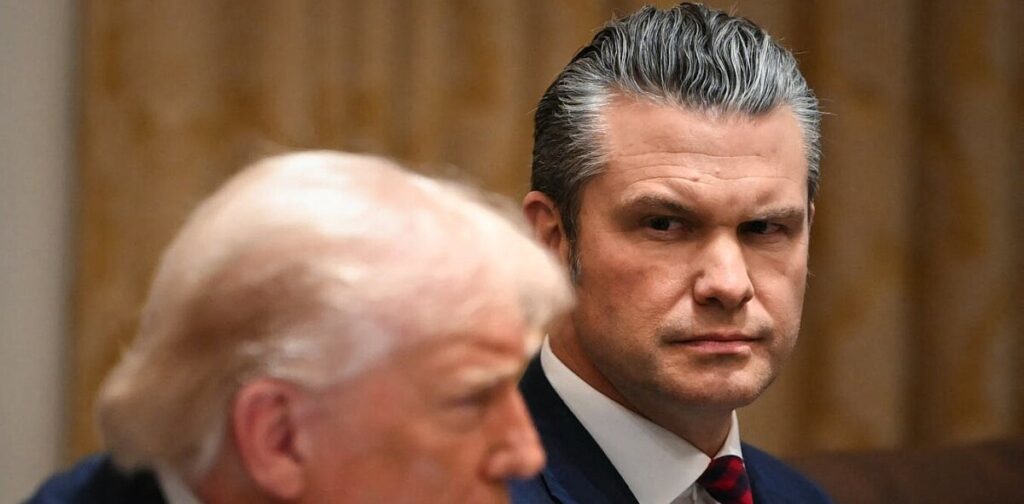
Defense Secretary Pete Hegseth attends a cabinet meeting with President Donald Trump at the White House in Washington, DC on December 2, 2025.
Carolyn Van Houten/The Washington Post via Getty Images
News reports about a U.S. military attack
on a boat in the Caribbean allegedly carrying drugs have raised critical questions about the military campaign against drug smugglers being carried out by the Trump administration in that region.
Among them: whether Secretary of Defense Pete Hegseth or others face
criminal liability for any of the attacks
. Those attacks killed people alleged to have been involved in illegal narcotics trafficking.
Congressional investigations have begun
into allegations that a Sept. 2, 2025, follow-up attack on two survivors of an earlier attack was illegal and ordered by Hegseth. Some legal scholars have
cited violations of international and United States criminal law
that could come into play.
But as a military law scholar
who spent 20 years as a lawyer and judge in the U.S. Air Force, I know that there aren’t enough facts known yet to determine who is responsible for what. There are five investigative mechanisms that could be used to determine the facts and whether there is criminal liability on the part of both senior civilian officials and military members involved in the now
extensively reported second strike on the suspected drug boat
that resulted in the deaths of civilians.
There are two caveats to this analysis. The first is that the Constitution says a person is to be presumed innocent before being proved guilty. The second is that the story from the White House and the Pentagon
has changed over time
.
Navy Adm. Frank Bradley, center, arrives for a closed-door classified meeting with lawmakers on Capitol Hill on Dec. 4, 2025.
Andrew Harnik/Getty Images
Congressional committees investigate
The first investigative mechanism is the Congress itself.
The House of Representatives and the Senate each
have an armed services committee and a foreign relations or foreign affairs committee
. In theory, any of these committees can place people under oath and have them testify, as well as issue subpoenas to obtain information.
This concept isn’t new.
Multiple committees examined
the country’s lack of preparedness preceding the Japanese attack on Pearl Harbor and other military installations in 1941.
Almost every month
during the Vietnam War, one or more of these committees investigated
military matters, including one of the most notorious war crimes in U.S. history. In 1968, Army Lt. William Laws Calley commanded a platoon of soldiers
who murdered close to 500 villagers in My Lai
, including children and the elderly, none of whom posed a threat and none of whom were lawful targets.
But congressional investigations can be highly political
. Even during the My Lai investigation, at least one member of the House, Mendel Rivers, a South Carolina Democrat who was at that time chairman of the Committee on Armed Services,
attempted to shield officers in the chain of command
. There is little reason to believe that a current investigation, conducted by a dramatically polarized Congress, will be free of partisan politics.
Attorney general investigates
A second means of investigating is for the U.S. attorney general to preliminarily conclude that crimes have been committed and
to convene a grand jury to investigate
. A federal grand jury is a constitutional body consisting of ordinary adult citizens. Its operations are governed by the
Federal Rules of Criminal Procedure
, and its role is to investigate whether there is probable cause to determine that a person has violated the criminal laws.
A federal statute prohibits murder
.
As far back as 1820
, if not before, federal grand juries have investigated the crime of “murder on the high seas.”
No member of the president’s administration is immune from the criminal laws of the country, with the exception of the president himself when he has acted in the capacity of president or commander in chief. The Supreme Court in 2024 determined that
the president is mostly immune from prosecution under criminal law
.
But I believe this type of investigation is unlikely. That’s because members of the administration have argued that their actions were legal and that the men killed in the second strike
were continuing in their mission and posed a threat
.
Moreover, the attorney general is supposed to act in an independent capacity from the White House. But Trump’s attorney general,
Pam Bondi, has demonstrated her loyalty to the president and his agenda
in many instances.
Another consideration is that federal agency heads who rely on their attorneys in good faith are presumed to
be immune from the law
. This may be why Hegseth has
stated that lawyers had advised the mission’s commanders
.
Congress and the AG work a case
It is possible that during a congressional investigation one or more witnesses will be accused of lying under oath or accused of contempt.
Congress has the authority to hold individuals in contempt and fine and sentence them, but this is rare. Usually, Congress forwards the claim to the attorney general.
Contempt of Congress is a federal misdemeanor offense
, meaning a person cannot be sentenced to more than a year. Again, I believe it is unlikely that the attorney general would pursue a contempt charge in a federal court from these events.
Inspector general investigates
The Department of Defense’s inspector general can investigate allegations of wrongdoing in the department, and this includes the secretary. In the past, inspectors general have discovered criminal activity, written a publicly releasable report, and then a senior official was prosecuted.
In 2003, the Department of Defense investigated Darleen Druyun, a senior contracting official, for
wrongly steering multimillion-dollar contracts to Boeing
. The investigative report resulted in criminal charges from the Justice Department, and Druyun was found guilty in a criminal trial. Boeing officials also
left the company
, and
the company was fined
.
The military can investigate its civilian members but cannot prosecute them. The
Uniform Code of Military Justice
does not apply to civilians. That includes the president and secretary of defense, even though they are at the pinnacle of the chain of command.
International courts investigate
Finally, an investigation could be mounted through international law as enforced by courts outside of the United States.
Superpowers such as the United States and Russia often get a free pass from international law enforcement. In 1986, the International Court of Justice – a body partly created by the United States –
ruled that the United States under the Reagan administration violated Nicaragua’s sovereignty
during its civil war.
The Reagan administration’s response was that because other nations had disregarded the court,
so too would the United States
. No American official was
ever held to account
for the mining of Nicaragua’s main port or for the arming of rebels that led to the deaths of Nicaraguans.
It’s not clear which, if any, of these mechanisms will be used to hold accountable those who ordered and carried out the September 2025 operation in the Caribbean that killed two survivors of an earlier attack. What is clear is that the methods exist to find the facts – and make judgments based on them.
Joshua Kastenberg does not work for, consult, own shares in or receive funding from any company or organization that would benefit from this article, and has disclosed no relevant affiliations beyond their academic appointment.


