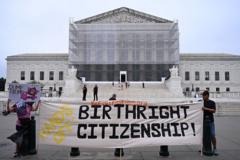
US Supreme Court agrees to hear case challenging birthright citizenship
In a significant legal development, former President Donald Trump’s executive order aimed at ending birthright citizenship has faced substantial pushback from the judiciary. This controversial order sought to reinterpret the 14th Amendment of the U.S. Constitution, which guarantees citizenship to anyone born on American soil, including children of undocumented immigrants. Trump’s administration argued that this policy was necessary to curb illegal immigration and prevent what they termed “birth tourism,” where individuals enter the U.S. primarily to give birth and secure citizenship for their children. However, lower courts have consistently ruled against this executive order, citing the constitutional protections enshrined in the 14th Amendment.
The rejection of Trump’s order highlights a broader debate surrounding immigration policy in the United States. Legal experts and advocates for immigrant rights argue that birthright citizenship is a fundamental principle that upholds the nation’s commitment to equality and inclusivity. For instance, a federal judge in California ruled that the executive order not only overstepped the bounds of presidential authority but also posed a threat to the established legal framework that has protected the citizenship rights of millions of children born in the U.S. This legal battle reflects a growing tension between the executive branch and the judiciary, as well as among various political factions regarding how immigration should be managed in America.
As the legal challenges unfold, the implications of this executive order extend beyond the courts, influencing public opinion and the political landscape. Advocates for immigrant rights are leveraging these rulings to galvanize support for comprehensive immigration reform, emphasizing the need to protect the rights of all individuals, regardless of their immigration status. Meanwhile, Trump’s supporters continue to rally around the notion of stricter immigration controls, arguing that such measures are essential for national security and economic stability. Ultimately, the ongoing discourse surrounding birthright citizenship not only underscores the complexities of U.S. immigration policy but also serves as a critical touchpoint in the nation’s ongoing struggle to define its identity in an increasingly diverse society.
Donald Trump’s controversial executive order to end birthright citizenship had been rejected by lower courts.