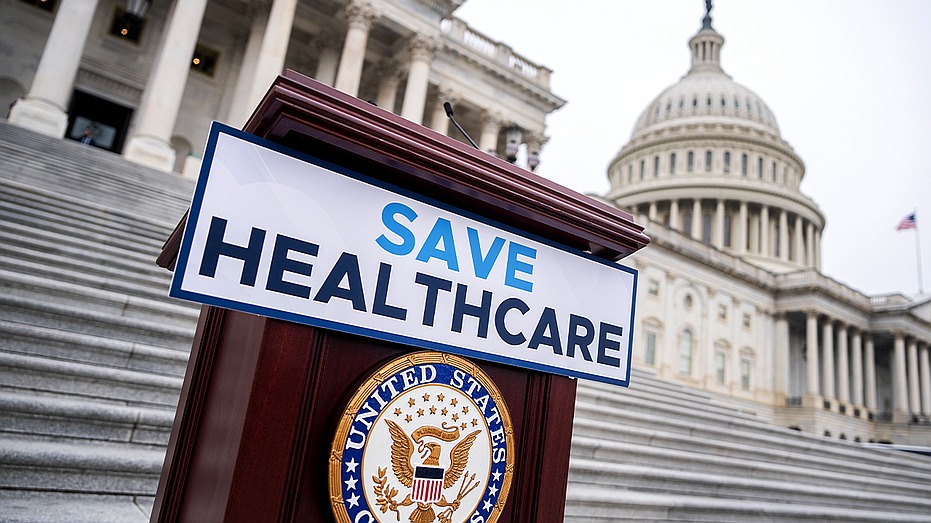
Bipartisan House group pushes new ‘CommonGround 2025′ healthcare framework
A bipartisan coalition of House lawmakers has unveiled a significant healthcare initiative aimed at extending the enhanced premium tax credits of the Affordable Care Act (ACA), which are set to expire at the end of the year. This initiative, titled “CommonGround 2025: A Bipartisan Health Care Framework,” is co-led by Representatives Josh Gottheimer (D-N.J.) and Jen Kiggans (R-Va.) and seeks to provide a one-year extension of these crucial tax credits. At a press conference, Rep. Mike Lawler (R-N.Y.) emphasized the importance of these credits, stating that they significantly impact the 24 million Americans who rely on them, as the difference between a subsidy of 78% versus 88% can be life-changing for many families. The lawmakers are urging swift action, with a vote anticipated by December 18 in both the House and Senate.
The proposed framework not only aims to extend the tax credits but also includes reforms designed to address concerns surrounding these temporary measures, which were initially implemented during the COVID-19 pandemic. Among the proposed changes are new safeguards to prevent fraud and the misuse of benefits, often referred to as “ghost beneficiaries.” With health insurance premiums already surging during the current open enrollment period, the urgency of this initiative is underscored by Gottheimer’s warning that without the extension of these tax credits, millions of families could face an average premium increase of 26% next year. In states like New Jersey, the situation could be even more dire, with potential increases as steep as 175%, translating to an additional $20,000 in costs for a family of four.
This bipartisan effort reflects a growing recognition among lawmakers of the pressing need to stabilize healthcare costs for American families. As the deadline for the expiration of these tax credits approaches, the coalition of 35 House members has reached out to key Senate leaders, including Majority Leader John Thune and Minority Leader Chuck Schumer, urging them to prioritize this framework. The healthcare landscape remains a contentious issue in American politics, but this collaborative approach signifies a willingness to work across party lines to address the critical needs of constituents facing rising healthcare costs. As discussions progress, the outcome of this initiative could have profound implications for millions of Americans reliant on affordable healthcare coverage.
https://www.youtube.com/watch?v=a8n8ps2Cpdg
A bipartisan group of House lawmakers on Thursday unveiled a two-year healthcare framework that would extend the Affordable Care Act (ACA) enhanced premium tax credits, which are set to expire at the end of the year.
“We are talking about whether or not the
federal government is subsidizing a plan
to the tune of 78 percent or 88 percent. But that difference means a lot to the 24 million people who are impacted by it,” said Rep. Mike Lawler, R-N.Y., at a press conference.
“And so, we need to address that by having a
two-year extension with reforms
that will address some of the concerns that have been raised about these temporary tax credits that were put in place during COVID, while addressing some of the longer term issues with health care, including the insurance companies.”
HOUSE GOP SPLITS OVER OBAMACARE FIX AS COSTS POISED TO SPIKE FOR MILLIONS
The “CommonGround 2025: A
Bipartisan Health Care Framework
,”, co-led by Reps. Josh Gottheimer, D-N.J., and Jen Kiggans, R-Va., would include a one-year extension of the enhanced premium tax credits, with targeted modifications to be voted on by Dec. 18, in the House and Senate.
TRUMP URGES SENATE REPUBLICANS TO REDIRECT FUNDS FROM OBAMACARE-BACKED INSURERS, PAY AMERICANS DIRECTLY
It also calls for new guardrails to prevent “ghost beneficiaries” and crackdown on fraud.
The 35 House members supporting the healthcare plan sent a letter to Senate Majority Leader John Thune, R-S.D., Minority Leader
Chuck Schumer
, D-N.Y., House Speaker Mike Johnson, R-La., and House Minority Leader Hakeem Jeffries, D-N.Y., urging them to consider the framework.
Gottheimer said families have seen their health insurance premiums surge during open enrollment and warned that, with the expiring ACA tax credits, millions of families could see their health premiums rise an average of 26% next year.
“In Jersey, where we live, it could be even rougher with a 175% increase. That’s $20,000 for a family of four. And that’s why we’re all here together to try to solve this problem, do something about it,” he told reporters.