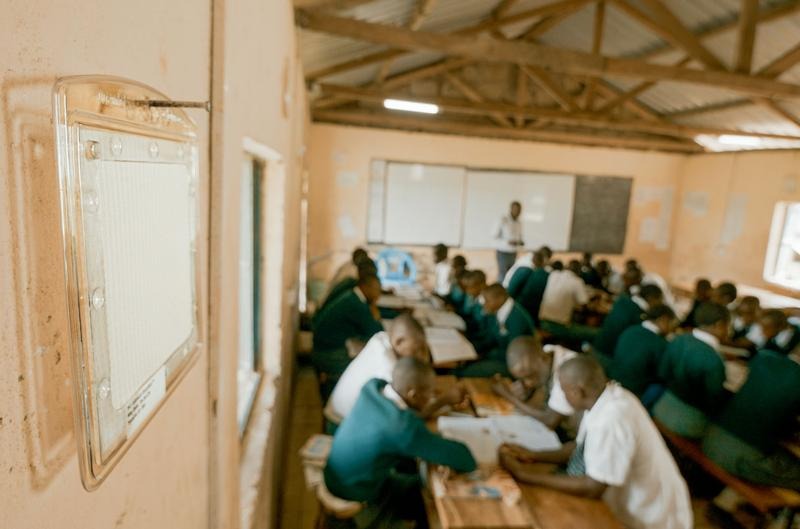
New vapor tool fights mosquitoes by slowly releasing insecticide in homes. Will it catch on?
The World Health Organization (WHO) has recently endorsed the use of “spatial repellents” as a promising strategy to combat malaria, a disease that continues to claim hundreds of thousands of lives each year, predominantly in sub-Saharan Africa. Spatial repellents are designed to emit chemicals that deter mosquitoes from entering a specific area, thereby reducing the likelihood of bites that can transmit malaria. This innovative approach could significantly enhance existing prevention methods, such as insecticide-treated bed nets and indoor spraying, by adding an additional layer of protection for communities at risk. The WHO’s backing of these repellents comes at a crucial time, as malaria cases have surged in some regions, exacerbated by climate change and the emergence of drug-resistant strains of the parasite.
However, while the potential benefits of spatial repellents are clear, a significant challenge looms regarding funding and accessibility. The WHO has yet to clarify who will bear the financial burden of producing and distributing these repellents on a large scale. Current funding mechanisms for malaria prevention largely rely on international aid and government support, which can be inconsistent. For spatial repellents to be effective, they must be affordable and accessible to the populations that need them most. Without clear pathways for funding and distribution, there is a risk that this promising innovation may not reach those who are most vulnerable to malaria. The situation highlights a broader issue in global health: the need for sustainable financing models that can support the deployment of new technologies in low-resource settings.
In light of these challenges, experts are calling for collaboration between governments, non-governmental organizations, and the private sector to develop a comprehensive strategy for the rollout of spatial repellents. By leveraging existing infrastructure and funding sources, stakeholders can work together to ensure that these repellents are not only effective but also accessible to communities in need. As the WHO continues to advocate for innovative solutions to combat malaria, the success of spatial repellents will depend not only on their scientific efficacy but also on the commitment of the global community to invest in equitable health solutions.
World Health Organization supports “spatial repellents” to prevent malaria, but it’s unclear who will pay for them


