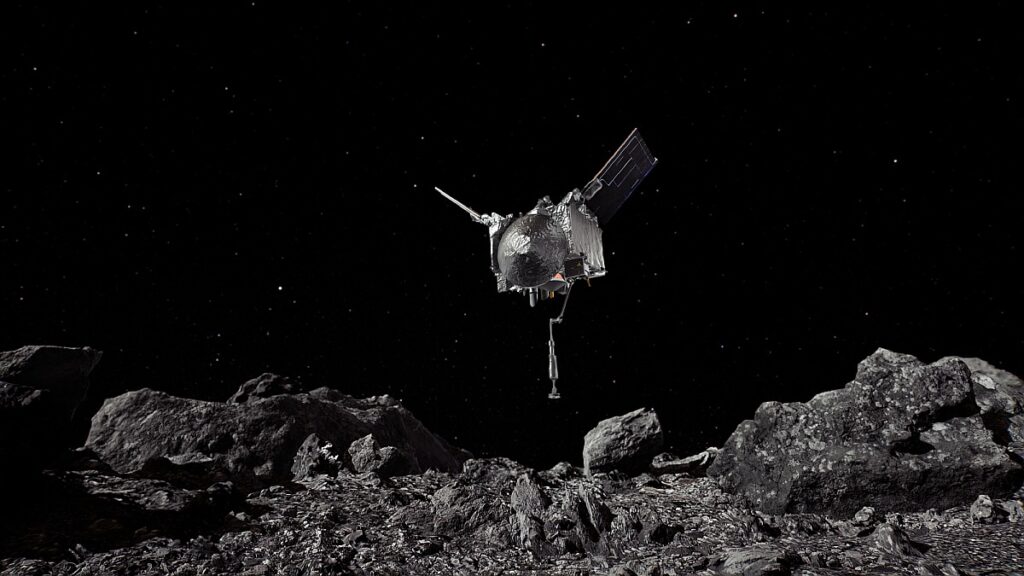
NASAs asteroid sample just revealed new clues to lifes origins
NASA’s groundbreaking OSIRIS-REx mission has yielded remarkable insights into the origins of life and the formation of our solar system, thanks to the pristine samples collected from the near-Earth asteroid Bennu. Three studies published in *Nature Geoscience* and *Nature Astronomy* reveal the presence of essential biological sugars, a novel gum-like substance, and a significant concentration of dust from supernovae, all of which provide critical clues about the building blocks of life and their distribution throughout space. The mission, which cost $800 million and launched in 2016, successfully returned approximately half a cup of Bennu’s rocks and dirt to Earth in 2023, marking the first time the U.S. has collected samples from an asteroid.
One of the most exciting discoveries from this research is the identification of six types of sugars, including ribose and glucose, which are vital for life. Ribose is a key component of RNA, while glucose serves as a primary energy source. This is the first time glucose has been detected in asteroid material, completing the set of essential components necessary for life, including previously identified amino acids and nucleobases. As Danny Glavin, an astrobiologist involved in the study, noted, these findings suggest that the ingredients for life were ubiquitous in the early solar system, potentially enabling life not just on Earth but also on other celestial bodies like Mars and Europa. Interestingly, the absence of deoxyribose, the sugar found in DNA, lends support to the “RNA world” hypothesis, which posits that early life may have relied solely on RNA for genetic information and chemical reactions.
In addition to sugars, researchers uncovered a unique organic substance with a polymer-like structure, akin to “space plastic,” which likely formed before Bennu separated from a larger asteroid. This material may have played a pivotal role in assembling the smaller organic components necessary for life. Furthermore, the analysis of “presolar grains,” tiny dust particles from ancient stars, revealed that Bennu contains six times more supernova dust than any other extraterrestrial material studied to date. This high concentration suggests that Bennu’s parent body formed in a region rich with debris from dying stars, reinforcing the idea that the raw materials for life were widely distributed across the cosmos and delivered to Earth by asteroids. As Glavin expressed, these discoveries enhance optimism regarding the potential for finding life beyond our planet, particularly within our own solar system, as researchers continue to explore the origins and distribution of life’s building blocks.
NASA
‘s asteroid
sample
has revealed new chemical evidence that scientists say sharpens the picture of how the solar system formed and how the ingredients for life spread through
space
.
Three studies published Tuesday in
Nature Geoscience
and
Nature Astronomy
examine pristine material the
OSIRIS-Rex
mission collected from the near-Earth asteroid
Bennu
and delivered to Earth in 2023. Researchers report finding important sugars for biology, a previously unknown gum-like substance, and large amounts of dust that were once forged in supernova explosions.
In one study, a team led by Yoshihiro Furukawa of Tohoku University in Japan found six types of sugars, including ribose, which forms the backbone of RNA — a crucial molecule for life — and glucose, a critical energy source for living creatures. It’s the first time glucose has been detected in pristine
asteroid
material.
Earlier, scientists had already found
amino acids
— the building blocks of proteins — and nucleobases, which help store genetic information. The discovery of sugars completes the set of key components needed to make proteins and genetic material.
“What this means is that these building blocks of life were distributed from the outer solar system all the way into the inner solar system,” said Danny Glavin, an astrobiologist leading the sample organics analysis, in a NASA video. “They were everywhere, ubiquitous, which really makes me more optimistic that not only could these building blocks have enabled life on Earth, but potentially elsewhere — Mars, Europa, the outer solar system.”
SEE ALSO:
An asteroid near Earth could become a temporary moon, then a crash risk
But what the researchers didn’t find might be even more enlightening. Notably absent in the sample was deoxyribose,
the sugar used to build DNA
. That finding adds credibility to the so-called “RNA world” hypothesis, which proposes that the earliest living things relied on RNA alone to store genetic information and drive basic chemical reactions, before DNA and proteins came about.
“This discovery of ribose, in fact, is really important,” Glavin said. “Maybe the origin of life was just a single strand of RNA.”
NASA’s $800 million OSIRIS-Rex mission, short for
Origins, Spectral Interpretation, Resource Identification, and Security Regolith Explorer
, launched in 2016. The robotic spacecraft completed its 4 billion-mile trip when it dropped the capsule from 63,000 miles above Earth onto a patch of Utah desert. It’s the first U.S. mission to grab a sample of an
asteroid
.
These are the most precious space souvenirs NASA has scored since the
Apollo moon rocks
, gathered between 1969 and 1972. The mission succeeded in collecting about
a half-cup of crushed Bennu rocks and dirt
. Though that might not sound like much, scientists expect the material to drive profound discoveries for decades to come.
“What this means is that these building blocks of life … were everywhere, ubiquitous.”
A second study uncovered an unexpected organic substance unlike anything previously seen in
space rocks
. The material, now hardened with age, likely had a gummy consistency when it formed, made of polymer-like chains of nitrogen and oxygen. These complex molecules may have provided the scaffolding to assemble the smaller organic ingredients necessary for life on Earth.
The substance likely formed before Bennu broke off from a larger asteroid that existed at the dawn of the solar system.
“Looking at its chemical makeup, we see the same kinds of chemical groups that occur in polyurethane on Earth, making this material from Bennu something akin to a ‘space plastic,'” said Scott Sandford, a NASA astrophysicist who led one of the
Nature Astronomy
papers.
The Bennu rocks are the most precious space souvenirs NASA has obtained since the Apollo moon rocks.
Credit: Robert Markowitz
The third study focused on so-called “presolar grains,” specks of dust that formed around ancient stars before the birth of the solar system and later got incorporated into asteroids and planets. A team led by NASA’s Ann Nguyen, a planetary scientist, found that the Bennu sample contains six times more dust from
supernovas
than has been measured in any other extraterrestrial material.
That high concentration suggests that Bennu’s parent body formed in a region chock full of debris from dying stars. Though
fluids later altered much of the asteroid’s rock
, the researchers also discovered relatively unchanged pockets, preserving organic material and fragile presolar grains from water damage.
Scientists say these discoveries bolster the idea that the raw ingredients for life were common, widely distributed and delivered to early Earth by asteroids similar to Bennu, helping lay the groundwork for biology long before the planet became habitable.
“I’m becoming much more optimistic that we may be able to find life beyond Earth, even in our own solar system,” Glavin said.