Federal funding cuts are only one problem facing America’s colleges and universities
American colleges and universities, while primarily operating as nonprofits, are increasingly mirroring business practices amid growing financial pressures. The landscape of higher education is evolving, with institutions facing significant challenges, particularly in light of funding cuts initiated during the Trump administration. Major research universities, such as Johns Hopkins University and the Massachusetts Institute of Technology, rely heavily on federal funding, which constituted around 40% of their total revenue in the 2022-23 academic year. However, since January 2025, the termination of federal grants valued between $6.9 billion and $8.2 billion has intensified the financial strain on these institutions. This situation is compounded by declining enrollment rates; colleges have seen an 8.4% drop in student numbers since the peak of 21 million in 2010, prompting schools to compete more aggressively for students by offering lower tuition and financial aid packages.
The economic landscape of higher education is complex. Although many colleges are not highly selective, they still feel the pressure to maintain revenue streams. With fixed costs like staff salaries and maintenance, schools are incentivized to admit more students to fill empty seats, which can be a double-edged sword. As students become more discerning about the value of a college degree, particularly in light of recent changes to federal loan forgiveness programs, universities are tasked with not only attracting students but also proving the worth of their education. The value proposition is further complicated by declining international student enrollment, particularly from China, which has dropped from over 317,000 in 2019 to around 266,000 in 2024-25. This shift, alongside rising competition from universities abroad, places additional financial pressure on American colleges that have traditionally relied on international students to bolster tuition revenue.
In this context, prospective students and their families are encouraged to approach college decisions with a critical eye, much like they would for significant investments such as purchasing a home. Understanding the return on investment for various degree programs is crucial; for example, graduates from the University of Texas at Arlington with degrees in drama earn an average of only $14,933 one year post-graduation, while civil engineering graduates see much higher earnings. As the landscape of higher education continues to shift, transparency about graduate outcomes and employment opportunities will be essential for institutions to regain trust and attract a new generation of students. By asking tough questions and demanding accountability, prospective students can help drive necessary reforms in the higher education sector.
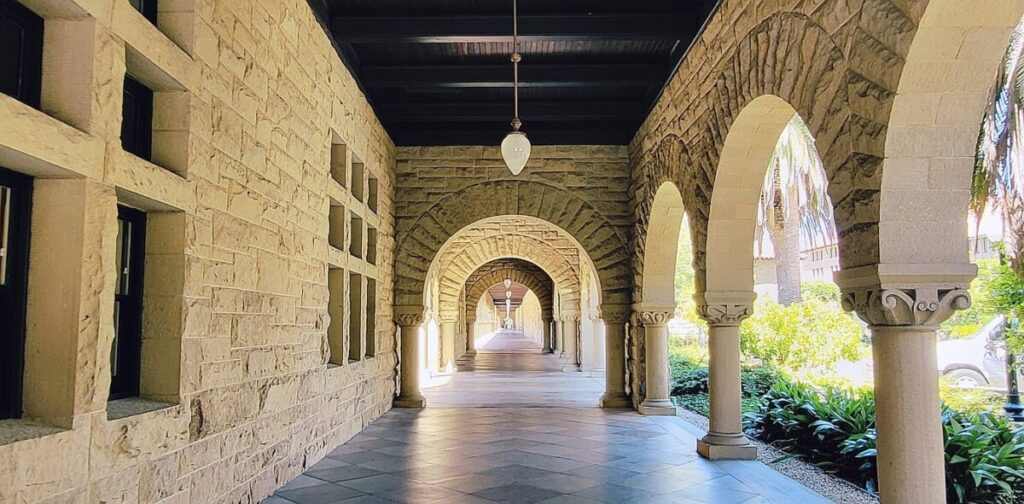
American colleges and universities are often nonprofits, but they often operate in many of the same ways that businesses do.
tc397/iStock/Getty Images Plus
Higher education is under stress. The highest-profile threat has been the Trump administration’s efforts to cut funding to
several universities
,
including Harvard
,
Columbia and
Northwestern
.
Research universities heavily depend on federal money to conduct research and carry out other areas of work. For example, after tuition, federal money allocated
for research
made up 40% of the total revenue for two major research
universities – Johns Hopkins University and Massachusetts Institute of Technology
– in the 2022-23 academic year.
Since January 2025, the
Trump administration has terminated various federal grants
for universities valued between US$6.9 billion and $8.2 billion.
While there’s been a lot of public attention to the federal government’s financial pressure on universities, universities have been experiencing financial pressure from other sources.
Understanding that is key for applicants and parents to understand their bargaining position when choosing whether and where to pursue a college degree.
As scholars of
public administration
and economics and
former university administrators
, we think parents and college applicants need to understand this economic landscape to make smart choices about making such a major investment. Here are four key things to know.
1. Universities are an industry
Most American private colleges and universities are nonprofits, but they still care about revenue. These schools aren’t responsible to shareholders, but they may respond to pressure from alumni, students, employees, donors, boards, the federal government and, if the schools are public universities, state governments.
And like businesses, nonprofit colleges and universities need money. As a result, despite what you might think,
most colleges
are not particularly selective. Though they don’t advertise that fact, hundreds of schools will take any student who meets minimal academic requirements and can pay tuition.
The added cost of teaching additional students is minimal when there are empty seats, so admitting more students can lead to an increase in revenue for most schools.
This is important because colleges’ costs – largely staff salaries and building maintenance – are hard to cut and are mostly fixed. Those costs must be spread across fewer students when there are unfilled seats.
As the number of people
who go to college is declining
, colleges need to respond to people’s skepticism about the value of degrees – but change is difficult
Becoming a smaller school is challenging. If students show less interest in foreign language study and more interest in data science classes, the school cannot have a German language professor suddenly teach data science.
As a result, colleges can become stuck with faculty who teach course students don’t want to take.
Unlike business leaders, who may be rewarded for fixing a failing company by laying off workers, university leaders who eliminate faculty positions become unpopular among their peers. This can reduce their chance to advance their careers at their current universities or switch to a new school.
A college freshman gets her new dorm room ready with her mother at Colorado State University in Fort Collins, Colo., in August 2025.
RJ Sangosti/MediaNews Group/The Denver Post via Getty Images
2. Schools have to work to admit students
Colleges
enrolled 8.4% fewer students
in 2024 than when attendance peaked at 21 million in 2010. As a result, schools must increasingly compete harder to attract students.
One way is to offer a better price, meaning lower tuition. Like most elite schools, Harvard has a listed price of
about $60,000
for tuition alone in one academic year – and nearly $87,000 when food, housing and other services are included.
Few students actually pay that
amount, though the exact percentage getting a discount is not public information.
The average net price a Harvard student paid in 2023-24 was
$17,900, as colleges
offered either financial aid, straight-up discounts or scholarships.
Most schools
engage in this
sort of price discrimination
, the term economists use to describe charging different prices to different customers based on their willingness to pay. In some ways, this is much like airlines selling seats on the same flights at different prices.
3. Schools have a declining foreign customer base
Another enrollment remedy
for colleges and universities to boost tuition revenue has been focusing on admitting international students, who
typically pay full
price.
One-fourth of all
international students
in the U.S. come from China, while another
quarter come from India
.
Most schools have not pursued this strategy of expanding foreign enrollment as aggressively as
Columbia University
, where international students approach
40% of the student body
.
By comparison,
international undergraduate students made up
6% of Columbia’s undergraduate student population in 2000, and 12% in 2011.
But the revenue that international students generate is not a guarantee. Foreign student enrollment declined
17% from fall of 2024 to 2025
.
In part, that’s because of some students’
inability to get a visa
or fear their authorization to study in the U.S.
will be revoked
.
Rising competition from universities in
Australia, Canada and the United Kingdom
, combined with stricter U.S. visa policies and geopolitical tensions with China, have led to
rapid declines
in Chinese students enrolling at American schools.
The number of Chinese
undergraduate and graduate students
attending U.S. colleges and universities has dropped from 317,299 in 2019 to 265,919 in the 2024-25 school year.
This change has increased the financial strain on American colleges and universities, many of which have grown accustomed to having large numbers of international students who pay their own way.
Chinese graduates throw their hats into the sky at their graduation from Columbia University in May 2016.
Xinhua/Li Muzi via Getty Images
4. The value of the product is in question
With recent changes to
federal loan forgiveness programs
, some students and their parents are questioning
the value of a college degree
.
Just
22% of Americans
said in 2024 that a college degree is worth the cost, if a student has to borrow money to get it.
The University of Texas system – made up of nine universities and four medical schools –
shares information
on the average income of graduates for every degree program after graduation.
In the case of the University of Texas at Arlington, the
average salary for a drama, theater arts and stagecraft major
is $14,933 one year after graduation. This amount goes up to $39,608 10 years after graduation, resulting in a negative $324,210 return on the price of college over that first decade.
Of course, some degrees pay off. A University of Texas at Arlington graduate with a degree in civil engineering earns an average of $67,920 one year after college and $105,377 10 years after graduation, demonstrating a positive return on investment of
$1.15 million
.
We believe that universities and colleges should reform to address the next generation’s uncertainty about higher education.
College applicants should be asking hard questions. What is the data on graduates’ earnings compared to the cost of their program? Where are graduates employed?
If more people treated buying a college degree with the same care they use to buy their first home – an equivalent investment – colleges and universities would feel pressure to become more transparent for students and parents. They would also become more aligned with the rapidly evolving demands of the workplace.
The authors do not work for, consult, own shares in or receive funding from any company or organization that would benefit from this article, and have disclosed no relevant affiliations beyond their academic appointment.


