Lasting peace in Ukraine may hinge on independent monitors – yet Trump’s 28-point plan barely mentions them
In recent developments surrounding the protracted conflict in Ukraine, U.S. President Donald Trump’s administration has intensified diplomatic efforts by introducing a comprehensive 28-point peace proposal. On December 2, 2025, Trump’s envoys, Steve Witkoff and Jared Kushner, met with Russian President Vladimir Putin, marking a significant moment in nearly four years of fluctuating negotiations. However, the path to achieving a lasting peace remains fraught with uncertainty. While the proposed deal aims to halt the ongoing violence, experts warn that the real challenge lies in sustaining and implementing any agreement reached. Historical evidence suggests that many peace accords collapse soon after they are signed, often leading to renewed violence.
Research from the University of Notre Dame’s Peace Accords Matrix indicates that effective third-party monitoring is crucial in managing mistrust between conflicting parties. Their findings reveal that peace agreements with built-in mechanisms for monitoring and verification can increase success rates by over 29%, significantly reducing the likelihood of resumed hostilities in the first five years post-agreement. Drawing on their experiences in Colombia, where they monitored the 2016 peace deal between the government and the Revolutionary Armed Forces of Colombia (FARC), the team emphasizes the importance of independent monitoring bodies. These entities can assess compliance, engage with various stakeholders, and identify areas needing attention, thereby fostering a more robust peace process.
For Ukraine, establishing a clear and independent monitoring mandate is vital. The failure of the Minsk agreements—designed to quell fighting in the Donbas region—underscores the necessity for a well-defined monitoring framework capable of addressing violations effectively. The previous monitoring mission lacked the authority to enforce compliance, allowing Russia to exploit loopholes. Additionally, the evolving nature of conflict necessitates that monitoring efforts extend beyond traditional military engagements to include cybersecurity threats, which have been a persistent issue throughout the war. The involvement of a diverse range of third-party actors, including local civil society organizations, can enhance the legitimacy and effectiveness of monitoring efforts. By prioritizing these elements from the outset, the international community can signal its commitment to ensuring a sustainable peace in Ukraine, differentiating the current approach from past failures.
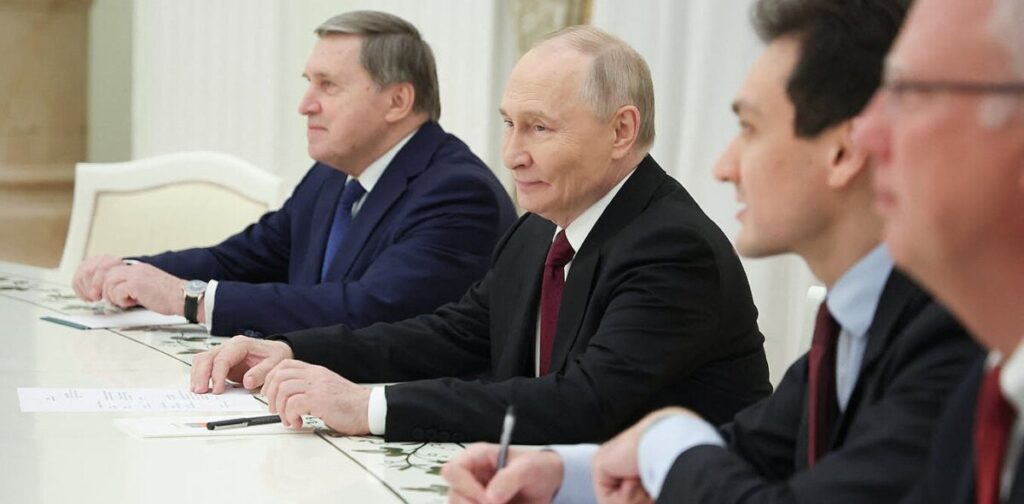
Russian President Vladimir Putin attends a meeting with U.S. representatives Steve Witkoff and Jared Kushner (both not pictured) on Dec. 2, 2025.
Alexander Kazakov/ AFP via Getty Images
Start-and-stop negotiations for a deal to end the war in Ukraine have been injected with new intensity after U.S. President Donald Trump’s administration unveiled
a 28-point peace proposal
.
It is far from clear whether the latest
flurry of diplomacy
, which on Dec. 2, 2025, saw Trump’s envoys Steve Witkoff and Jared Kushner
meet with Russian President Vladimir Putin
, will force the warring parties any closer to a resolution in the grinding, nearly four-year-long conflict.
Yet even if negotiators can broker a welcome deal to stop the current fighting, they will immediately be faced with the challenges of sustaining and implementing it.
And many peace accords fall apart quickly and are
followed by new waves of violence
.
Our
research
as scholars focusing on peace monitoring and Ukraine suggests that one thing is key in managing mistrust between parties involved in any peace plan: multifaceted third-party monitoring.
The University of Notre Dame’s
Peace Accords Matrix
, – the
largest collection of implementation data
on intrastate peace agreements – shows clear evidence that built-in safeguards, such as monitoring and verification by third parties, can increase success rates in peace agreements
by more than 29%
– meaning no resumption of fighting in the first five years of an accord.
Peace Accords Matrix team members regularly provide support to ongoing peace processes and in the design and implementation of agreements. We believe the program’s research could be applied to the challenges facing future peace in Ukraine.
Lessons from Colombia
The Peace Accords Matrix team’s
work in Colombia
is instructive on how an effective monitoring mechanism could be shaped in Ukraine.
Notre Dame’s Kroc Institute for International Peace Studies was tasked with carrying out on-the-ground and real-time monitoring of the
2016 peace deal
between the Colombian government and the Revolutionary Armed Forces of Colombia, better known as FARC.
The Peace Accords Matrix’s 30-staffer team in Colombia has served as an independent body monitoring 578 peace accord commitments in areas such as rural reform, political participation and securing justice for victims. These staffers have, for example, traveled to reintegration camps to speak to former combatants in verifying
United Nations data
on the number of weapons surrendered and destroyed, among other accord targets.
Armed with quantitative and qualitative data, matrix members regularly meet with stakeholders – including victims, former guerrillas and politicians – to
assess the status of implementation and to identify areas
that need to be prioritized.
Over the past decade, the work has highlighted when and where there has been insufficient progress in boosting livelihoods and leadership
opportunities for women
and
ethnic minorities
.
This reporting has prompted new attention toward implementing these obligations laid out in the accord.
What does Ukraine need?
Our experience shows that when it comes to securing a lasting peace in Ukraine, it is imperative that a mandate for robust monitoring is spelled out clearly and realistically. To be effective, a monitoring body must have the independence to
fully report and document violations
.
That’s just the first step. Consider the
failure of the Minsk agreements
, signed in 2014 and 2015 to end fighting in the Donbas region of Ukraine between Ukrainian troops and Russian-backed separatists.
Those accords failed in part because the monitoring mission, led by the Organization for Security and Co-operation in Europe, lacked any defined mechanism to press for any action or change once violations – and there were many –
had been established
.
While the organization’s Special Monitoring Mission
may have contributed
to some temporary de-escalation in the Donbas conflict, ultimately Russia was able to exploit the
weaknesses of the Minsk agreements
and commit hostile acts, laying the groundwork for the current war.
Research suggests that monitoring works best when it extends beyond physical ceasefire lines to encompass the cyber domain, too. Moscow has carried out
extensive cyberattacks
on Ukrainian infrastructure throughout the conflict. Such aggression could continue invisibly despite a ceasefire, allowing one party to pre-position capabilities for future attacks or to conduct espionage without triggering traditional monitoring mechanisms.
Unlike conventional military activities, such cyber hostilities are inherently difficult to monitor and verify. A comprehensive monitoring arrangement will need to grapple with these threats, requiring carefully designed information-sharing protocols with the few international actors capable of
monitoring the online activities of both sides
.
A bigger tent
A key element of ensuring a durable peace is building trust between conflict parties over time. With the right mandate and authority, monitoring bodies can create space and structure for follow-on dialogue as implementation obstacles emerge. Durable
peace processes require
fine-tuning to adapt to changing political realities on the ground.
The war in Ukraine has dragged on for nearly four years.
Russian Defense Ministry/Anadolu via Getty Images
Involving public stakeholders in the implementation of a peace agreement is another key element,
our research shows
. Third-party monitoring can provide the framework for soliciting outside perspectives and participation.
Over the past decade, Ukrainian nongovernmental organizations have steadily developed expertise in monitoring and accountability in areas including elections, procurement, humanitarian operations and
potential war crime activity
.
Building on this experience by involving broader segments of civil society – including the country’s highly trusted
faith-based communities
– would strengthen the legitimacy of third-party monitoring in the eyes of the domestic public and assuage uneasy acceptance of any peace accord.
Ready on Day 1
While the United Nations and other multinational bodies are well placed to support some core monitoring tasks, those planning for peace now should, we believe, consider the benefits of involving a wider range of third-party actors. Indeed, many Ukrainians are skeptical that
institutions of which Russia is a member
can carry out their work with the needed independence.
As we have seen with the Peace Accords Matrix’s experience, the involvement of an independent research institution can open up new possibilities for monitoring.
And ideally, monitoring missions should be ready to go from Day 1, or as close to that as possible.
Comparative research
has shown that the speed at which a monitoring mission starts its work can affect its relevance. Yet, many monitoring bodies are wracked by delays due to lack of planning, support and resources.
The current 28-point peace plan being mulled by Russia and Ukraine makes only a
brief mention of monitoring
, by a “Peace Council, headed by President Donald J. Trump.”
But our experience shows that prioritizing third-party monitoring and delving into the details of how it would be carried out – even as ceasefire negotiations are ongoing – can help ensure the
success of a future deal
.
It would serve as a vital signal to Ukrainians that, unlike the aftermath of the Minsk agreements, this time the
international community
will continue to engage and act to ensure their country’s peace.
The authors do not work for, consult, own shares in or receive funding from any company or organization that would benefit from this article, and have disclosed no relevant affiliations beyond their academic appointment.


