State Department ‘immediately’ halts all Afghan passport visas following deadly National Guard attack
In a significant and controversial move, the U.S. Department of State has announced a pause on all visa issuances for individuals traveling on Afghan passports, following a tragic shooting incident in Washington, D.C., that targeted National Guard members. The suspect, 29-year-old Rahmanullah Lakanwal, an Afghan national, has been charged with first-degree murder after the ambush resulted in the death of West Virginia National Guard Army Spc. Sarah Beckstrom and left U.S. Air Force Staff Sgt. Andrew Wolfe critically injured. Lakanwal, who had been vetted by the CIA and granted asylum earlier this year under the Trump administration, is now at the center of a national security debate that has sparked a swift response from government officials.
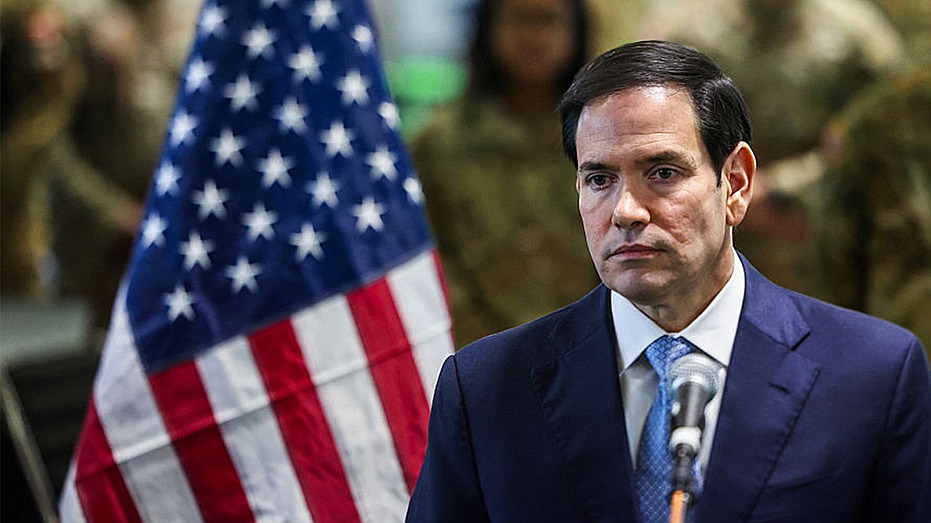
Secretary of State Marco Rubio confirmed the visa pause on social media, emphasizing the priority of national security in light of the attack. This decision has drawn sharp criticism from organizations like AfghanEvac, a nonprofit dedicated to the relocation and resettlement of Afghan allies. AfghanEvac President Shawn VanDiver condemned the move as a violation of federal law, arguing that it unfairly punishes an entire community based on the actions of one individual. He accused the administration of using the incident to further a long-standing agenda against the Afghan Special Immigrant Visa program, which was designed to assist those who supported U.S. efforts in Afghanistan. The fallout from this incident raises critical questions about the vetting processes for asylum seekers and the broader implications for Afghan nationals in the U.S., particularly in the wake of heightened scrutiny from the government.
The timing of the visa pause coincides with former President Trump’s remarks regarding the vetting process, where he expressed skepticism about the effectiveness of the current system, suggesting that some individuals may pose risks once in the U.S. His comments reflect a growing concern among officials about the potential for violence among certain groups of immigrants. In response, U.S. Citizenship and Immigration Services (USCIS) Director Joseph B. Edlow announced a comprehensive review of green cards issued to immigrants from “high-risk” countries, including Afghanistan. This decision not only affects Afghan nationals but also extends to individuals from other nations deemed problematic, raising alarms about the future of immigration policy and the treatment of those who have risked their lives to support U.S. missions abroad. As the situation unfolds, the balance between national security and humanitarian obligations remains a contentious issue, with advocates urging for a more nuanced approach that does not compromise the safety and dignity of vulnerable populations.
https://www.youtube.com/watch?v=DDghpaE4WjU
The Department of State has paused all visas for individuals traveling on
Afghan passports
after an attack in Washington, D.C., Wednesday targeting National Guard members.
Rahmanullah Lakanwal, 29, an Afghan national, was charged with first-degree murder among other counts related to the ambush, which has since claimed the life of West Virginia National Guard Army Spc. Sarah Beckstrom and critically wounded U.S. Air Force Staff Sgt. Andrew Wolfe, 24.
Lakanwal was vetted by the CIA in Afghanistan and granted final asylum approval under President
Donald Trump’s
administration earlier this year, multiple sources told Fox News Digital.
“The Department of State has IMMEDIATELY paused visa issuance for individuals traveling on Afghan passports,” the agency wrote in an announcement on social media. “The Department is taking all necessary steps to protect U.S. national security and public safety.”
LAW ENFORCEMENT RESPONDING AFTER 2 NATIONAL GUARD MEMBERS SHOT NEAR WHITE HOUSE
Secretary of State
Marco Rubio
also took to X to share the news.
“President Trump’s
State Department
has paused visa issuance for ALL individuals traveling on Afghan passports,” Rubio wrote in a post. “The United States has no higher priority than protecting our nation and our people.”
U.S.-based Afghanistan allies relocation and resettlement nonprofit AfghanEvac denounced Friday’s decision, calling the administration’s move a “violation of federal law.”
“It appears Secretary Rubio is attempting to shut down the Afghan Special Immigrant Visa program in direct violation of federal law and standing court orders. He is seemingly acting at the direction of President Trump and Stephen Miller, and there is no doubt this is the outcome they have been driving toward for months,” AfghanEvac President Shawn VanDiver said in a statement.
“They are using a single violent individual as cover for a policy they have long planned, turning their own intelligence failures into an excuse to punish an entire community and the veterans who served alongside them.”
VANCE’S PAST WARNINGS REIGNITE AFTER AFGHAN NATIONAL NAMED AS SUSPECT IN DC GUARD SHOOTING
The new policy comes less than a day after the media questioned Trump about how the attack could have taken place after successful vetting.
“I mean, he went nuts, and that happens. It happens too often with these people,” Trump told reporters from his
Mar-a-Lago club in Florida
. “There was no vetting or anything. … We have a lot of others in this country, and we’re going to get them out, but they go cuckoo. Something happens to them.”
Trump noted “when it comes to asylum, when they’re flown in, it’s very hard to get them out. No matter how you want to do it, it’s very hard to get them out. But we’re going to be getting them all out now.”
U.S. Citizenship and Immigration Services (USCIS) Director Joseph B. Edlow also announced Thursday that, at Trump’s direction, there would be a ”
full-scale, rigorous reexamination
” of every green card issued to immigrants from “every country of concern.”
The 19 countries deemed “high-risk” by the USCIS include Afghanistan, Burma, Chad, the Republic of the Congo, Equatorial Guinea, Eritrea, Haiti, Iran, Libya, Somalia, Sudan, Yemen, Burundi, Cuba, Laos, Sierra Leone, Togo, Turkmenistan and Venezuela.