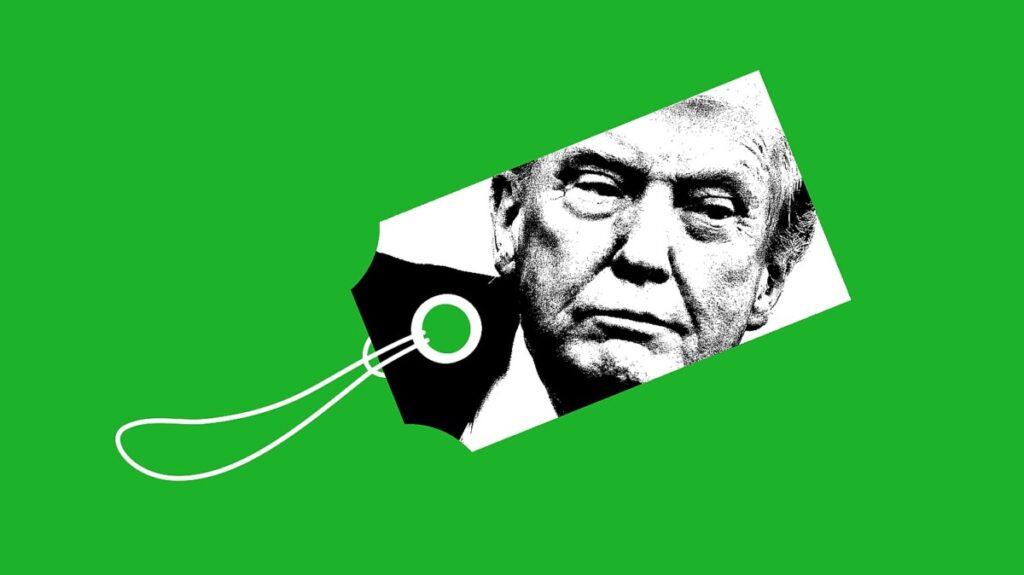
Donald Trump’s War on Christmas
As the holiday season approaches, American families are bracing for a significant increase in their spending, projected at around $1 trillion this November and December—an approximate 4% rise from last year. However, this festive spending comes with a caveat: families are facing higher prices across the board, from artificial Christmas trees and ornaments to toys and holiday apparel. This inflationary trend is largely attributed to President Donald Trump’s ongoing trade war, which has disrupted supply chains and led to fewer options available for consumers. Many retailers have either ceased shipping to the U.S. or gone out of business altogether, exacerbating the challenges for holiday shoppers. While the average family is expected to spend an additional $132 due to tariffs, the broader economic context reveals a concerning reality: wage growth is stagnating, unemployment is on the rise, and consumer confidence is dwindling.
The impact of the trade war has been particularly harsh on small businesses. Unlike larger corporations, which have the resources to navigate the complexities of tariffs—such as sourcing products from countries with lower tariffs—small firms often lack the financial flexibility to adapt. Many small businesses are struggling to maintain their inventory and have resorted to raising prices or laying off employees. Nichole MacDonald, owner of Sash Bag, exemplifies this plight; she has been unable to import her products from India due to exorbitant tariffs, which has forced her to cancel orders and consider changing suppliers. A recent survey highlighted that 71% of small-business owners anticipate a decline in revenue this holiday season, with only 5% planning to hire or expand their operations.
Compounding these challenges are broader economic issues, including a government shutdown that has negatively impacted the Washington, D.C. metro area, and rising concerns over artificial intelligence and economic growth that have led many companies to halt hiring or even reduce their workforce. As households tighten their budgets in response to these economic pressures, retailers find it increasingly difficult to attract customers without raising prices. The end result is a holiday season marked by uncertainty and financial strain, leaving many small businesses feeling as though they are fighting an uphill battle against an increasingly hostile economic landscape. As MacDonald poignantly remarks, “Are they literally trying to make it impossible to run a business?” The answer seems to resonate with many small business owners facing the harsh realities of this holiday season.
https://www.youtube.com/watch?v=HGHjbD3XcUs
President Donald Trump might not be ruining Christmas, but he’s making it more expensive. American families are
expected to spend
$1 trillion on gifts and other goods this November and December, roughly 4 percent more than they spent last year. But they’re paying more for everything—artificial trees, ornaments, toys, novelty sweaters. They have fewer
options
to choose from when they log on to Etsy and browse upscale boutiques. Some retailers have stopped shipping to the United States, and some have gone out of business—all thanks to Trump’s globe-engulfing and pointless trade war.
Holiday shoppers might not notice that things are a little less merry and bright than they would have been otherwise. The average family is expected to spend $132
more this year
because of tariffs—not nothing, but not enough to break the bank, either. But wage growth has
been cooling
. The unemployment rate has been rising. Consumer confidence has been
falling sharply
. Rent, co-pays, mortgages, car payments, and utilities remain brutal for average families to afford—and health insurance is about to get radically
more expensive
. In recent weeks, customers have started shopping at cheaper outlets, buying fewer items, and putting off major expenses.
Shoppers are looking for deals, but it has not been easy for stores to provide them. When Trump kicked off the trade war early this year, the White House argued that foreign exporters would pay the fees slapped on goods from nearly every American trading partner. Instead, the government
has collected
$118 billion and counting from domestic importers.
Big companies have managed to dodge and shuffle in response: pressing their
suppliers for discounts
, stocking up and storing
products
to get ahead of the tariffs, rerouting their supply lines, buying merchandise from lightly tariffed countries. Retailers including Walmart have managed to keep their sales figures up and hold costs down, for the most part. Yet many companies have run out of warehoused items, leaving them no choice but to raise sticker prices or cut into their profits.
Small companies have had fewer options. Many small-scale businesses lack the time, bandwidth, or travel budget to find new overseas suppliers—especially when big importers are doing so too. Boutiques don’t have the bargaining power to press manufacturers and shipping companies for discounts. Single-person firms cannot take out loans to buy up stock and move it to the United States before a trade levy hits. Many small firms cannot change their product lines, either.
As a result, the trade war has helped large companies squeeze out their smaller competitors. Many small firms have closed down, fired workers, watched their sales fall apart, or worse. In a
new survey
, 71 percent of small-business owners said they expect the trade war to depress their revenue this holiday season. Only 5 percent said they were hiring and expanding their business.
The holiday season “is our Super Bowl,” Nichole MacDonald told me. “This is when we’re supposed to make all of our money.” MacDonald runs the Sash Bag, a company that manufactures and sells specialty
handbags
. Like many retailers, the Sash Bag generates an outsize share of its annual sales and profits leading up to Christmas. But this year, she said, she is “literally terrified.” Batches of her bags are stuck in two warehouses in India because she cannot produce the $430,000 needed to cover the import tariffs on the goods. “That product is done,” she said. “It’s sewn. It’s perfectly saleable—beautiful leather, beautiful Sash bags, sitting in India for months because I don’t have the budget to bring it here.”
In addition, she has let go some of her employees, raised prices by 10 to 15 percent, canceled special orders, and considered finding new suppliers. But “people don’t understand” how hard that is to do, MacDonald told me, when you have “your own proprietary product, not something a manufacturer has already invented or already created.”
Struggling firms aren’t the economy’s only problem. The government shutdown has depressed the Washington, D.C., metro economy. Concerns about artificial intelligence and the growth outlook have led businesses of all sizes to quit hiring, and some have started firing workers too. Households have noticed those changes and are limiting their spending. Yet companies don’t have much room to win back customers by cutting prices, in many cases—because of the tariffs, which are at their highest effective rate in close to a century. The country is in a stagflationary, queasy state as the year comes to a close, and it’s not doing much for anyone’s holiday spirit.
“Are they literally trying to make it impossible to run a business?” MacDonald asked me. Because “that’s how it feels.”


