Nguyen: Put consumers in drivers’ seat of health care
In a significant development, Congress has resolved its impasse to reopen the government, yet the core issue behind the recent shutdown remains unresolved: the renewal of expiring subsidies for insurance premiums under the Affordable Care Act (ACA). While Democrats continue to push for these subsidies, Republicans have proposed an alternative approach aimed at reforming health care funding. This proposal involves contributions to Americans’ health savings accounts (HSAs) or flexible spending accounts (FSAs), allowing individuals more direct control over their health care spending. Although this idea has not yet materialized, it represents a potential shift from the traditional top-down health care model that has characterized U.S. politics for decades.
The essence of the Republican proposal is to empower consumers by providing them with the option to allocate funds toward their insurance premiums or use them directly for health care services. This consumer-centric approach could encourage patients to become more engaged in their health care decisions, ultimately fostering competition among providers and helping to contain soaring health care costs. By allowing individuals to manage their own funds, the proposal aims to address the ongoing issue of health care inflation, which has persisted even as innovation in the sector has stagnated. Historically, government initiatives like the ACA, Medicare, and Medicaid have focused on short-term cost-cutting measures that often stifle competition and innovation, leading to unintended consequences such as the consolidation of medical practices and the closure of rural hospitals.
The Republican proposal for HSAs and FSAs could represent a pivotal first step toward a more sustainable health care system. By enabling patients to pay cash for services—often significantly cheaper than insurance-reimbursed rates—this approach could lead to more informed consumer choices and a reduction in unnecessary bureaucratic hurdles. Furthermore, retaining unspent medical funds for future expenses would incentivize individuals to be more judicious with their health care spending. By fostering a marketplace that responds to consumer demand and emphasizing pricing transparency, this model could help restore a sense of agency to patients, moving away from the bureaucratic oversight that has increasingly dominated the health care landscape. Ultimately, the bipartisan dialogue on health care reform must embrace this bottom-up approach, empowering consumers and promoting innovation to ensure that health care remains both accessible and affordable for all Americans.
https://www.youtube.com/watch?v=nScfLtE6RZA
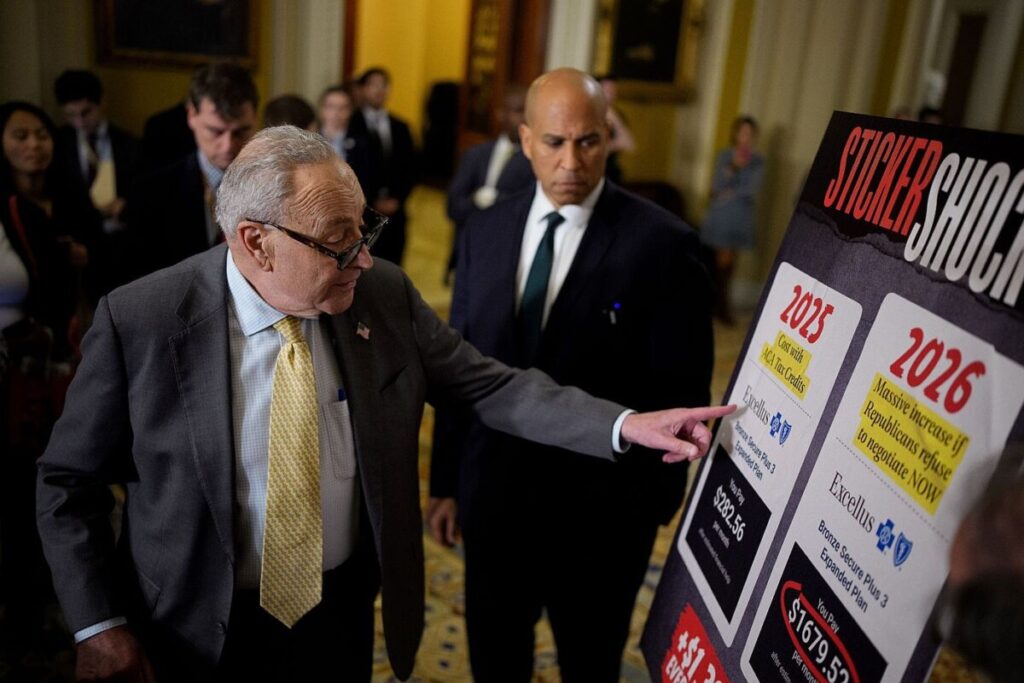
Congress ended its impasse to reopen the government, but the Democrats’ reason for the shutdown remains unresolved: the renewal of expiring subsidies for insurance premiums under the Affordable Care Act.
Republicans offered an olive branch to end the standoff by proposing to make payments into Americans’ health savings accounts or flexible spending accounts. Although this idea was not realized, the proposal should not be forgotten as the parties work on compromises for long-term government appropriations.
The Republicans’ plan would allow individuals to choose between putting the money toward insurance premiums or spending it directly on health care. This offers a refreshing change from the top-down approach to health care that has dominated both political parties for generations.
Moving away from insurance subsidies and directing payments to taxpayers would serve as a first step toward empowering Americans to make their own health care choices and leverage their self-interest to contain health care costs. Americans would be incentivized to curb spending and would have the upper hand in bargaining for lower costs with providers. This approach offers a path for opening up access to health care while addressing the underlying problem plaguing our system: health care inflation.
When politicians talk about containing the escalating health care costs, they take a top-down approach that fails fundamentally to change the face of American health care. Just as the Biden administration negotiated for price caps on prescription drugs used by Medicare recipients, President Donald Trump recently negotiated a price drop for anti-obesity drugs. These gimmicks grabbed headlines but did little to address a persistent paradox: while health care costs vastly eclipse inflation, health care innovation has flattened.
The Affordable Care Act, Medicare and Medicaid suffer from similar flaws as top-down health reform initiatives that expand access at the cost of our system’s long-term viability. Their reimbursements have focused on short-term cost-cutting that ends up stifling competition, crippling innovation, and raising long-term costs. The Affordable Care Act’s cost-cutting centerpiece is higher government reimbursements for “coordinated care,” with the well-intended logic that economies of scale through integrated networks are the best way to expand access and cut short-term costs. This approach has “worked” inasmuch as reimbursement incentives have led small physician practices to merge en masse and prompted private equity to buy out freestanding medical centers. The result is regional oligopolies and closures of rural hospitals. For every dollar saved through consolidation, more is being spent on the endlessly growing compliance red-tape that buries doctors in paperwork and distracts them from patient care.
We don’t have to settle for a managed decline of our health care system. Both parties have said they want to make the Affordable Care Act “better.” The Republicans’ proposal of contributions to health savings accounts or flexible spending accounts would represent a first concrete step.
Hospitals often charge several times more for procedures when insurance or government reimbursement is used than when paid in cash. Those with annual HSA or FSA grants could pay the lower prices and contain health care costs. Instead of letting insurers dictate which procedures patients can and cannot access, the government would let patients take ownership over their health care.
The government can also motivate people to be good stewards by allowing them to retain unspent medical funds for future health expenses. By working through consumer advocacy groups to negotiate cash prices and by taking advantage of policies on pricing transparency, patients would have a personal stake in their health and be more informed consumers.
Empowering consumers may also incentivize the marketplace to innovate based on consumer demand and help hospital systems better discern which services are valued.
The past two generations of health care have been about gradual socialization of medicine, which has subordinated both patients and doctors to faceless bureaucrats and insurers. But the recent Republican proposal to direct supplemental payments to HSAs and FSAs, coupled with transparency requirements for health care costs, offer a way to put patients back in the driver’s seat. Our leaders would do well by empowering consumers to make health care choices and by embracing a bottom-up approach to cost management and innovation. This is the best pathway to making care both accessible and affordable.
Kim-Lien Nguyen is an associate professor of medicine at David Geffen School of Medicine at UCLA and a practicing cardiologist./Tribune News Service


