Did a NASA telescope really ‘see’ dark matter? Strange gamma-rays spark bold claims, but scientists urge caution
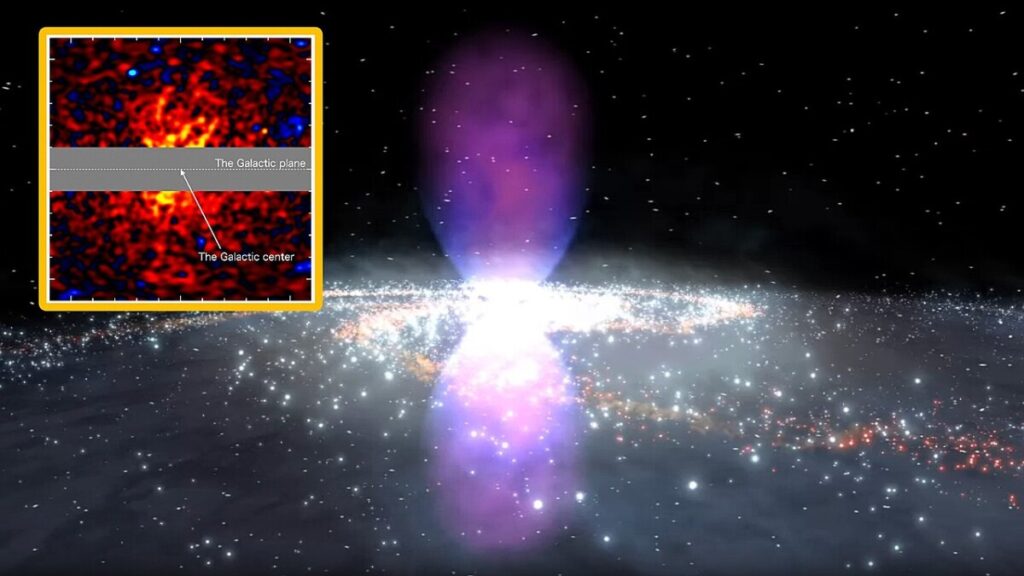
A groundbreaking study utilizing data from the NASA Fermi Space Telescope has proposed the existence of a halo of dark matter surrounding the center of our Milky Way galaxy. This intriguing finding stems from observations of high-energy gamma rays emitted from the region, which suggest a concentration of dark matter that could provide insights into the elusive substance that constitutes about 27% of the universe’s mass-energy content. Dark matter, which does not emit, absorb, or reflect light, remains one of the most enigmatic components of the cosmos, and this new evidence could potentially reshape our understanding of galactic formation and evolution.
The research team analyzed gamma-ray emissions from the galactic center, specifically looking for signals indicative of dark matter interactions. They found an unusual concentration of gamma rays that could be attributed to the annihilation of dark matter particles, a phenomenon predicted by various theoretical models. However, the researchers caution that while these observations are compelling, further investigation and validation are necessary to confirm the presence of a dark matter halo. They emphasize the need for additional data and analysis to rule out alternative explanations, such as cosmic rays or other astrophysical processes that could mimic the signals attributed to dark matter.
This study adds to a growing body of evidence suggesting that dark matter plays a crucial role in the structure and dynamics of galaxies. For instance, previous observations have indicated that dark matter influences the rotation curves of galaxies, leading to the conclusion that there is far more mass present than what is visible. The potential discovery of a dark matter halo at the center of our galaxy could provide a significant step towards unraveling the mysteries of dark matter, offering a clearer picture of its distribution and effects in our universe. As scientists continue to explore this fascinating frontier, the findings from the Fermi Space Telescope may pave the way for new theories and experiments aimed at understanding one of the universe’s greatest mysteries.
A new study says observations from the NASA Fermi space telescope suggest a halo of dark matter around the center of our galaxy, but more information is needed to confirm the result.


