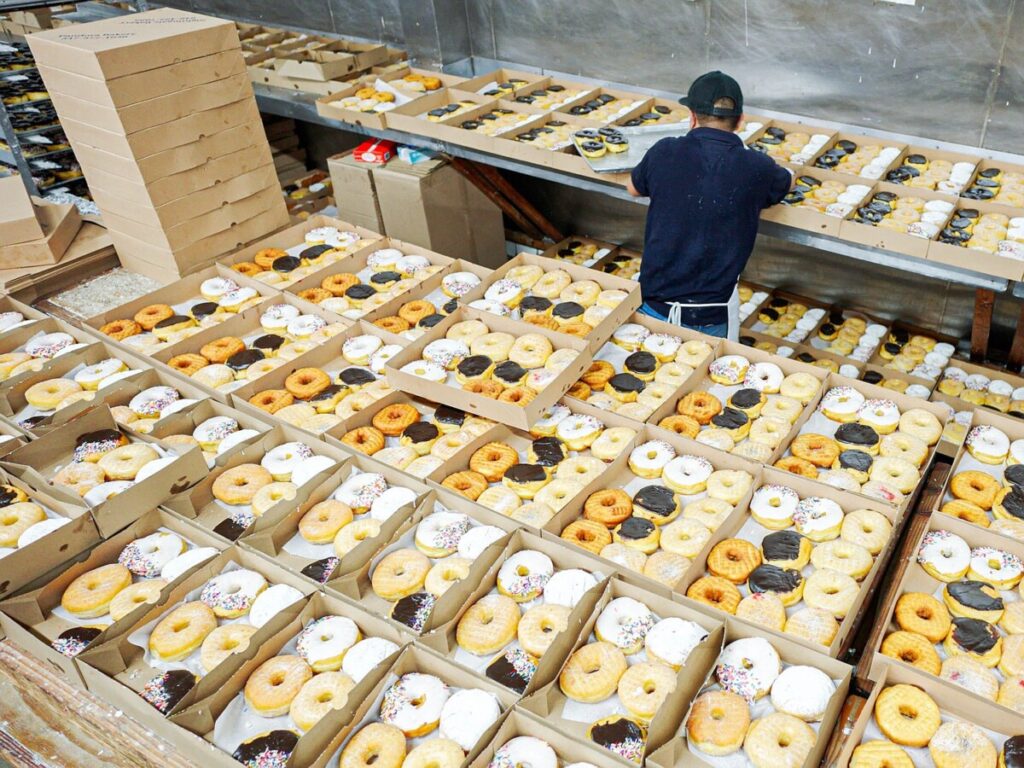
Inside the factory where NYC’s food carts get ingredients
Every morning, the bustling streets of New York City come alive with the aroma of freshly brewed coffee and baked goods, as countless New Yorkers flock to chrome breakfast carts for their daily fix of bagels, doughnuts, and caffeine. These mobile vendors play a crucial role in fueling the city’s workforce, providing not just sustenance but also a sense of community and convenience for those navigating the urban landscape. However, beneath this beloved morning ritual lies a fragile industry that faces significant challenges, including reliance on large suppliers, the demands of early-morning shifts, and a convoluted permit system that has sparked protests among vendors.
The breakfast cart industry is not only essential for the daily routines of many New Yorkers but also serves as a microcosm of broader issues related to small business operations in the city. Vendors often struggle with the complexities of obtaining permits, which can be both costly and difficult to navigate. This has led to street protests as vendors advocate for more equitable regulations that would allow them to operate without the constant fear of fines or confiscation of their carts. With the recent election of Mayor Zohran Mamdani, who has expressed a commitment to supporting small businesses and highlighted the importance of street vendors in his campaign, there is renewed hope for reform in this area. Mamdani’s administration may bring fresh perspectives and policies aimed at addressing the challenges faced by these vendors, potentially reshaping the landscape of street vending in New York City.
As the new administration takes office, the future of breakfast carts and their operators hangs in the balance. The need for a more supportive regulatory framework is urgent, as these vendors not only contribute to the city’s economy but also reflect its diverse culture. By acknowledging the vital role of street vendors, the city can foster a more inclusive environment that allows these small businesses to thrive. This ongoing dialogue about the importance of street vendors will be crucial in shaping policies that not only protect their livelihoods but also enhance the vibrancy of New York City’s streets, making them a better place for all residents and visitors alike.
Every morning, New Yorkers stop at chrome breakfast carts for coffee, bagels and doughnuts — a routine that fuels the city’s workforce. But behind that ritual is a fragile industry built on large suppliers, early-morning shifts, and a permit system that has prompted street protests. With Mayor-elect Zohran Mamdani, who highlighted vendors in his campaign videos, preparing to take office, the system is getting fresh attention.
Read the original article on
Business Insider


