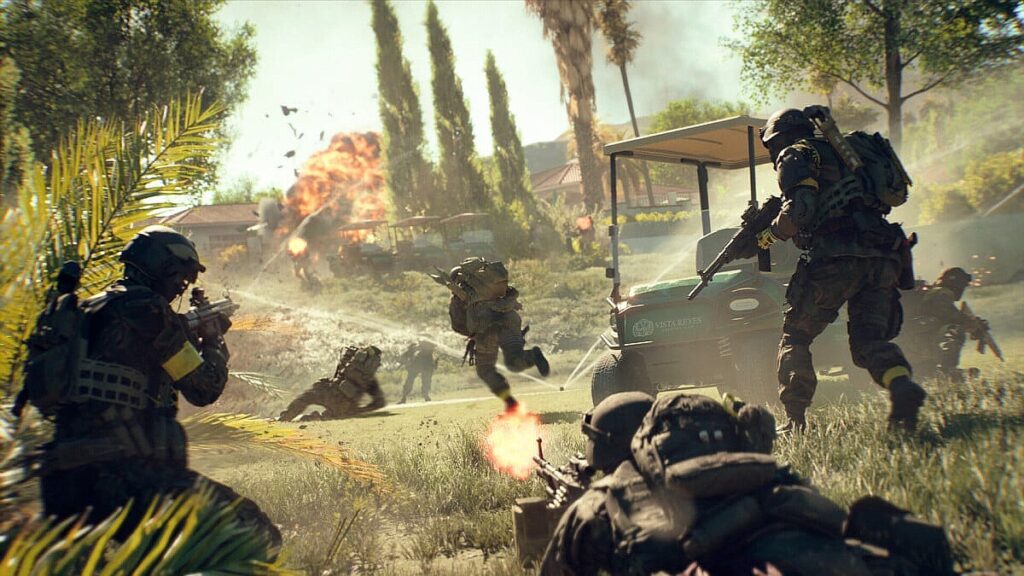
EA says its Battlefield 6 anti-cheat system is a big time success
**Cheaters Aren’t Prosperous in Battlefield 6: EA’s Javelin Anti-Cheat Software Makes Strides**
In a significant development for the gaming community, EA’s latest military shooter, *Battlefield 6*, has emerged as one of the top-selling games of 2025, challenging the long-standing dominance of *Call of Duty*. With a surge in popularity, the game has attracted a vast player base, inevitably leading to an increase in cheating as some players seek unfair advantages in competitive play. However, a recent report from EA reveals promising news for those concerned about game integrity: the company has successfully curbed cheating on PC through its custom anti-cheat software, Javelin. This innovative system has reportedly reduced the Match Infection Rate (MIR)—a metric that indicates the percentage of multiplayer matches featuring cheating—to just 2%. This means that an impressive 98% of matches are now free from cheating, a significant achievement given the game’s massive player count.
The effectiveness of Javelin highlights the ongoing battle against cheating in online gaming, a concern that has plagued multiplayer games for years. DICE, the developers behind *Battlefield 6*, have utilized the MIR metric to assess the impact of their anti-cheat measures, and the results speak volumes. While a 2% cheating rate may still seem substantial in absolute terms, it is a remarkable improvement that underscores the efficacy of Javelin in maintaining fair play. Gamers can now enjoy a more balanced competitive environment, which is crucial for the longevity and enjoyment of *Battlefield 6*. Nonetheless, the implementation of Javelin has not been without controversy. As a kernel-level anti-cheat system, it operates at a deep level within users’ PCs, raising concerns about privacy and security among players. This debate is not new; many PC gamers have expressed unease over software that requires such extensive access to their systems.
The discussion surrounding Javelin encapsulates the delicate balance between ensuring a fair gaming experience and respecting players’ privacy. While the need to combat cheating is undoubtedly vital for maintaining the integrity of multiplayer games, the implications of kernel-level access cannot be overlooked. EA’s approach appears to be effective, but it also invites scrutiny and dialogue about the lengths to which developers should go to protect their games. As *Battlefield 6* continues to thrive in the competitive gaming landscape, the ongoing conversation about anti-cheat measures will likely remain a focal point for both players and developers alike.
Cheaters apparently aren’t prospering in
Battlefield 6
.
EA’s latest large-scale military shooter has been
one of the best-selling games of 2025
so far, in a way that has actually
challenged
Call of Duty
‘s dominance
in that category. That means lots of people are playing it, so lots of people are trying to use cheats to get an unfair advantage over the competition. The good news, at least from a competitive standpoint, is that
a new report from EA itself
says it’s been able to curb the large majority of cheaters on PC using its custom Javelin anti-cheat software.
The developers at DICE are evaluating this using a metric called Match Infection Rate, which roughly measures the percentage of multiplayer matches that include some form of cheating. According to DICE, Javelin has reduced the MIR to a mere 2 percent, meaning that 98 percent of
Battlefield 6
matches on PC maintain the game’s integrity. Given how well the game has sold, 2 percent is probably still a significant number of matches to include cheaters, but it’s also only 2 percent.
SEE ALSO:
‘Battlefield 6’ is nonsense in the best and worst ways
Of course, this isn’t without at least a tiny bit of controversy. Javelin is a kernel-level anti-cheat system, which means it has access to the deepest parts of your PC. A
lot
of people don’t like this for privacy and security reasons; it’s been a hot topic of debate among PC gamers for years now.
It’s easy to sympathize with both sides of the debate, honestly. Stopping cheaters is an essential part of maintaining a large multiplayer game’s fun for players, and kernel-level anti-cheat software (at least in this case) appears well-equipped to do so. On the other hand, one could very easily argue that no video game needs access to the deepest recesses of your operating system. Still, EA’s system here seems to be working.