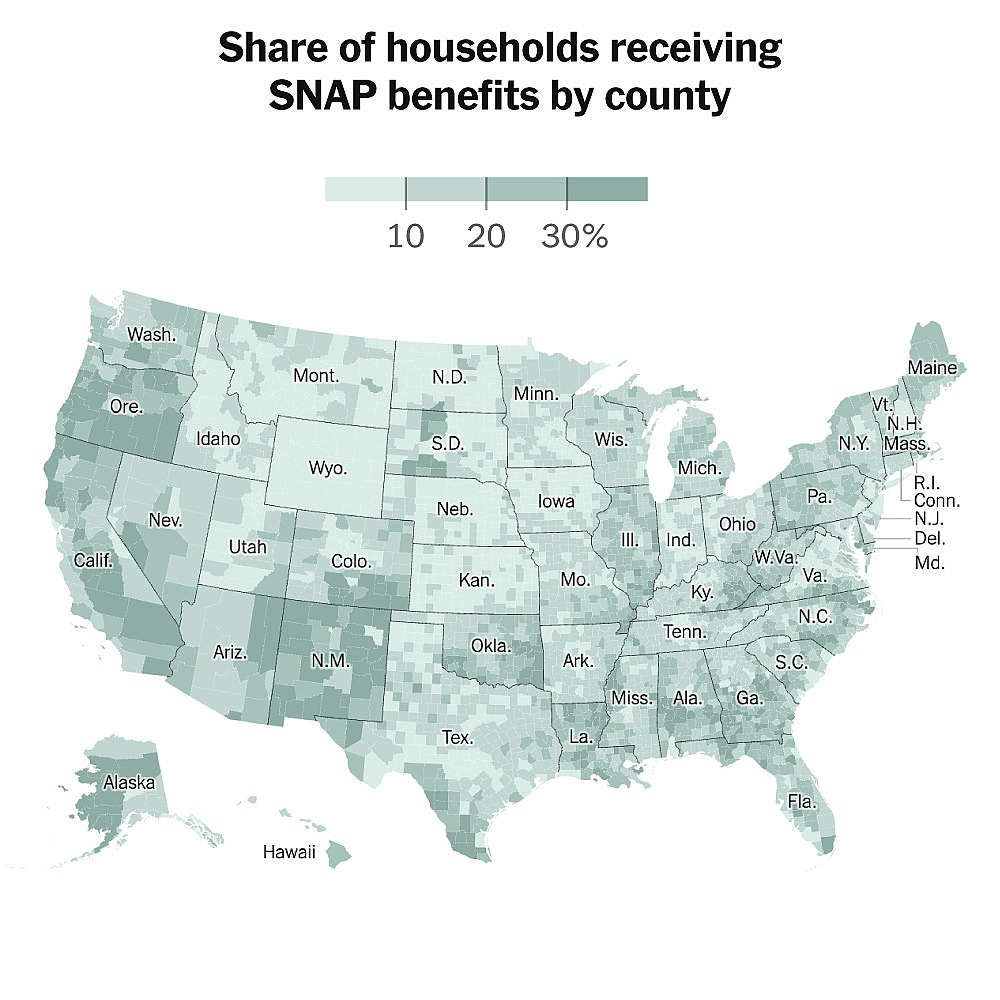
SNAP Map: Here’s Who Will Be Affected by Disruptions to Food Aid
The Supplemental Nutrition Assistance Program (SNAP), commonly known as food stamps, plays a crucial role in providing nutritional support to millions of Americans. Recent data reveals that a significant number of SNAP recipients reside in districts represented by Democratic lawmakers, highlighting a notable trend in the political geography of food assistance. According to the U.S. Department of Agriculture, approximately 42 million individuals benefit from SNAP, with the program serving as a vital safety net for low-income families across the nation. This demographic distribution raises questions about the political implications of food assistance programs and their impact on policy-making.
Despite the concentration of SNAP recipients in Democratic districts, the program’s reach extends far beyond party lines, affecting communities in every corner of the country. For instance, rural areas, often represented by Republican lawmakers, also rely heavily on SNAP benefits. A report from the Center on Budget and Policy Priorities indicates that states with higher poverty rates, regardless of their political affiliations, tend to have a greater number of SNAP recipients. This underscores the program’s essential role in combating food insecurity, which is a pressing issue that transcends political boundaries.
Moreover, the importance of SNAP has been further highlighted during economic downturns, such as the COVID-19 pandemic, which saw an increase in enrollment due to rising unemployment and financial instability. The program not only alleviates hunger but also stimulates local economies, as every dollar spent on SNAP generates approximately $1.50 in economic activity, according to the USDA. This multifaceted impact of SNAP illustrates the program’s significance in fostering food security and economic resilience, making it a critical topic for policymakers on both sides of the aisle. As discussions around food assistance continue, it is essential to recognize the bipartisan nature of hunger and the collective responsibility to address it effectively.
More SNAP recipients live in Democratic districts. But the program touches every corner of the country.