Goldberg: Trump’s vaccine legacy at risk from own camp
In a recent statement, President Donald Trump emphasized the effectiveness of vaccines, declaring, “You have vaccines that work. They just pure and simple work. They’re not controversial at all.” This assertion comes amidst ongoing discussions and decisions from the Department of Health and Human Services (HHS) that have complicated the national dialogue surrounding vaccines. Historically, President Trump has recognized vaccines as a vital component of public health, advocating for both access to vaccines and the individual’s right to choose whether to use them. His administration has consistently supported informed decision-making in vaccination, allowing families to consult with healthcare professionals about their options.
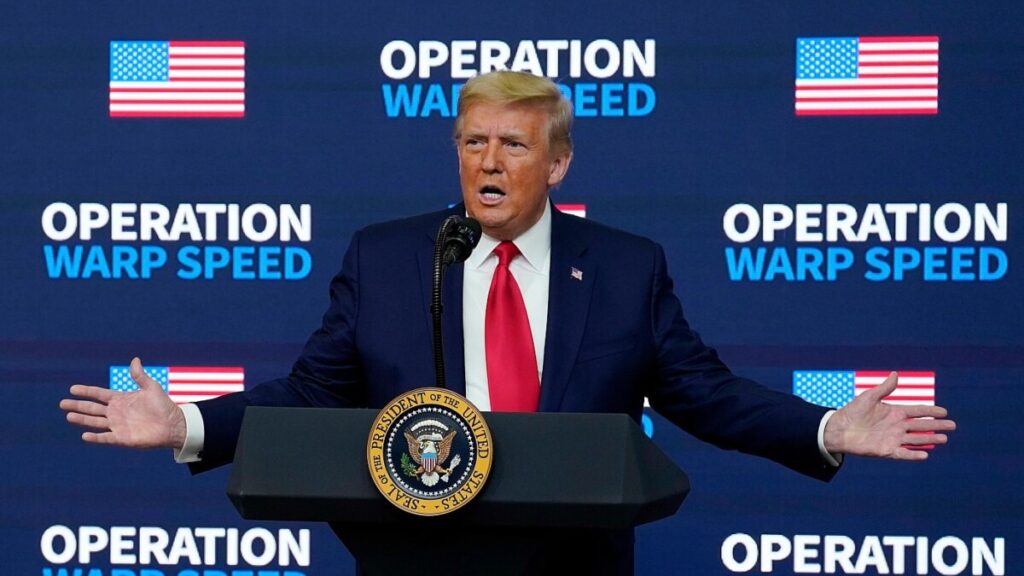
Trump’s commitment to vaccination is underscored by his leadership during the COVID-19 pandemic, where he spearheaded Operation Warp Speed, an unprecedented initiative that accelerated the development and distribution of COVID-19 vaccines. The effort resulted in the rapid availability of vaccines in less than a year, a feat that Trump hailed as a “medical miracle.” This swift response not only addressed an immediate public health crisis but also paved the way for further medical research, as evidenced by a recent study showing that mRNA COVID-19 vaccines significantly improved survival rates in cancer patients. This finding highlights the broader potential of vaccines to bolster the immune system and fight various diseases, reinforcing Trump’s message that science and individual freedom can coexist harmoniously.
As Trump advocates for vaccine access and personal choice, he remains critical of mandates that might coerce individuals into vaccination. He believes that public health initiatives are more effective when they respect personal autonomy and encourage informed consent. The Centers for Disease Control and Prevention (CDC) corroborates the importance of vaccination, noting that routine childhood vaccines have prevented over one million deaths and 500 million illnesses among children since 1994. However, the current landscape is threatened by figures like Secretary of Health and Human Services Robert F. Kennedy Jr., who has been accused of spreading misinformation about vaccines. Trump’s stance is clear: fostering a culture of trust in science and empowering individuals to make their own health decisions is essential for progress. In a climate often overshadowed by misinformation, his message remains vital: vaccines are effective, and the freedom to choose is fundamental to public health and societal advancement.
“You have vaccines that work. They just pure and simple work. They’re not controversial at all.”
That recent remark from President Trump might have surprised some, given the recent decisions at HHS to limit access to certain vaccines — moves that have muddied the national conversation about these life-saving medical tools.
But the president’s record is clear. From the start, he’s recognized vaccines as a key line of defense in protecting public health — while maintaining that Americans should have the freedom to decide whether to use them. He’s long supported both access and informed choice, ensuring families can make science-based vaccination decisions in consultation with their doctors.
Time and again, President Trump has hailed vaccines as one of the great triumphs of modern medicine. Last year, he praised the polio vaccine, which virtually eliminated a disease that once claimed the lives of over 1,800 Americans and paralyzed another 16,300 every year. Born nine years before the first polio vaccine, the president remembers the fear that gripped families as outbreaks spread during his early childhood — and has spoken of friends who were affected. As he noted, the “moment they took that vaccine, it ended.”
Just as earlier generations conquered polio, President Trump faced a once-in-a-lifetime test of scientific and political resolve during the COVID-19 pandemic. Through Operation Warp Speed, President Trump led the single most ambitious vaccine development effort in American history, helping to bring COVID-19 vaccines to the public faster than anyone thought possible.
Vaccine development can typically take between 10 and 15 years. With President Trump at the helm, the United States secured a COVID-19 vaccine in less than one — an extraordinary accomplishment he rightly regarded as a “medical miracle.”
That landmark achievement continues to pay off. In a recent analysis of nearly 1,000 people with lung or skin cancer, researchers found that those who received mRNA COVID-19 vaccines had a median survival almost double that of those who weren’t COVID-19 vaccinated. They described the vaccine as acting like a “siren,” activating the entire body’s immune system to recognize and attack tumors — a promising lead in the fight against cancer.
This medical breakthrough affirms the larger principle at the heart of President Trump’s leadership — freedom and science can advance together. He’s been equally clear that deciding whether to be vaccinated should remain a decision made with one’s doctor — not dictated by Washington. That’s precisely why he’s opposed to COVID vaccine mandates. People are more likely to accept public health guidance when they feel informed and respected, rather than coerced.
Choice and access go hand in hand. Americans who want vaccines shouldn’t face barriers to getting them. Pharmacies, clinics, and hospitals need to be stocked and staffed so that parents can protect their children and adults can safeguard themselves and their families. The Centers for Disease Control and Prevention estimates that routine childhood vaccines prevented more than one million deaths and 500 million illnesses among children born between 1994 and 2023. Those who want that protection should always have access to it.
Trump’s message is straightforward and consistent: science and freedom aren’t opposites — they’re complementary. A government that trusts its citizens encourages responsible choices and real progress. His approach empowered scientists to innovate at warp speed and empowered Americans to decide what’s right for themselves.
Unfortunately, figures like Secretary of Health and Human Services Robert F. Kennedy Jr. threaten to undermine that legacy — spreading fear and misinformation about vaccines and mRNA science that endanger public trust and progress alike. While President Trump champions both innovation and individual choice, Kennedy’s attacks risk turning back the clock on medical advances.
In a time when misinformation and political theater often drown out facts, President Trump’s message matters more than ever. Vaccines work. Freedom works. Together, they’re saving lives — and proving that America thrives when we lead with both science and liberty.
Robert Goldberg, PhD, is co-founder and vice president of the Center for Medicine in the Public Interest.


