Tom Stoppard — Sparkling, Tony- and Oscar-Winning Writer for the Stage and Screen — Dies at 88
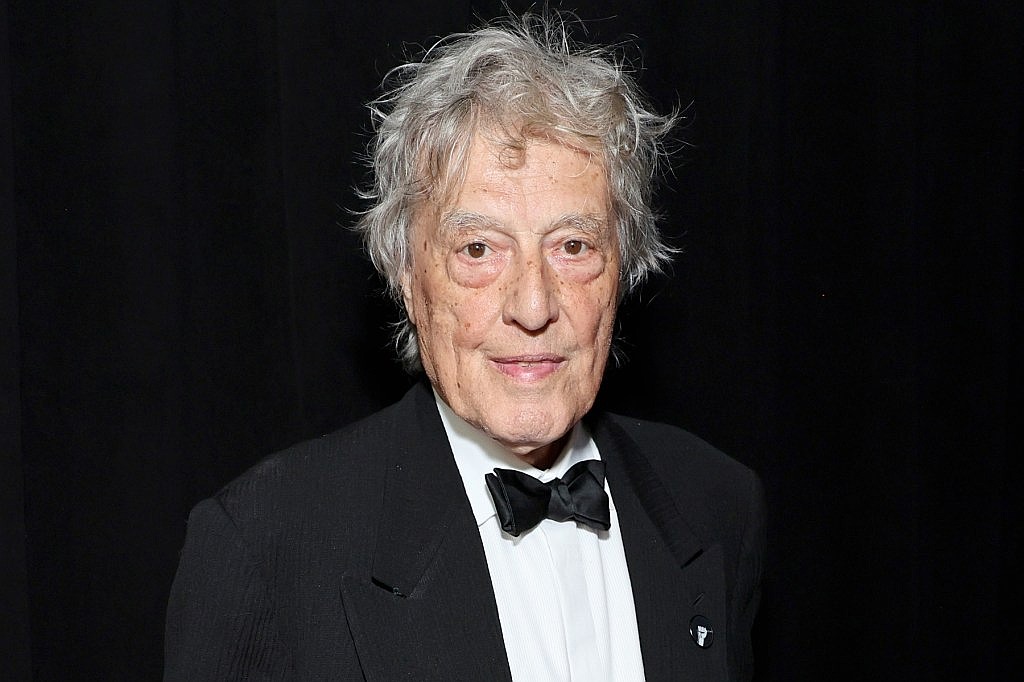
Tom Stoppard, the celebrated British playwright known for his intellectual wit and innovative storytelling, has passed away at the age of 88. Born Tomás Sträussler in 1937 in Czechoslovakia, Stoppard’s life was marked by upheaval from an early age, as his family fled the Nazis and later the Japanese invasion during World War II. After settling in postwar Britain, he embraced English culture and launched his career as a journalist before transitioning into playwriting. Over a six-decade career, he became a luminary in the theater world, with works that seamlessly blended humor, philosophy, and the complexities of human experience. His statement of intent—”One writes because one loves writing”—echoes throughout his body of work, which includes classics like *Rosencrantz and Guildenstern Are Dead*, *Arcadia*, and *Leopoldstadt*, the latter of which explores his own Jewish heritage and the impact of the Holocaust on his family.
Stoppard’s contributions to theater were not just prolific but groundbreaking. He won five Tony Awards for Best Play and was awarded an Academy Award for the screenplay of *Shakespeare in Love*. His plays often featured intricate narratives and a unique blend of tragedy and humor, challenging audiences to engage deeply with themes of existence, love, and history. Biographer Hermione Lee noted that Stoppard’s genius lay in his ability to intertwine language, knowledge, and emotion, creating works that resonate on multiple levels. His commitment to free speech and human rights advocacy further underscored his influence beyond the stage. In a poignant tribute, Mick Jagger described Stoppard as “a giant of the English theater,” highlighting his dazzling wit and the musicality that permeated his scripts.
As news of his passing spread, tributes poured in from across the arts community, with theaters in London’s West End planning to dim their lights in his honor. Stoppard’s legacy is not only defined by his accolades but also by the profound impact he had on theater and literature, inspiring generations of playwrights and audiences alike. His ability to capture the human condition through cleverly constructed dialogue and layered storytelling ensures that his works will continue to be celebrated and studied for years to come.
https://www.youtube.com/watch?v=C8LEnhvnVD8
British playwright
Tom Stoppard
, a playful, probing dramatist who won an Academy Award for the screenplay for 1998’s
Shakespeare in Love
, has died. He was 88.
Related
Gone But Not Forgotten: Musicians We Lost in 2025
The 50 Best Rock Bands (Full List): Staff Picks
How to Watch ‘Christmas Everyday,’ Brandy’s New Lifetime Holiday Movie That Co-Stars Her Daughter Sy’Rai
In a statement Saturday (Nov. 29), United Agents said the Czech-born Stoppard — often hailed as the greatest British playwright of his generation — died “peacefully” at his home in Dorset in southwest England, surrounded by his family.
“He will be remembered for his works, for their brilliance and humanity, and for his wit, his irreverence, his generosity of spirit and his profound love of the English language,” they said. “It was an honor to work with Tom and to know him.”
Rolling Stones
frontman
Mick Jagger
was among those paying tribute, calling Stoppard “a giant of the English theater, both highly intellectual and very funny in all his plays and scripts.
“He had a dazzling wit and loved classical and popular music alike which often featured in his huge body of work,” said Jagger, who produced the 2001 film
Enigma
, with a screenplay by Stoppard. “He was amusing and quietly sardonic. A friend and companion and I will always miss him.”
Theaters in London’s West End will dim their lights for two minutes on Tuesday (Dec. 2) in tribute.
Brain-teasing plays
Over a six-decade career, Stoppard’s brain-teasing plays for theater, radio and screen ranged from Shakespeare and science to philosophy and the historic tragedies of the 20th century.
Five of them won Tony Awards for best play:
Rosencrantz and Guildenstern Are Dead
in 1968;
Travesties
in 1976;
The Real Thing
in 1984;
The Coast of Utopia
in 2007 and
Leopoldstadt
in 2023.
Stoppard biographer Hermione Lee said the secret of his plays was their “mixture of language, knowledge and feeling. … It’s those three things in gear together which make him so remarkable.”
The writer was born Tomás Sträussler in 1937 to a Jewish family in Zlín in what was then Czechoslovakia, now the Czech Republic. His father was a doctor for the Bata shoe company, and when Nazi Germany invaded in 1939 the family fled to Singapore, where Bata had a factory.
In late 1941, as Japanese forces closed in on the city state, Tomas, his brother and their mother fled again, this time to India. His father stayed behind and later died when his ship was attacked as he tried to leave Singapore.
In 1946 his mother married an English officer, Kenneth Stoppard, and the family moved to threadbare, postwar Britain. The 8-year-old Tom “put on Englishness like a coat,” he later said, growing up to be a quintessential Englishman who loved cricket and Shakespeare.
He did not go to university but began his career, aged 17, as a journalist for newspapers in Bristol, southwest England, and then as a theater critic for
Scene
magazine in London.
Tragedy and humor
He wrote plays for radio and television including
A Walk on the Water
, televised in 1963, and made his stage breakthrough with
Rosencrantz and Guildenstern Are Dead
, which reimagined Shakespeare’s
Hamlet
from the viewpoint of two hapless minor characters. A mix of tragedy and absurdist humor, it premiered at the Edinburgh Fringe Festival in 1966 and was staged at Britain’s National Theatre, then run by Laurence Olivier, before moving to Broadway.
A stream of exuberant, innovative plays followed, including meta-whodunnit
The Real Inspector Hound
(first staged in 1968);
Jumpers
(1972), a blend of physical and philosophical gymnastics, and
Travesties
(1974), which set intellectuals including James Joyce and Vladimir Lenin colliding in Zurich during World War I.
Musical drama
Every Good Boy Deserves Favor
(1977) was a collaboration with composer Andre Previn about a Soviet dissident confined to a mental institution — part of Stoppard’s long involvement with groups advocating for human rights groups in the Soviet Union and Eastern Europe.
He often played with time and structure.
The Real Thing
(1982) was a poignant romantic comedy about love and deception that featured plays within a play, while
Arcadia
(1993) moved between the modern era and the early 19th century, where characters at an English country house debated poetry, gardening and chaos theory as fate had its way with them.
The Invention of Love
(1997) explored classical literature and the mysteries of the human heart through the life of the English poet A.E. Housman.
Stoppard began the 21st century with
The Coast of Utopia
(2002), an epic trilogy about pre-revolutionary Russian intellectuals, and drew on his own background for
Rock ’n’ Roll
(2006), which contrasted the fates of the 1960s counterculture in Britain and in Communist Czechoslovakia.
The Hard Problem
(2015) explored the mysteries of consciousness through the lenses of science and religion.
Free-speech champion
Stoppard was a strong champion of free speech who worked with organizations including PEN and Index on Censorship. He claimed not to have strong political views otherwise, writing in 1968: “I burn with no causes. I cannot say that I write with any social objective. One writes because one loves writing, really.”
Some critics found his plays more clever than emotionally engaging. But biographer Lee said his “very funny, witty plays” contained a “sense of underlying grief.”
“People in his plays … history comes at them,” Lee said at a British Library event in 2021. “They turn up, they don’t know why they’re there, they don’t know whether they can get home again.”
That was especially true of his late play
Leopoldstadt
, which drew on his own family’s story for the tale of a Jewish Viennese family over the first half of the 20th century. Stoppard said he began thinking of his personal link to the Holocaust quite late in life, only discovering after his mother’s death in 1996 that many members of his family, including all four grandparents, had died in concentration camps.
“It would be misleading to see me as somebody who blithely and innocently, at the age of 40-something, thought, ‘Oh, my goodness, I had no idea I was a member of a Jewish family,’” he told
The New Yorker
in 2022. “Of course I knew, but I didn’t know who they were. And I didn’t feel I had to find out in order to live my own life. But that wasn’t really true.”
Leopoldstadt
premiered in London at the start of 2020 to rave reviews; weeks later all theaters were shut by the COVID-19 pandemic. It eventually opened in Broadway in late 2022, going on to win four Tonys.
Dizzyingly prolific, Stoppard also wrote many radio plays, a novel, television series including
Parade’s End
(2013) and many film screenplays. These included the dystopian Terry Gilliam comedy
Brazil
(1985), the Steven Spielberg-directed war drama
Empire of the Sun
(1987), the Elizabethan rom-com
Shakespeare in Love
(1998) — for which he and Marc Norman shared a best adapted screenplay Oscar — the code breaking thriller
Enigma
and the Russian epic
Anna Karenina
(2012).
He also wrote and directed a 1990 film adaptation of
Rosencrantz and Guildenstern Are Dead
and translated numerous works into English, including plays by dissident Czech writer Václav Havel, who became the country’s first post-Communist president.
Stoppard also had a sideline as a Hollywood script doctor, lending sparkle to the dialogue of movies including
Indiana Jones and the Last Crusade
and the Star Wars film
Revenge of the Sith
.
He was knighted by Queen Elizabeth II in 1997 for his services to literature.
He was married three times: to Jose Ingle, Miriam Stern — better known as the health journalist Dr. Miriam Stoppard — and TV producer Sabrina Guinness. The first two marriages ended in divorce. He is survived by four children, including the actor Ed Stoppard, and several grandchildren.