Future of Gerrymandering? Here’s How Weird Things Could Look.
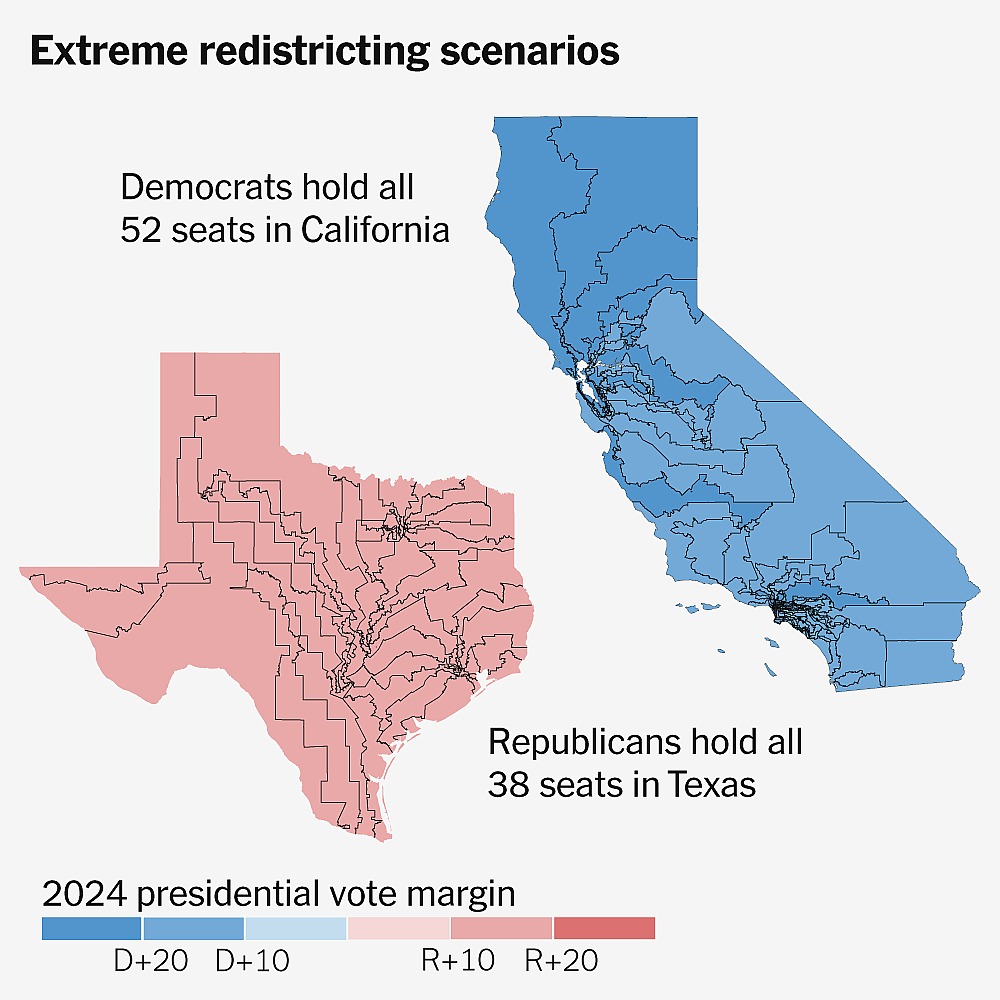
In a rapidly changing political landscape, the concept of extreme electoral maps is gaining traction, raising concerns about potential gerrymandering and its implications for democracy. As various states across the U.S. consider new redistricting laws, the possibility of creating highly partisan districts has become more feasible than ever. These extreme maps, while often seen as unlikely, are now being discussed in legal and legislative contexts, suggesting that the boundaries of political representation could be pushed further than they have been in the past. This shift is fueled by advancements in data analytics and demographic modeling, enabling political parties to draw voting districts that significantly favor their candidates.
Recent discussions surrounding these maps highlight the delicate balance between fair representation and partisan advantage. For instance, some states have proposed redistricting plans that could result in districts shaped like bizarre, twisting lines, designed to pack voters of a particular party into a single district while diluting their influence in surrounding areas. This practice, known as gerrymandering, has historically raised ethical questions about the integrity of the electoral process. As legal frameworks evolve, states may find themselves with the green light to pursue such extreme mapping strategies, potentially leading to a new era of political polarization.
The implications of these developments are profound. If states adopt extreme redistricting practices, the consequences could extend beyond mere political advantage. Voter disenfranchisement, reduced competition, and increased polarization could all result from a system that prioritizes party loyalty over equitable representation. As citizens and advocacy groups rally for fairer redistricting processes, the conversation around these extreme maps serves as a critical reminder of the ongoing struggle to maintain the integrity of democracy. The future of electoral maps may hinge on the choices made in the coming months, making it essential for voters to remain engaged and informed about the redistricting process in their states.
These extreme maps may not be likely, but they might soon be legal, with temptations to go further than ever before.