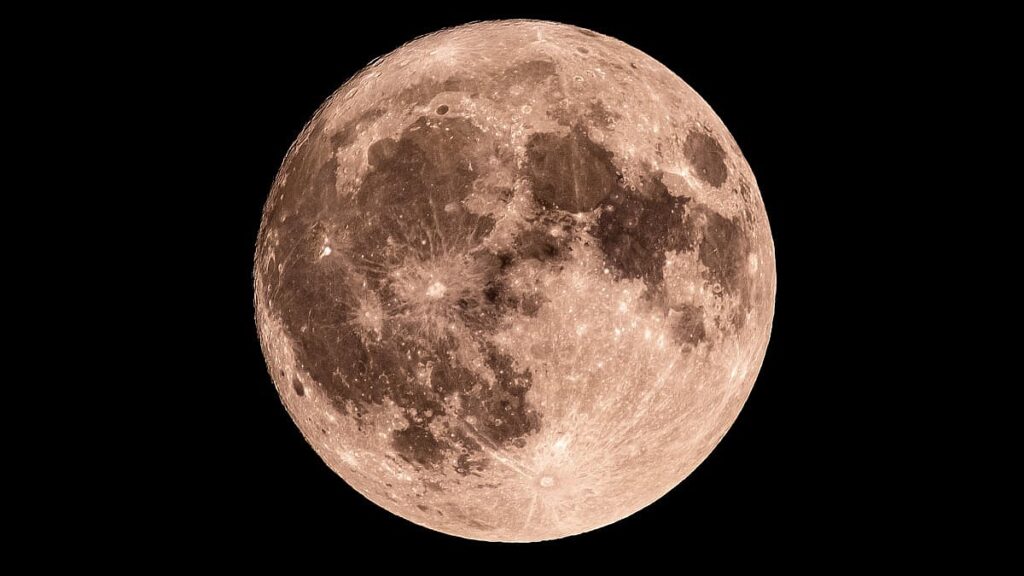
Moon phase today: What the moon will look like on November 29
As we approach the December full moon, excitement is building for skywatchers and astronomy enthusiasts alike. Currently, on November 29, the moon is in the Waxing Gibbous phase, meaning that 63% of its surface is illuminated. This phase is a beautiful precursor to the full moon, which will occur on December 4 and will be the final supermoon of the year. Supermoons happen when the moon is at its closest point to Earth in its orbit, resulting in a larger and brighter appearance in the night sky. The last full moon, which took place on November 5, has set the stage for this spectacular celestial event.
For those gazing up at the moon tonight, there is much to behold. Without any visual aids, observers can spot the Mare Tranquillitatis and Mare Serenitatis, two of the moon’s prominent “seas,” as well as the famous Tycho Crater, known for its distinctive rays. Binoculars will enhance the experience, allowing viewers to see additional features such as the Endymion, Alphonsus, and Clavius Craters. For the more ambitious stargazers equipped with telescopes, the Apollo 15 and 16 landing sites, along with the Fra Mauro Highlands, are within reach, providing a glimpse into humanity’s exploration of the moon.
Understanding the moon’s phases is key to appreciating its beauty and significance. NASA explains that the lunar cycle lasts approximately 29.5 days and consists of eight distinct phases, each representing a different stage in the moon’s orbit around Earth. Starting from the New Moon, when the moon is invisible, the phases progress through the Waxing Crescent, First Quarter, and Waxing Gibbous, before culminating in the Full Moon. After this peak, the moon transitions through the Waning Gibbous, Third Quarter, and Waning Crescent phases, returning to darkness. This cycle not only influences the night sky but also has cultural and natural significance, affecting tides and inspiring countless myths and legends throughout history. As we await the brilliance of the full moon, let us take a moment to appreciate the magic of the Waxing Gibbous phase and all it has to offer.
We’re in the last lunar phase before the full moon, which can only mean we’re getting closer and closer. There’s still a few days until we reach the December full moon (which will again be a supermoon this month), but the moon is still nice and bright with plenty to see until then.
What is today’s moon phase?
As of Saturday, Nov. 29, the
moon
phase is Waxing Gibbous. This means 63% of the moon is lit up tonight, according to
NASA’s Daily Moon Observation
.
So, what can you see when you look up tonight? If you’re looking up without any visual aids you should be able to spot the Tranquillitatis, and Serenitatis Mares, as well as the Tycho Crater. With binoculars you’ll also be able to spot the Endymion, Alphonsus Craters and Clavius Craters. If you have a telescope, pull it out to try and catch a glimpse of the Apollo 15 and 16 landing spots, and the Fra Mauro Highlands.
When is the next full moon?
The next full moon will be on Dec. 4, which will be the last of three consecutive supermoons. The
last full moon was on Nov. 5
.
What are moon phases?
NASA
explains that the lunar cycle (which is about 29.5 days long) is made up of the Moon’s phases, which describe how the Moon looks from Earth as it travels around us. We view the same side of the Moon at all times, but the sunlight hitting its surface shifts as it moves through its orbit. That changing illumination is what makes the Moon appear full, half-lit, or not visible at all. The cycle includes eight distinct phases:
New Moon – The moon is between Earth and the sun, so the side we see is dark (in other words, it’s invisible to the eye).
Waxing Crescent – A small sliver of light appears on the right side (Northern Hemisphere).
First Quarter – Half of the moon is lit on the right side. It looks like a half-moon.
Waxing Gibbous – More than half is lit up, but it’s not quite full yet.
Full Moon – The whole face of the moon is illuminated and fully visible.
Waning Gibbous – The moon starts losing light on the right side. (Northern Hemisphere)
Third Quarter (or Last Quarter) – Another half-moon, but now the left side is lit.
Waning Crescent – A thin sliver of light remains on the left side before going dark again.