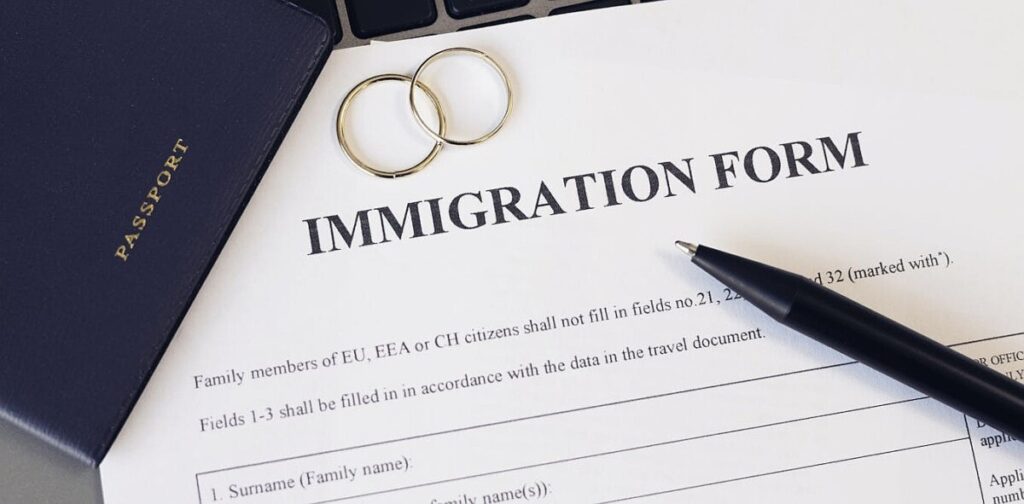
From ‘mail-order brides’ to ‘passport bros,’ the international dating industry often sells traditional gender roles
The international dating industry has undergone a significant transformation over the past few decades, evolving from the stigmatized concept of “mail-order brides” to a more modern phenomenon characterized by a new generation of men dubbed “passport bros.” This shift reflects broader societal changes in gender roles, economic stability, and cultural perceptions of intimacy. Fifteen years ago, the topic of international dating was often dismissed as a punchline, associated with lonely men seeking companionship from women in economically disadvantaged countries. However, as explored in Julia Meszaros’s forthcoming book, “Economies of Gender,” the landscape of love and relationships is now intricately linked to global mobility and shifting gender dynamics, particularly as younger men seek partners who embody what they perceive as traditional values.
Historically, the concept of mail-order brides dates back to the 19th century, when women would advertise themselves to men in the American West, seeking stability in a rapidly changing social landscape. The modern matchmaking industry began to take shape in the 1970s, primarily featuring Filipino women and expanding into a $2 billion global industry by 2010. This evolution coincided with the increasing presence of women in the workforce, prompting some men to seek partners abroad who would adhere to more traditional gender roles, prioritizing domestic duties and family life. The advent of reality television, particularly shows like TLC’s “90 Day Fiancé,” has further normalized international dating, showcasing the complexities and challenges of cross-cultural relationships while highlighting underlying themes of economic inequality and migration.
Today, the “passport bros” represent a younger, more diverse group of men who travel internationally to seek romantic connections, often using free dating apps rather than formal matchmaking services. Many of these men express a desire for partners who align with traditional values, contrasting their experiences with Western women who prioritize careers. Meszaros’s research indicates that these men often view their international pursuits as a way to reclaim a sense of masculine identity amid economic uncertainties, where traditional gender roles appear to offer a semblance of stability. As the world grapples with rising inflation, stagnant wages, and social inequalities, the longing for traditional relationships may serve as a coping mechanism, providing a framework for navigating the complexities of modern intimacy. Ultimately, Meszaros argues that until systemic economic issues are addressed, the nostalgia for clear gender hierarchies will likely persist, perpetuating cycles of inequality within intimate relationships.
For many American men, the draw of the international dating industry is the idea of ‘more traditional’ women.
Kurgenc/iStock via Getty Images Plus
Fifteen years ago, when
I started studying
the international dating industry
, few people took the subject seriously. The term “mail-order bride” was treated as a punch line – something outdated, associated with lonely men and poor women who migrated from Eastern Europe, Asia or other places to meet their new husbands in the United States.
But I’ve seen firsthand how ideas about gender, intimacy and global mobility have shifted. In 2025, a man going abroad to look for love might call himself
a “passport bro
” – and celebrate his lifestyle
on TikTok
.
This new generation of young men may have rebranded international dating, but they reflect an age-old theme. Social and economic changes shape how people negotiate love and labor across borders, as I explore in
my 2025 book, “Economies of Gender
.” In a chaotic world, some men and women turn to
traditional gender roles
as a source of seeming stability – and that often leads them abroad.
Old industry, new look
The term “mail-order bride” dates back to the 19th century, when so-called
frontier brides
advertised themselves in newspapers to single men in the American West. After the Civil War, when large numbers of men had died on the East Coast, some
women saw migrating to the frontier
to marry someone sight unseen as a way to secure stability. That narrative still lingers today in
Western novels and films
.
The modern international matchmaking industry, however, took shape in the 1970s, when catalogs of mostly Filipino women’s photos and addresses were sold to American men. After being pen pals, men would travel to the Philippines to meet and decide whether they wanted to get married. Some scholars
consider this a form of human trafficking
, but that has been challenged by
other scholarship
.
These catalogs emerged as more U.S. women were
entering the workforce
and earning their own money. Some men sought wives abroad who they believed would embody more traditional values – prioritizing domestic work and devoting themselves to men and children.
Over the
next few decades
, large numbers of
stable, well-paying factory jobs disappeared
, further challenging some men’s view of themselves as breadwinners.
By 2010, the catalog system had moved online and expanded into a global industry that generated
US$2 billion dollars per year
. Today, it
takes many forms
. Most of the industry is online, with email and chat correspondence that charges men but not women. Some agencies provide in-person tours for male clients, and there are higher-end, more personalized matchmaking services as well.
From taboo to televised
What was once stigmatized has become more normalized through reality TV. TLC’s hit series “90 Day Fiance,” which came on air in 2014, has transformed international dating into
a lucrative entertainment franchise
.
The stresses of the K-1 visa process have become fodder for reality TV.
AMR Image/iStock via Getty Images Plus
The show and its numerous spin-offs show couples navigating
the K-1 visa process
, which gives 90 days to marry after a partner enters the country. If the wedding is called off, the foreign fiance or fiancee must return to their country of origin.
Many of the featured couples met randomly, in person. A significant number, however, connected through online dating or language-learning sites. Numerous couples’ storylines highlight family and friends of the American partner who question the girlfriend’s or boyfriend’s motives, accusing them of faking love for financial gain and access to a
green card
.
Audiences might watch the show for drama or love stories, but the underlying themes mirror what I’ve seen in the field: relationships shaped by
economic inequality and migration
, with women often exchanging emotional, domestic and sexual labor in return for financial stability.
Rise of the ‘passport bros’
In recent years, the mail-order bride industry has gotten a cultural revamp, with younger and more diverse men who identify as “passport bros.” This crowd is typically
younger than men
participating in the commercial international dating industry and more likely to identify as men of color.
These men are less likely to pay for formal dating and introduction services. They travel on their own, using free dating apps such as Tinder to meet local women – mostly in
Colombia
,
Brazil
and the Dominican Republic.
Passport bros say they travel abroad to
meet women who are more traditional
than the ones they meet at home. Many of the American men I interviewed between 2010 and 2022 talked about Western women as too focused on career, which challenged their idea of themselves as financial providers.
‘Passport bros’ fly solo rather than paying for international dating services.
Stanislav Smoliakov/iStock via Getty Images Plus
Similarly,
my research in Ukraine, Colombia and the Philippines
shows that many men using international dating services are motivated by more than just love or cultural curiosity. They are responding to a changing world in which women’s financial independence has challenged traditional male roles. For some, traveling abroad is a way to reassert control and to find
relationships that reaffirm a sense of masculine identity
.
In my interviews, American men looking abroad talked about feeling empowered and having choices, while being ignored in the U.S. dating market. Some recognized that their relative wealth is the cause of this. As one man on a romance tour in Ukraine told me in 2012, “I am here to exchange my financial stability for some Ukrainian woman’s youth and beauty, and I am OK with that.”
Appeal of ‘tradition’
Together, many of these daters illustrate
the global pattern
I’ve seen across
my years of fieldwork
: anxiety fuels a longing for traditionalism.
What appears to be a return to the past is, in reality, an adaptation to the present. The romance tours, the “90 Day Fiance” phenomenon and the passport bros speak to how people use relationships to navigate the economic instability of the modern world. Gender roles become a way to reestablish order and identity.
In the past two decades, rising inflation, stagnant wages and housing shortages have left many people, especially
younger generations, feeling economically trapped
. The
COVID-19 pandemic
deepened these inequalities, forcing millions out of the workforce and amplifying the strain of unpaid caregiving, particularly for women.
In times of uncertainty, societies often retreat to familiar narratives. Traditional gender roles offer an illusion of stability and order, even if they reinforce inequality. The fantasy of the dependable male provider and the nurturing homemaker resurfaces because it seems to resolve anxieties that the modern economy has made harder to bear.
As a sociologist, I study these dynamics not just to understand dating trends but to trace how societies reproduce inequality through intimacy. Until our society addresses stagnant wages, rising costs and the erosion of social safety nets, I believe nostalgia for a clear, gendered hierarchy will continue. In this hierarchy, men are guaranteed women’s labor, and women hold out hope for economic security – which is often seen as romance.
Julia Meszaros receives funding from East Texas A&M and Florida International University to support her research. She volunteers for the nonprofit organization RISE Travel Institute.


