Avian-origin influenza A viruses tolerate elevated pyrexic temperatures in mammals | Science
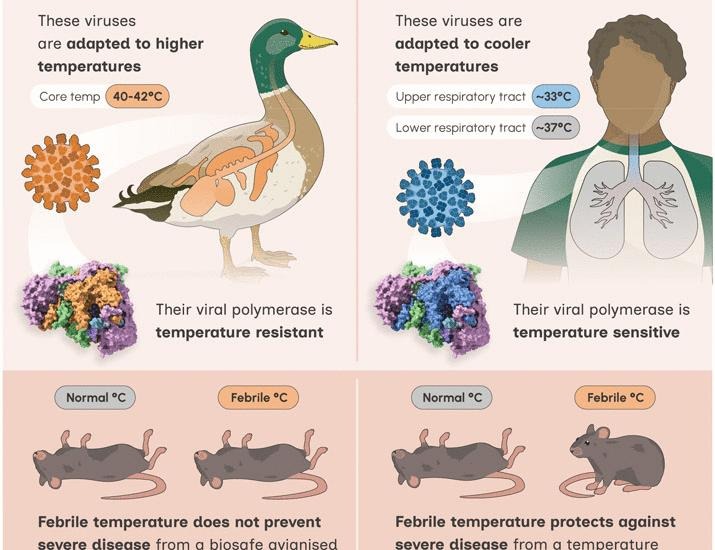
In recent research, scientists have uncovered fascinating insights into how host body temperature influences the replicative profiles of influenza A viruses (IAVs). The study highlights a significant difference between avian and human strains of IAVs, particularly in their adaptation to varying temperatures. Influenza viruses that have adapted to avian hosts, thriving at temperatures between 40° to 42°C, exhibit a marked resilience when tested in vitro, showing reduced temperature sensitivity compared to their human counterparts, which are adapted to the cooler range of 33° to 37°C. This temperature adaptability is crucial because it may explain the transmission dynamics and pathogenicity of these viruses across different species.
The implications of these findings are profound, particularly in the context of public health and pandemic preparedness. For instance, the research indicates that avian-origin IAVs could potentially pose a greater threat to human health, especially in scenarios where these viruses spill over into human populations. By understanding the temperature profiles that different strains of IAV can tolerate, researchers can better predict the likelihood of zoonotic transmissions and the potential for new outbreaks. This knowledge not only aids in the development of effective vaccines but also informs strategies for surveillance and control of influenza viruses in both avian and human populations.
Moreover, this study underscores the importance of environmental factors, such as temperature, in shaping viral evolution and behavior. As climate change continues to alter ecosystems and host interactions, the dynamics of virus-host relationships may shift, potentially leading to increased risks of novel IAVs emerging. The research serves as a reminder of the intricate connections between wildlife, environmental conditions, and human health, emphasizing the need for a One Health approach that integrates veterinary, environmental, and human health disciplines to combat infectious diseases effectively.
Host body temperature can define a virus’s replicative profile—influenza A viruses (IAVs) adapted to 40° to 42°C in birds are less temperature sensitive in vitro compared with human isolates adapted to 33° to 37°C. In this work, we show that avian-origin …


