Elon Musk’s Grokipedia contains copied Wikipedia pages
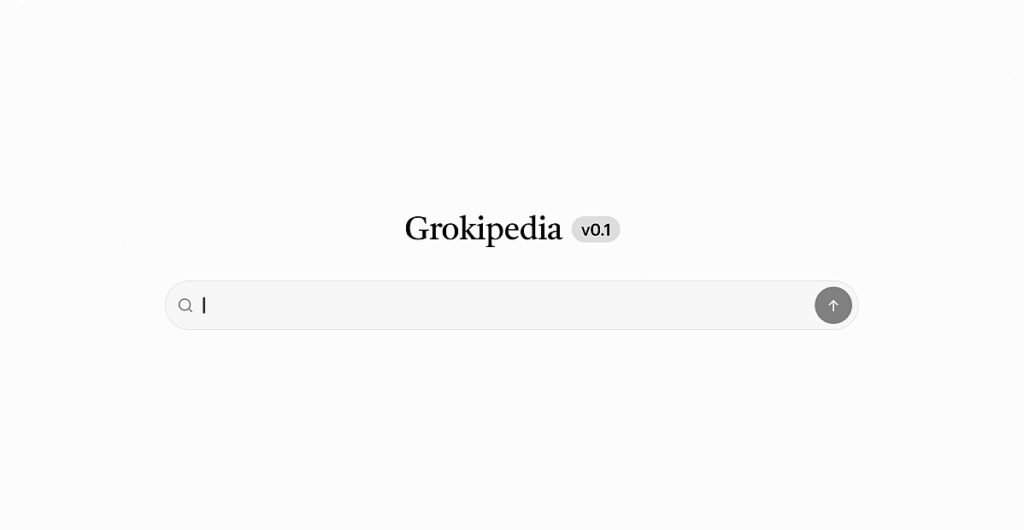
xAI, the artificial intelligence company founded by Elon Musk, has officially launched Grokipedia, a Wikipedia-like online encyclopedia that aims to revolutionize the way we access information. While the site currently sports a basic design reminiscent of Wikipedia—with a prominent search bar and simple article layouts—its functionality and content have sparked both interest and controversy. Unlike Wikipedia, Grokipedia does not currently allow users to edit entries freely, which raises questions about the collaborative nature that has made Wikipedia a trusted resource. Users have reported that a limited “edit” button appears on some pages, but it primarily shows previously made edits without allowing for new contributions, limiting the community-driven aspect that Wikipedia is known for.
One of the most contentious features of Grokipedia is its claim that entries have been fact-checked by its AI system, Grok. This assertion is particularly troubling given the propensity of large language models to produce fabricated information. For instance, while Grokipedia’s entry on climate change diverges significantly from Wikipedia’s consensus-driven approach, it presents a more controversial narrative that downplays the scientific agreement on human-caused climate change. Critics, including representatives from the Wikimedia Foundation, have pointed out that Grokipedia appears to rely heavily on Wikipedia for content, with many entries directly adapted from Wikipedia’s articles, often word-for-word. This reliance highlights a fundamental challenge for Grokipedia: despite Musk’s promise that it would be a “massive improvement” over Wikipedia, it seems to need Wikipedia’s vast repository of knowledge to function effectively.
As Grokipedia’s development continues, it currently boasts over 885,000 articles, a fraction of Wikipedia’s approximately 7 million English pages. The early version, marked as v0.1, suggests that Grokipedia is still in its infancy, and its long-term viability remains uncertain. The Wikimedia Foundation has expressed a commitment to its mission of providing free, unbiased knowledge through a collaborative model, emphasizing that Grokipedia’s existence does not threaten Wikipedia’s established role as a trusted source of information. As the digital landscape evolves, the introduction of Grokipedia raises important questions about the future of knowledge-sharing platforms and the balance between AI-driven content and human oversight.
Related articles:
– Link 1
– Link 2
xAI’s Grokipedia, its Wikipedia-like online encyclopedia, is
now live
. The similarities go deeper than expected.
Grokipedia’s design is pretty basic right now; like Wikipedia, the homepage is mostly just a big search bar, and entries resemble very basic Wikipedia entries, with headings, subheadings, and citations. I haven’t seen any photos on the site yet. Wikipedia lets users edit pages, but it doesn’t appear that users can currently do that on Grokipedia; a big edit button at the top only appeared on a few pages for me, and when I clicked the button, it only showed edits that had already been completed without specifying who is actually suggested or made the changes, and I wasn’t able to suggest changes of my own.
Entries also claim that Grok has fact-checked them — a controversial idea, given
how large language models tend to make up false “facts”
— and how long ago the “fact check” happened.
However, despite Elon Musk promising that Grokipedia would be a “massive improvement” over Wikipedia, some articles appear to be cribbing information
from
Wikipedia. At the bottom of the page for the
MacBook Air
, for example, you can see this message: “The content is adapted from
Wikipedia
, licensed under Creative Commons Attribution-ShareAlike 4.0 License.” In some cases, the cribbing goes farther than a rewrite: I’ve also seen that message on pages for the
PlayStation 5
and the
Lincoln Mark VIII
, and both of those pages are almost identical — word-for-word, line-for-line — to their
Wikipedia
counterparts
.
“Even Grokipedia needs Wikipedia to exist,” Lauren Dickinson, a spokesperson for the Wikimedia Foundation, the non-profit that operates Wikipedia tells
The Verge
. You can read Dickinson’s full statement in full at the end of this article.
It’s not the first time xAI’s AI has been caught pointing to Wikipedia; last month, in response to an X user pointing out that Grok cites Wikipedia pages,
Musk said
that “we should have this fixed by end of year.”
Not all Grokipedia articles are based directly on Wikipedia ones, and some will be controversial.
While both sites have articles on climate change, for example, Wikipedia’s page
points out that
“There is a nearly unanimous scientific consensus that the climate is warming and that this is caused by human activities. No scientific body of national or international standing disagrees with this view.”
In Grokipedia’s entry
, meanwhile, the word “unanimous” only appears in one paragraph: “Critics contend that claims of near-unanimous scientific consensus on anthropogenic causes dominating recent climate change overstate agreement due to selective categorization in literature reviews.” It suggests that the media and advocacy organizations like Greenpeace are “contributing to heightened public alarm,” and are part of “coordinated efforts to frame the issue as an existential imperative, influencing public discourse and policy without always grounding in proportionate empirical evidence.”
According to a ticker at the bottom of the homepage, Grokipedia has over 885,000 articles; Wikipedia currently maintains around 7 million English pages. However, this is an early version of Grokipedia — it has a v0.1 version number on the homepage.
Here is Dickinson’s full statement:
We’re still in the process of understanding how Grokipedia works.
Since 2001, Wikipedia has been the backbone of knowledge on the internet. Hosted by the Wikimedia Foundation, it remains the only top website in the world run by a nonprofit. Unlike newer projects, Wikipedia’s strengths are clear: it has transparent policies, rigorous volunteer oversight, and a strong culture of continuous improvement. Wikipedia is an encyclopedia, written to inform billions of readers without promoting a particular point of view.
Wikipedia’s knowledge is – and always will be – human. Through open collaboration and consensus, people from all backgrounds build a neutral, living record of human understanding – one that reflects our diversity and collective curiosity. This human-created knowledge is what AI companies rely on to generate content; even Grokipedia needs Wikipedia to exist.
Wikipedia’s nonprofit independence — with no ads and no data-selling — also sets it apart from for-profit alternatives. All of these strengths have kept Wikipedia a top trusted resource for more than two decades.
Many experiments to create alternative versions of Wikipedia have happened before; it doesn’t interfere with our work or mission. As we approach Wikipedia’s 25th anniversary, Wikipedia will continue focusing on providing free, trustworthy knowledge built by its dedicated volunteer community. For more information about how Wikipedia works, visit our
website
and new
blog series
.