The AI bubble debate is slowly making its way to Washington
The ongoing debate surrounding the potential for an artificial intelligence (AI) bubble has recently gained traction among lawmakers in Washington, reflecting a growing concern about the economic implications of this rapidly evolving technology. The discussion was sparked by comments from industry leaders, including OpenAI CEO Sam Altman, who suggested that investors may be overly optimistic about AI’s prospects. This sentiment was echoed by notable figures such as Bill Gates, who likened the current climate to the dot-com bubble of the late 1990s, raising alarms about the sustainability of the extensive investments flowing into AI infrastructure. Lawmakers, including Rep. Ro Khanna from Silicon Valley and Sen. Elizabeth Warren, have expressed reservations about the heavy reliance on a single sector for economic growth, warning that an overvaluation could have widespread consequences if the bubble were to burst.
Among those vocal about the potential risks is Democratic Rep. Alexandria Ocasio-Cortez, who described the situation as a “massive economic bubble” that could threaten economic stability akin to the 2008 financial crisis. She emphasized the need for caution, arguing against any potential bailouts should the bubble pop. Ocasio-Cortez’s concerns highlight the ethical dimensions of AI development, suggesting that the pursuit of profit might lead to exploitative practices that invade personal privacy and exploit consumer data. Meanwhile, other lawmakers like Sen. Ted Cruz acknowledge the uncertainties surrounding the AI industry but stress the importance of maintaining America’s competitive edge in technology, particularly in the context of global competition with China.
As the debate unfolds, it becomes clear that the implications of an AI bubble extend beyond mere financial metrics; they touch on broader societal concerns and the need for regulatory frameworks that protect both consumers and the economy. While some lawmakers advocate for deregulation to foster innovation, others argue for a more cautious approach that prioritizes the welfare of working individuals over unchecked technological advancement. This ongoing dialogue in Congress reflects a critical moment in the intersection of technology and policy, as stakeholders grapple with the potential risks and rewards of AI’s future.
https://www.youtube.com/watch?v=T2g8FF8-RLA
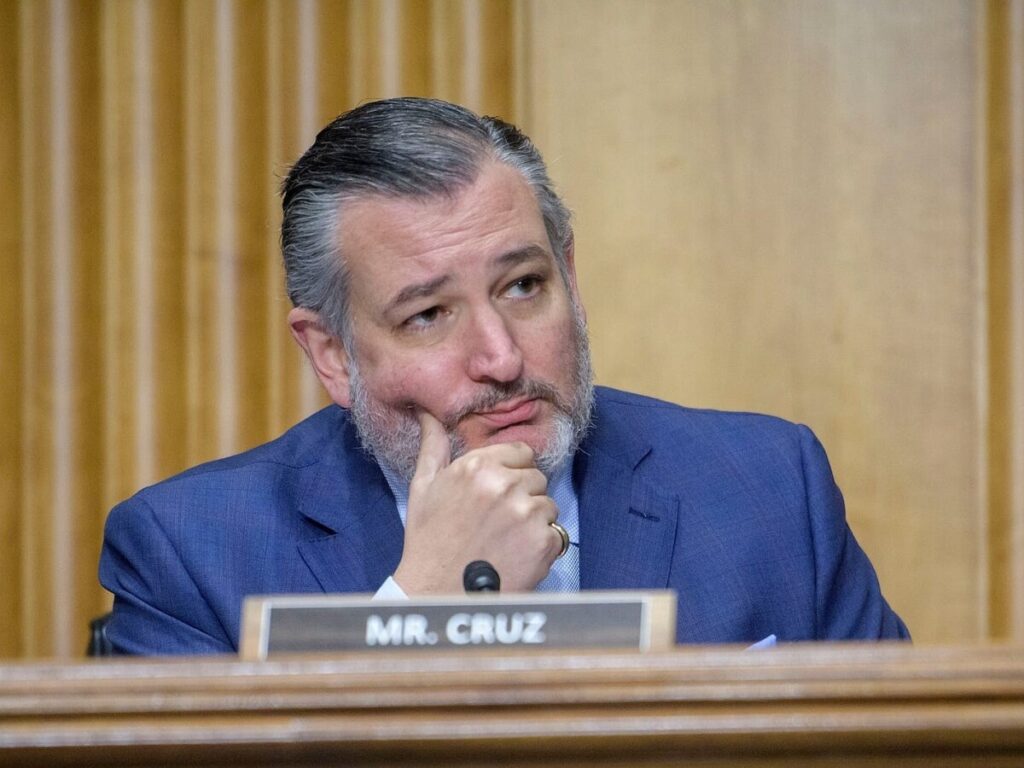
“Will there be uncertainty? Will there be economic challenges? Of course,” said Sen. Ted Cruz.
AP Photo/Rod Lamkey, Jr.
There’s an ongoing debate in the tech world about whether we’re in the midst of an AI bubble.
That debate is just now starting to make its way into the halls of power in Washington.
AOC said that we could be in a “massive” bubble — and there should be no bailout if it pops.
Are we in the middle of an
AI bubble
? Ask a lawmaker, and they probably won’t have a definitive take for you.
“If I knew that, I’d be in a different line of work,” Rep. Ro Khanna, a Democrat who represents much of Silicon Valley, told Business Insider.
The
AI bubble debate
has been raging in the tech world since August, when
OpenAI
CEO Sam Altman said that investors had grown “overexcited” about the technology.
There are also concerns about
circular spending patterns
among tech companies investing in AI technology, and fears that companies won’t be able to recoup the billions of dollars they’re
spending on data centers
and other AI infrastructure.
Bill Gates
has explicitly compared it to the dot-com bubble of the late 1990s.
However, many in the tech world remain confident that there’s no bubble, citing continued high demand for AI products.
“Are we in an AI bubble? I have no idea,” Democratic Sen. Brian Schatz of Hawaii told Business Insider. “Even the AI people don’t know.”
Democratic Sen. Elizabeth Warren of Massachusetts said that while she was unsure whether there’s a bubble, she’s concerned by “how much of the economic activity in the stock market and across the country is driven by this one sector.”
“If it is overvalued, when that bubble pops, it’s going to be felt everywhere,” Warren said. “The concentration makes the economy far more vulnerable than it otherwise would be.”
One of the few lawmakers who’s been outspoken about the potential for a bubble is Democratic Rep.
Alexandria Ocasio-Cortez
of New York, who said at a hearing last week that we may be in a “massive economic bubble” that could pose “2008-style threats to economic stability.”
“Should this bubble pop, we should not be entertaining a bailout,” Ocasio-Cortez added.
The debate is slowly making its way to Capitol Hill as the Trump administration and some Republicans in Congress are pursuing ways to make it
easier for the AI industry
to do business.
President
Donald Trump
, when asked, has largely shrugged off questions about whether he’s worried about a bubble.
“I guess. I worry about everything,” Trump said in an interview with CBS’s “60 Minutes” earlier this month. “I hope it’s gonna be very good. But if it’s not so good, we’re protected.”
Trump has begun to talk up the need to restrict states’ ability to regulate AI, reviving a fight that played out over the summer as Congress considered the
“Big Beautiful Bill.”
The bill originally included a provision that would have blocked states from enacting some regulations on AI for 10 years. It was strongly supported by Sen. Ted Cruz of Texas, the chairman of the Senate Commerce Committee who’s positioned himself as an ally of the AI industry on Capitol Hill. It was later
stripped out of the megabill
in a 99-1 vote.
When asked last week whether he sees a bubble in the AI industry, Cruz was circumspect.
“Will there be uncertainty? Will there be economic challenges? Of course,” Cruz told Business Insider. “But for technology of this magnitude, it’s in our interest that America win the race, and not China.”
Ocasio-Cortez argued that there’s a connection between the potential bubble and financial incentives to make AI technology more exploitative.
“People’s deepest fears, secrets, emotional content, relationships can all be mined for this empty promise that we’re getting from these companies to turn a profit,” Ocasio-Cortez said at the hearing.
But for some of those who want to see stronger regulation of AI, the question of a bubble is largely beside the point.
“Bubble, no bubble, whatever,” Sen. Josh Hawley of Missouri said. “We need to focus on the effect on working people.”
Read the original article on
Business Insider


