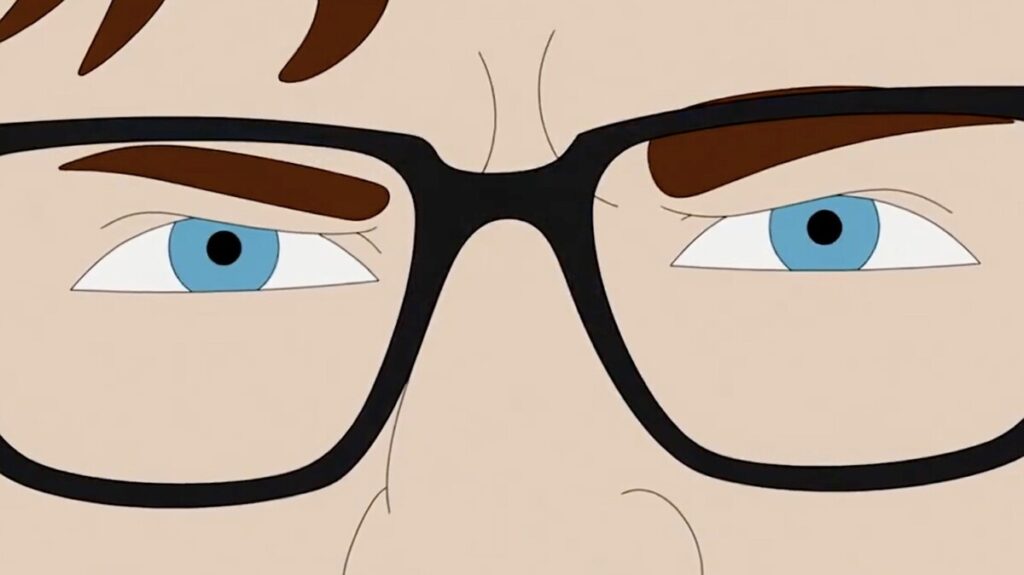
The Racist, AI-Generated Future of Entertainment
On September 28, 2023, the iconic animated sitcom *The Simpsons* launched its 37th season, drawing 1.1 million viewers. Just over a week later, *The Will Stancil Show* premiered on X (formerly Twitter), quickly amassing 1.7 million views. Created by Emily Youcis, a controversial figure known for her far-right views, the show has since released additional episodes, accumulating over 3.5 million views and sparking a wave of memes. What sets *The Will Stancil Show* apart is its use of artificial intelligence in animation—Youcis drew the characters and wrote the scripts, while OpenAI’s Sora brought them to life. However, the content of the show is deeply troubling, as it serves as a platform for neo-Nazi propaganda, using the likeness of Will Stancil, a real-life liberal lawyer and social media figure, without his consent.
Youcis, who identifies as a national socialist, has a history of creating provocative content that challenges societal norms. Her past works, which include dark comics on Newgrounds, have garnered a cult following, and her current show continues this trend. Stancil himself described the experience of being portrayed in this manner as surreal, expressing frustration over the lack of institutional safeguards that once prevented such content from proliferating on platforms like X. Following Elon Musk’s acquisition of the site, many content moderation policies were dismantled, allowing extremist content to flourish. The episodes of *The Will Stancil Show* are characterized by offensive humor and a veneer of satire that can obscure their underlying bigotry, making them appealing even to viewers who might not endorse such views. This blend of humor and hate raises concerns about the normalization of extremist ideologies in mainstream media, as the show cleverly disguises its racist content in comedic narratives that some viewers may misinterpret as satire.
The rise of *The Will Stancil Show* reflects a broader trend where far-right creators leverage new technologies, such as AI, to produce content that bypasses traditional media gatekeepers. This shift could signal a significant change in the entertainment landscape, where extremist narratives compete with more conventional programming. The show’s production costs are significantly lower than traditional animated series, allowing creators like Youcis to spread their messages more widely and efficiently. As the show gains traction, it not only highlights the potential of AI in content creation but also poses a serious question about the impact of such narratives on public discourse. With Youcis aiming to “meme national socialism into the public,” the implications of her work extend beyond entertainment, potentially reshaping perceptions of extremist ideologies in society. The emergence of shows like *The Will Stancil Show* serves as a stark reminder of the need for vigilance in media consumption, as the lines between satire and genuine bigotry become increasingly blurred.
https://www.youtube.com/watch?v=MtGbuZal-A8
On September 28, 1.1 million Americans tuned in for the 37th season premiere of the groundbreaking animated sitcom
The Simpsons
. A little more than a week later, another groundbreaking animated sitcom had its season premiere:
The Will Stancil Show
debuted on X, where it accumulated 1.7 million views. Since then, three more episodes have been released, piling up more than 3.5 million additional views and generating seemingly as many memes. The show, which was created by a provocateur-cartoonist named Emily Youcis, is notable for at least two reasons. It appears to be one of the first popular online television series made with the assistance of artificial intelligence—Youcis drew the cartoon and wrote the script, then used OpenAI’s Sora to bring the animation to life. And also,
The Will Stancil Show
is neo-Nazi propaganda.
The Will Stancil Show
is all but impossible to explain to someone who is not addicted to The Website Formerly Known as Twitter, but I’ll do my best. The real-world
Will Stancil
is a 40-year-old Minneapolis lawyer and minor social-media celebrity who once ran for the Minnesota House of Representatives (and
has written
for
The Atlantic
). He has become a favorite target of the far right for being something like the Platonic pure form of the Trump-era liberal wonk. He is enthusiastic about policy minutiae, perpetually irate at various MAGA-world characters, and prone to brawling with racists online, and he has a lot of graduate degrees.
Youcis is a self-declared national socialist—a political philosophy more widely known by its contraction,
Nazism
, though she said that was not the most accurate way to describe her. “‘Commie’ is also short for communist,” she told me in an email, “but you wouldn’t report Xi Jinping as being chairman of the Chinese Commie Party, would you?” (She detailed her political views to me as follows: “I am a Nationalist, Pro-White, against predatory finance Capitalism, and critical of Jewish and Israeli foreign influence over the United States.”) Youcis attracted a cult following in the 2000s for a series of pitch-black comics she wrote for the website
Newgrounds
. These were mostly focused on a character named Alfred Alfer, a dog with multiple personalities struggling to process childhood sexual abuse. The series’ style was transgressive, low-fi, and intentionally janky. Youcis was also a longtime concessions vendor at Philadelphia Phillies games until she was
fired in 2016
because of her stated interest in the “white-identity movement.”
She now posts under the name “Linda” on X, where she discusses such varied topics as “the Jews” (the party responsible for “flooding the country with non-whites”), Hitler (“the most slandered man in history”), and, of course, “the blacks” (who are to be sent “back to Africa” to “start the Fourth Reich”).
The Will Stancil Show
appears to be her first foray into animation in some time. Among its many shocking qualities is the fact that Youcis uses Stancil’s name and likeness without his permission, and that she is profiting, however modestly, from what amounts to an online harassment campaign.
When I spoke with the real Stancil about the show, he told me that it was “extremely surreal to become a main character of the online Nazi phantasmagoria.” Still, he said, “I’m mostly mad at the institutional failures, the commercial failures that have made this possible.” X once had policies that could have prevented
The Will Stancil Show
from being distributed on the platform. Since buying the company in 2022, however, Elon Musk has removed most of its content-moderation guidelines and infrastructure. “We had structures in place to forbid people like Emily Youcis from forming an enormous fan base and audience,” Stancil said. He continued, “Those structures were important, in my opinion. And those structures have been dissolved.”
The show is racist and offensive. Episodes range from four to eight minutes each, and feature cruel gags about Black people in Minneapolis and Cartoon Stancil’s bumbling attempts to help them; extended jokes about a chatbot raping Stancil,
based on a real incident
in which Grok, X’s in-house AI, provided a user with instructions for sexually assaulting Stancil; and, in one, a scene in which Tel Aviv gets nuked. Unlike other AI-generated content disseminated by the right, however, it is not
slop
. The episodes have clear narrative arcs, and the animation, though at times clunky, is decent.
The Will Stancil Show
’s racism, combined with its relatively high production quality, makes it a concerning sign of what might be ahead. Youcis has demonstrated that far-right creators can use AI to make good-enough entertainment, without needing to go through any gatekeeping institutions. And she’s proved that even people who don’t see themselves as bigots will watch this content—and in some cases laugh along.
The American right has a long history of taking advantage of new technologies. Conservatives are “more inclined to be early adopters,” A. J. Bauer, a University of Alabama media-studies professor, told me, because they have “felt marginalized by the media.” Examples of this phenomenon include Rush Limbaugh’s pioneering talk-radio show and Tucker Carlson, who began streaming from his own platform after
being
exiled
from Fox News in 2023.
Until now, however, the right has generally had a harder time producing narrative television shows and films. These are more expensive to make than a radio or streaming talk show and thus have needed support from mainstream (read: liberal) gatekeepers.
The Will Stancil Show
reveals what can happen once narrative TV becomes cheap enough to make without buy-in from major studios. Compare
The Will Stancil Show
, for instance, with a sketch-comedy show that once ran during the Cartoon Network’s Adult Swim block, called
Million Dollar Extreme Presents: World Peace
.
MDE
, as fans call it, is deliberately slapdash; assessing the actual talent of its creators, or saying with confidence whether what you’re watching is good-bad or bad-bad, ironically racist or racist-racist, is difficult. (This same sort of plausible deniability is a defining characteristic of Trump’s political style.) That ambiguity in turn becomes part of the bit. The show was
canceled
in 2016, after one season, when
BuzzFeed
revealed
that the creator, Sam Hyde, had voiced support for conservative conspiracy theories such as Pizzagate, and that the show’s racist jokes were less ironic than they had initially seemed.
MDE
returned to production this year, with help from funding by a private donor.
[
Read: What happens when people don’t understand how AI works
]
Youcis, however, doesn’t need to worry about getting kicked off the air by her employer, nor does she need substantial funds to make her show. Youcis told me that each
Will Stancil Show
episode costs $100 to $250 to animate. “Compared to a standard animated cartoon, which typically costs hundreds of thousands of dollars for even just a 10-minute-long piece,” she said, “this is an extremely small budget.” And although the creative process she describes is labor-intensive—Youcis told me that each episode takes her four or five days of work—it requires significantly less time and staffing than traditional animation, or a show, such as
MDE
, that employs live actors.
The Will Stancil Show
also couldn’t survive were it not distributed on the free-speech Thunderdome that is X under Musk. Thanks to Musk’s removal of most of the policies that had prevented extremists from dominating the site, and to the noxiousness of Grok, unreconstructed Nazism runs rampant on the platform. The story here is similar in form, if not in content, to the rise of conservative talk radio, which likewise flourished in a time of loosening media standards. After the repeal of the Fairness Doctrine in 1987, broadcasters no longer had to offer balanced portrayals of controversial topics, which cleared the way for highly partisan political radio and TV shows. Another similarity: Youcis’s audience includes people who don’t share her politics. Just as Limbaugh
seemed to count
more than a few liberals among his regular listeners,
The Will Stancil Show
seems to have fans in the center and on the left. “The Will Stancil Show is pretty funny,” the liberal pundit Noah Smith
observed
on X. He
added
that its style “shows that conservatives are starting to understand satire.” Other posters who do not appear to endorse hard-right politics echoed versions of this assessment, describing it as being “light-hearted” or praising it for not being “hateful.”
Indeed,
The Will Stancil Show
has plenty of red meat for bigots, but it cloaks its hate in just enough satire for non-bigots to think that the racism is a joke. As I watched, a few moments did make me laugh. “Nothing like getting some brewskis with a good friend after a long day fighting fascists on X.com,” the animated Stancil says in the opening scene of the first episode. “It do be like that, Mr. Stancil,” replies his Black friend Jamal, who listens patiently as Stancil drones on about housing policy. The show mostly relies on an on-the-nose screwball bigotry. But the “Mr. Stancil” line—which has become a meme on X—is one of Youcis’s subtler jokes, playing as it does on the incongruity between Cartoon Stancil’s progressive beliefs about racial justice and the fact that his Black “friend” (who, as far as I know, is not based on a real person) isn’t comfortable calling him by his first name. The scene sends up a kind of liberal many people may recognize: cheerfully “anti-racist,” yet frequently oblivious to the ways that they tokenize minorities, whom they treat less as peers and more as props in their own morality play.
[
Read: Is this the worst-ever era of American pop culture?
]
The episode goes on to follow Cartoon Stancil’s attempts to improve the lot of Minneapolis’s Black community, who are presented as 40-drinking, child-abandoning, street-fighting criminals. It ends with him and Jamal high-fiving on a hilltop, completely unaware that the city is burning down behind them. “Great to see that Black-studies degree put to work,” Cartoon Stancil observes. (Real Stancil holds a master’s degree in Reconstruction-era Black history but is nowhere near as buffoonishly “woke” as his cartoon doppelgänger.) The provocation Youcis seems to imply here goes something like this:
Yes, I’m a bigot, but so, too, are these paternalistic liberal do-gooders. At least I’m open and honest about it
.
It’s a provocation that she seems to want everyone to hear—not just her fellow white nationalists, but also people in the political mainstream. In a recent interview on
The Backlash
, an ultra-reactionary podcast, Youcis said that the goal of her show, which she calls “my propaganda,” is to Trojan-horse far-right politics into the mainstream. “I’m memeing myself into power,” she said, “and I’m memeing national socialism into the public.”
Youcis’s success at memeing her ideas into the public is the result of her ingenuity as a creator. It is also an example of the boundary-breaking possibilities of AI image-generation technology. Creators are already making animated music videos and short-form online shows that reference and build on
The Will Stancil Show
. One of these new cartoons lampoons the conservative writer and internet personality James Lindsay, who has drawn the ire of “America First” conservatives for his support of Israel, as well as for opposing racism and calling
Nick Fuentes
a “mad Nazi twink.” Given how quickly Youcis’s work has inspired imitators, it seems possible, even likely, that her series is merely the harbinger of a new entertainment landscape where extremist AI shows will jockey for our attention with more anodyne ones. Many people won’t be able to tell the difference, will be too desensitized to care, or—and this is Youcis’s wager—may start thinking that being a Nazi is no big deal.


