NASA Crater Detection Challenge
NASA’s Lucy spacecraft recently made headlines by capturing stunning images of the Moon’s surface on October 16, 2022, during its first gravity assist flyby of Earth. This mission is part of a broader initiative to enhance our understanding of celestial bodies and improve navigation for future space exploration. The images collected by Lucy are not just visually striking; they hold significant scientific value, particularly in the study of lunar craters. These crater rims serve as crucial landmarks for planetary science and navigation, yet detecting them in real imagery poses unique challenges. Factors such as varying shadows, lighting conditions, and fragmented edges can obscure the true shape of these geological features, making accurate identification difficult.
To address these challenges, NASA is inviting researchers and enthusiasts to contribute to the development of advanced methods for reliably fitting ellipses to crater rims in images. This initiative is part of a larger effort to create a next-generation terrain-based optical navigation system. The proposed system will utilize a visible-light camera mounted on a spacecraft to capture detailed images of the Moon’s terrain. The goal is to process these images to not only detect crater rims but also identify specific craters from a catalog and estimate the spacecraft’s position based on the identified features. The focus of this project is on improving the crater detection process, which is critical for ensuring the accuracy and reliability of navigation in future lunar missions.
The project is open for participation, with a total prize pool of $55,000 available for those who can devise effective solutions. The competition opens on November 25, 2025, and runs until January 19, 2026, inviting innovative minds to tackle the complexities of natural imagery and enhance our capabilities in space exploration. For more details on how to participate and contribute to this exciting endeavor, interested individuals can visit the official NASA Crater Detection page on Topcoder. This initiative not only fosters technological advancements but also engages the global community in the quest for knowledge about our Moon and beyond.
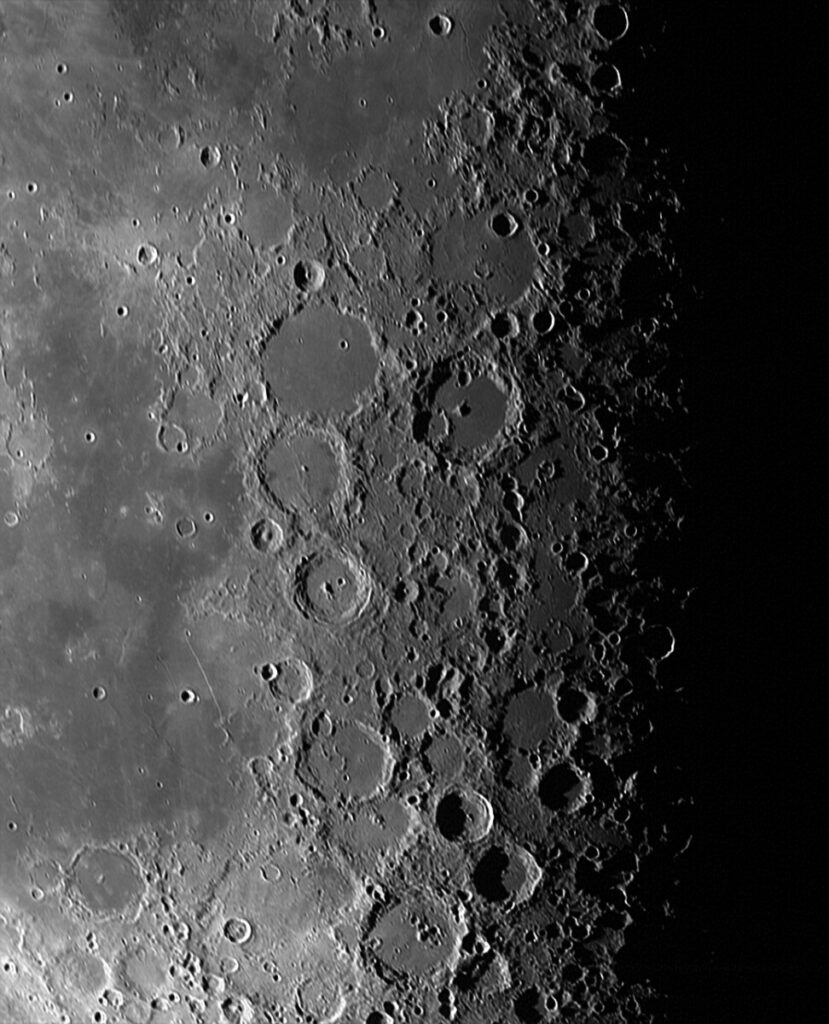
NASA’s Lucy spacecraft captured images of the Moon’s surface on Oct 16, 2022, after flying by the Earth for its first of three gravity assists.
Crater rims are vital landmarks for planetary science and navigation. Yet detecting them in real imagery is tough, with shadows, lighting shifts, and broken edges obscuring their shape.
This project invites you to develop methods that can reliably fit ellipses to crater rims, helping advance future space exploration.
In the pursuit of next generation, terrain-based optical navigation, NASA is developing a system that will use a visible-light camera on a spacecraft to capture orbital images of lunar terrain and process the imagery to:
detect the crater rims in the images,
identify the craters from a catalog, and
estimate the camera/vehicle position based on the identified craters.
The focus of this project is the crater detection process.
Natural imagery varies significantly in lighting and will impact the completeness of crater rims in the images.
Award: $55,000 in total prizes
Open Date: November 25, 2025
Close Date: January 19, 2026
For more information, visit:
https://www.topcoder.com/nasa-crater-detection


