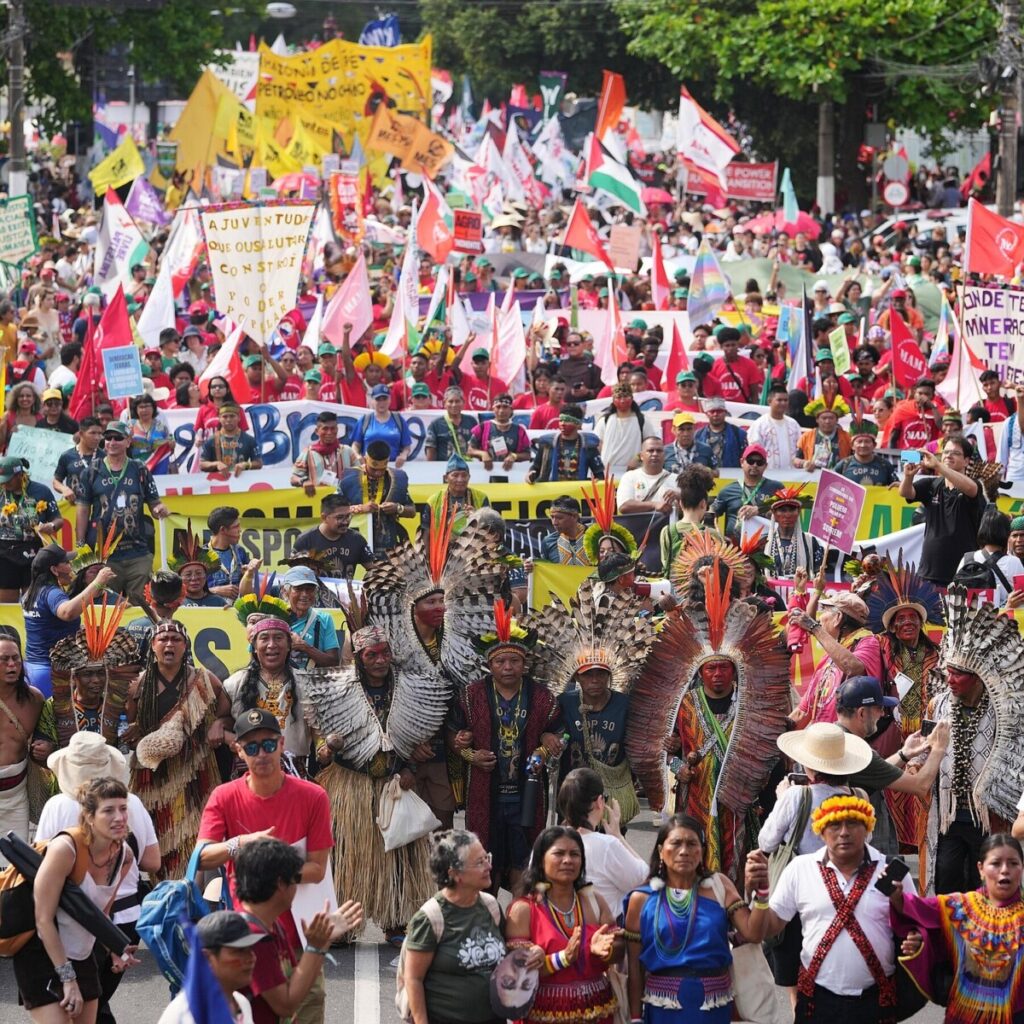
Thousands March for Climate Action as COP30 Talks Enter Second Week
Amidst the backdrop of the U.N. climate summit in Belém, Brazil, a vibrant demonstration unfolded on Saturday, highlighting a stark contrast to previous summits held in nations with stringent restrictions on public protests. This year, the atmosphere in Brazil has been notably different, fostering an environment where citizens feel empowered to voice their concerns about climate change and demand action from global leaders. The demonstrators, a diverse group of activists, indigenous peoples, and environmental organizations, took to the streets, chanting slogans and carrying banners that called for urgent measures to combat the climate crisis. Their presence underscored the urgency of the issues at hand, with many participants sharing personal stories about the impacts of climate change on their communities.
The shift in the protest atmosphere can be attributed to Brazil’s democratic framework, which allows for greater freedom of expression compared to the previous three summits held in countries like Egypt, the UK, and Poland, where government restrictions limited public dissent. For instance, in Egypt during COP27, protests were tightly controlled, and many activists faced harassment or detention for expressing their views. In contrast, Belém has welcomed a range of voices, with demonstrators highlighting not only the need for global action but also the importance of local solutions and indigenous knowledge in addressing environmental challenges. This inclusive approach has amplified calls for climate justice, emphasizing the disproportionate impact of climate change on marginalized communities.
As world leaders gather to discuss critical climate policies, the demonstrations in Belém serve as a powerful reminder of the grassroots movements pushing for change. The activists are not just advocating for immediate action to reduce carbon emissions but are also calling for a transformation in how societies interact with the environment. Their messages resonate with the urgency of the climate crisis, as extreme weather events become increasingly frequent and severe. The vibrant atmosphere of the protests in Belém is a testament to the growing global movement for climate action, reinforcing the idea that collective efforts at the local level can influence international policy and drive meaningful change in the fight against climate change.
A demonstration near the U.N. climate summit in Belém, Brazil, on Saturday. The atmosphere has been a marked contrast to the past three summits that were held in countries where governments restricted public protests.


