Galaxy NGC 2775 continues to baffle astronomers
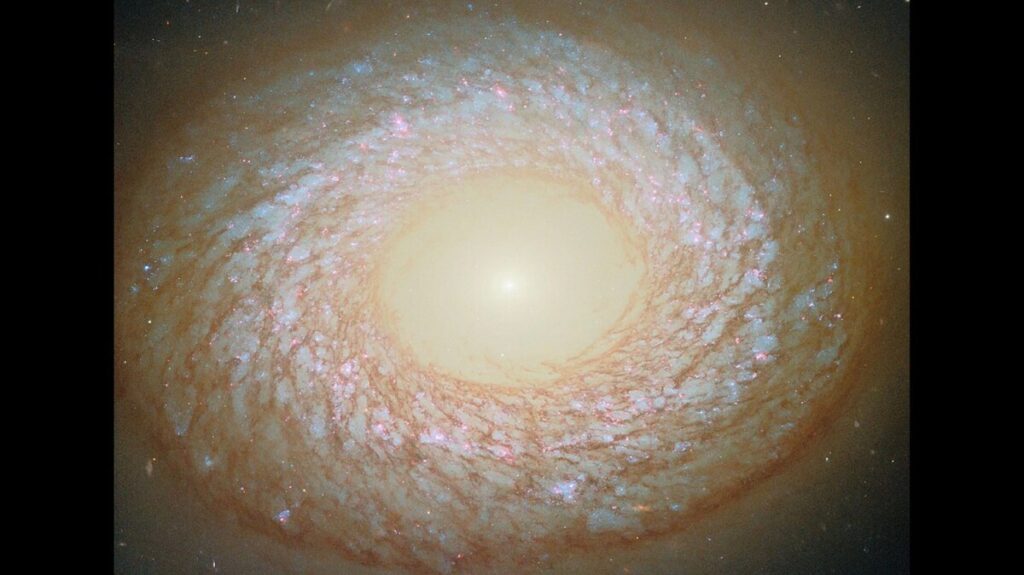
In a captivating exploration of the cosmos, the Hubble Space Telescope has turned its gaze towards the enigmatic galaxy NGC 2775, located a staggering 67 million light-years away in the constellation Cancer. This galaxy presents a unique blend of characteristics that challenge traditional classifications. While galaxies are typically categorized into shapes such as elliptical, spiral, or lenticular—each defined by the Hubble sequence—NGC 2775 exhibits features that defy easy categorization. Its central region resembles that of an elliptical galaxy, characterized by a large, featureless core, while its outer ring of star clusters, cloaked in dust, is more reminiscent of spiral galaxies. This duality raises intriguing questions about its true nature.
NASA notes that the classification of NGC 2775 remains a point of contention among astronomers, with opinions varying widely. Some lean towards labeling it as elliptical, others as spiral, and a few even suggest it fits the lenticular category, which is still not fully understood in terms of its formation. The complexity of NGC 2775’s structure may stem from its tumultuous past, potentially shaped by interactions with other galaxies through mergers. Evidence of this history is hinted at by a hydrogen gas tail stretching nearly 100,000 light-years into space, which may be remnants of galaxies it has absorbed over time. Until further observations from advanced space telescopes provide clarity, NGC 2775 is primarily considered a flocculent spiral galaxy, marked by its indistinct and patchy spiral arms.
The ongoing study of NGC 2775 not only underscores the mysteries of our universe but also highlights the dynamic processes that govern galactic evolution. As astronomers continue to unravel the complexities of this peculiar galaxy, it serves as a reminder of the vastness of space and the myriad of forms that celestial bodies can take. The quest to understand NGC 2775 is emblematic of the broader challenges faced in astrophysics, where even the most advanced technology can encounter phenomena that elude straightforward explanation. With each new observation, we inch closer to unlocking the secrets of galaxies like NGC 2775, deepening our understanding of the cosmos and our place within it.
Picture a galaxy, with its
shining stars
and space dust. What does it look like in your mind? Chances are, it’s a swirling circle of
galactic energy
.
A galaxy
is often described as one of a few broadly defined shapes—elliptical, spiral, or lenticular—as described by the
Hubble sequence
. Meanwhile, the
de Vaucouleurs system
expands on the Hubble model with more precise designations for various spirals, among other features.
Regardless of your preferred galactic organizational system, you’ll likely have difficulty describing the
Hubble Space Telescope’s recent glimpse at NGC 2775
. Located 67 million light-years away in the constellation Cancer, NGC 2775 somewhat resembles an elliptical galaxy with its large, featureless center region. At the same time, its dust-blanketed ring of outer star clusters is usually found in spiral variants. So what kind of galaxy is NGC 2775, anyway?
According to NASA
, the answer is still to-be-determined. Astronomers will lean towards either an elliptical or spiral depending on who you ask, while some experts even argue its spiral and elliptical attributes meet the “lenticular” definition. This may actually track, since astronomers still aren’t entirely certain how lenticular galaxies form in the first place.
At least some evidence suggests that NGC 2775 developed its odd shape after merging with other galaxies eons ago. While not visible in Hubble’s image, NGC 2775 features a hydrogen gas tail extending nearly 100,000 light-years around it. This tail may be all that remains of previously devoured galaxies.
Additional observations from space telescopes will likely solve the mystery of NGC 2775 once and for all. Until then, however, most astronomers consider it a flocculent spiral galaxy—one with extremely nebulous, discontinuous arms.
The post
Galaxy NGC 2775 continues to baffle astronomers
appeared first on
Popular Science
.


