Falcons help keep bird poop off your delicious cherries
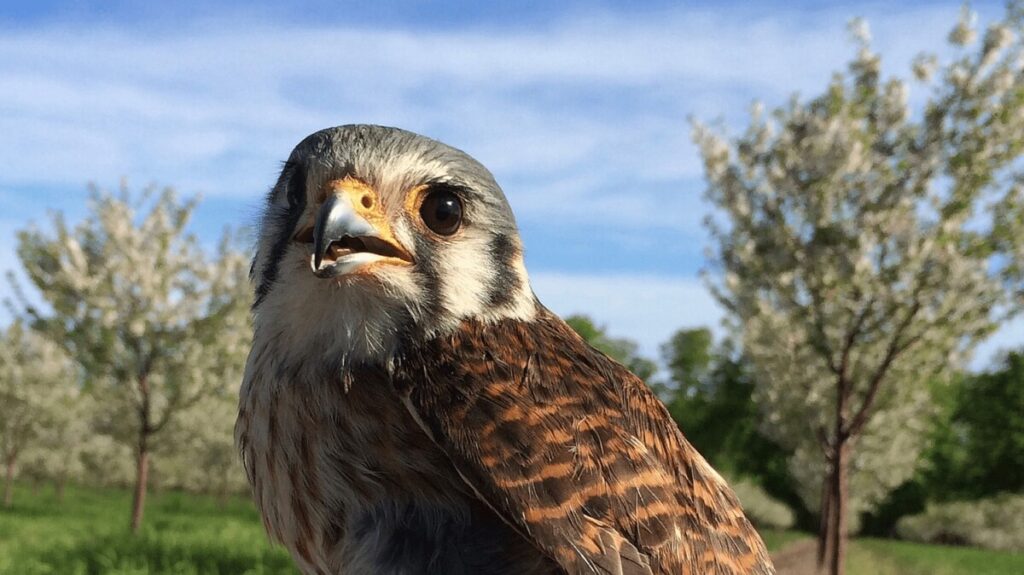
Farmers in northern Michigan are turning to an unlikely ally in their battle against crop contamination: the American kestrel, a small falcon species. This innovative approach aims to deter smaller birds that feast on sweet cherries and, in the process, introduce fecal contamination to the fruit, which can pose health risks to consumers. A study published on November 27 in the *Journal of Applied Ecology* reveals how these raptors can significantly reduce the presence of unwanted birds in orchards, thereby minimizing the risk of spoilage and contamination.
American kestrels, measuring only nine inches from head to tail, are adept hunters that can hover in mid-air while scanning for prey. By installing nest boxes in eight cherry orchards, researchers observed that the presence of kestrels led to a dramatic decrease in the visits of fruit-eating birds such as robins, grackles, and starlings. In fact, the study found that the likelihood of cherry damage dropped by more than tenfold when kestrels were nearby. Furthermore, the researchers noted a three-fold reduction in bird droppings on cherry trees, indicating that the kestrels effectively kept the population of potential contaminators at bay. While the kestrels themselves do produce waste, their predatory behavior significantly outweighs the risks associated with their droppings, making them a valuable asset for farmers.
The study highlights the ongoing challenges faced by cherry growers, who typically suffer annual losses of 5 to 30 percent due to bird-related contamination, despite employing various deterrent methods such as scarecrows and noise makers. By incorporating kestrels into their pest management strategies, farmers can adopt a low-cost and low-maintenance solution to protect their crops. The findings suggest that this natural approach could be extended to other crops, particularly those linked to foodborne illness outbreaks, such as leafy greens. As co-author Olivia Smith aptly summarizes, “They’re really good at keeping the amount of poop down,” underscoring the potential for kestrels to enhance food safety in agriculture.
No one wants poop on their
cherries
. Farmers in northern Michigan could get some help on this fecal matter from some feathered allies. Small
falcons
called the American kestrel help deter smaller birds that like to snack on the fruit when it is growing. By shooing cherry-pecking
birds
away, these raptors prevent them from contaminating crops with their poop. The findings are detailed in a
study published November 27 in the
Journal of Applied Ecology
.
American kestrels are the smallest falcon species at
only nine inches from head to tail
. They live throughout North and South America. While in flight, they hover in mid-air as they scan the ground below for insects, mice, and small birds to eat. Eating those smaller avians is what could help keep
crops
clean from excess
bird poop
, which can contaminate the fruit with pathogens that make people sick.
“It’s hard to keep birds out of crops,”
Olivia Smith
, a study co-author and Michigan State University agroecologist,
said in a statement
.
Other methods to keep unwanted birds out of crops include scarecrows, sprays, nests, and noise makers. These approaches can be costly and do not always yield great results.
According to the team
, even with control measures in place, sweet cherry growers in states Michigan, Washington, California, and Oregon can lose anywhere from five to 30 percent of their crops every year to contamination.
In this
new study
, the team was curious if enticing these predators to patrol orchards could help reduce the risks. They installed nest boxes in eight sweet
cherry orchards
in northern Michigan. The kestrels use tree cavities and other small spaces to raise their chicks and were quick to move into the orchards. They then took note of all of the bird species that they could see and hear as harvest time approached in July.
When the kestrels were flying nearby, robins, grackles, and starlings were much less likely to visit orchards and eat fruit. By scaring away these visitors, the kestrels
reduced the likelihood of cherry damage more than tenfold
.
As far as the other birds’ poop, the team found fewer signs that they were doing their business on the cherry trees. The kestrels were associated with a
three-fold reduction in dropping
s spotted on tree branches.
The team noted that, of course, the kestrels also poop, but the number of fruit-eating birds that they keep away from an orchard makes up for it. The team found that cherry trees closer to the kestrel’s nest boxes were less likely to have droppings on them.
A hungry bird eats a farmer’s fruit in a cherry orchard in northern Michigan.
Image:
Olivia Smith/ Michigan State University.
A DNA analysis revealed that 10 percent of the droppings contained
Campylobacter
.
These bacteria commonly cause foodborne illness. However, the team says that none of the foodborne illness outbreaks caused by
Campylobacter
have been linked to cherries and it might be too early to entirely blame birds for contaminated crops. Only one outbreak has been traced to birds. In 2008, a
Campylobacter
outbreak linked to
migratory cranes was reported in pea fields in Alaska
.
The study still suggests that kestrels could be a way to improve
food safety
in other crops that have been associated with outbreaks, such as leafy greens.
“They’re really good at keeping the amount of poop down,” Smith said. “That means fewer opportunities for transmission.
Smith added that this won’t solve all of the bird problems that farmers face, namely that kestrels are more likely to stay in some regions over others. However, it could still help keep those crops clear and healthy.
“Certainly, kestrels poop too,” said study co-author and integrative biologist
Catherine Lindell
. “But it’s a low-cost, low maintenance tool for growers to use in their bird management toolbox.”
The post
Falcons help keep bird poop off your delicious cherries
appeared first on
Popular Science
.


