Did a NASA telescope really ‘see’ dark matter? Strange gamma-rays spark bold claims, but scientists urge caution
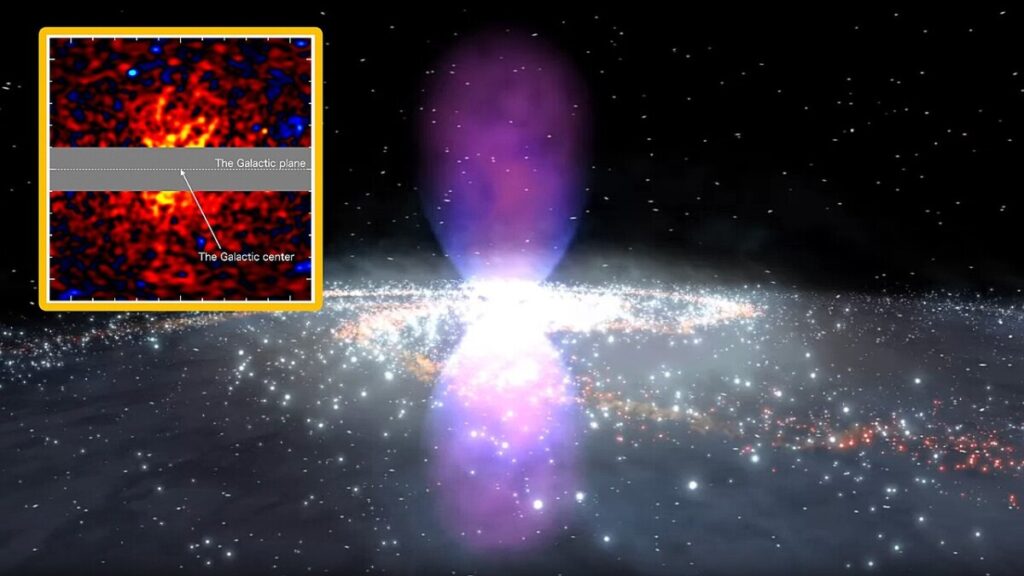
A recent study utilizing observations from the NASA Fermi Space Telescope has presented intriguing evidence of a halo of dark matter surrounding the center of our galaxy, the Milky Way. This finding is significant as it aligns with existing theories about dark matter, which is believed to constitute about 27% of the universe’s total mass-energy content, yet remains largely undetected through conventional means. The Fermi telescope, which primarily observes gamma rays, has been instrumental in identifying high-energy phenomena in space, and its latest data may provide crucial insights into the elusive nature of dark matter.
The research indicates that the center of the Milky Way could be enveloped by a substantial halo of dark matter, potentially influencing the motion of stars and gas around the galactic core. This halo is theorized to be a vast, spherical region where dark matter particles interact very weakly with normal matter, making them difficult to detect directly. The study’s authors caution, however, that while the findings are compelling, further investigation is necessary to validate these observations and fully understand the implications of dark matter’s presence in our galaxy.
To put this into context, dark matter is a fundamental component of the universe’s structure, shaping galaxies and influencing cosmic evolution. Despite its prevalence, direct detection has proven elusive, with researchers relying on indirect observations, such as gravitational effects on visible matter. The Fermi telescope’s data could pave the way for new methods of studying dark matter, potentially leading to groundbreaking discoveries in astrophysics. As scientists work to confirm these findings, the quest to unravel the mysteries of dark matter continues, promising to deepen our understanding of the universe and our place within it.
A new study says observations from the NASA Fermi space telescope suggest a halo of dark matter around the center of our galaxy, but more information is needed to confirm the result.


