I have 4 kids. I’m raising them to be quitters.
In a thought-provoking article published by Business Insider, Rachel Garlinghouse challenges the prevailing notion among many parents that allowing children to quit activities is a sign of failure. Instead, she advocates for a more flexible approach, encouraging her own children to step back from commitments that no longer serve them. Garlinghouse argues that quitting can actually foster confidence, maturity, and self-awareness in children. She highlights that many parents cling to the idea that enduring discomfort is a virtue, often leading to children feeling trapped in extracurricular activities, advanced classes, or even friendships that don’t align with their needs or happiness.
Garlinghouse shares personal anecdotes to illustrate her perspective. For instance, she recounts how her daughter was enrolled in an elite sports program that ultimately caused her distress rather than growth. After recognizing her child’s unhappiness, Garlinghouse supported her decision to quit, allowing her to continue enjoying the sport in a healthier environment. This experience reinforced her belief that quitting can be a positive choice when it promotes mental well-being. Similarly, she emphasizes the importance of letting children evaluate their friendships and relationships, encouraging them to distance themselves from those that are unhealthy or unfulfilling. Garlinghouse also discusses the academic pressures faced by high school students, noting that it’s crucial for them to feel empowered to change their schedules or drop classes that may lead to burnout, thereby reinforcing their ability to make thoughtful decisions about their education and mental health.
Furthermore, Garlinghouse advocates for mental health days, allowing her children to take a break when needed without the stigma of being labeled as “quitters.” She argues that perfect attendance awards can be detrimental, as they may encourage children to push through significant stress rather than prioritize their well-being. By fostering an environment where quitting is not seen as a failure but rather as a healthy and mature choice, Garlinghouse aims to raise well-adjusted adults who can navigate life’s challenges with confidence and resilience. Through her approach, she hopes to instill a sense of self-awareness in her children, enabling them to understand their limits and make decisions that align with their true selves.
The author said that some parents she knows see quitting as a failure. By contrast, she encourages her kids to quit things that no longer suit them.
Courtesy of Rachel Garlinghouse
Many parents I kknow resist letting their kids quit activities, thinking it reflects poorly on them.
I want my kids to quit activities and friendships that no longer suit them.
I think allowing kids to quit builds confidence, maturity, and helps them evaluate their own needs.
Not a week goes by that I don’t hear a parent saying their child is miserable in an
extracurricular activity
, an advanced placement class, or even a friendship. That parent often then remarks that they won’t allow their child to quit. It seems that parents have inherited and sustained the idea that letting a child quit is a moral failure and reflects poorly on the parent with a resounding, “I’m not raising a quitter!”
I am taking the opposite approach with my own four kids, two of whom are teens and two are tweens. I believe there are perfectly
acceptable reasons to quit
— the main of which is that quitting can be a healthy habit. After all, as an adult, I have no problem quitting a job, a relationship, a volunteer position, or even holiday plans if they no longer serve me and my family.
Ultimately, I ask, why should I have a different standard for my children than I have for myself? If the goal of parenting is to raise well-adjusted, well-functioning adults, why not let them quit?
I let my kids quit sports
Last year, one of my teens was enrolled in an elite, short-term sports program. We were convinced that the tough love she was getting on the court would help her have more grit and build skills.
Our child, who thrives with calm coaching and more private criticism, was miserable with the coaching style of this team. She asked to quit, and we readily agreed because she was reporting to us that she wanted to completely give up her beloved sport. The mental anguish wasn’t worth the “elite” program.
I’m happy to report that
quitting worked
. She’s still in her sport, just not at an unhealthy capacity.
I let my kids quit relationships
Many family-to-family relationships develop because parents want to spend time with other kids’ parents, but the kids? Sometimes they grow apart or never even liked each other at all. I try not to force my kids to stay in these uncomfortable situations.
Quitting a relationship
can be a quiet fade; it doesn’t have to be loud and dramatic. We want our kids to evaluate relationships and understand what is and isn’t healthy. The same goes for dating relationships. It’s OK to break up with someone who simply isn’t a match, rather than wasting time and energy.
I have shared with my kids how I felt two of my own friends stopped supporting me when I was diagnosed with breast cancer, and how it was better for me to let them go than to implore them to hang in there with me. I hope they’ll do the same if faced with a similar situation.
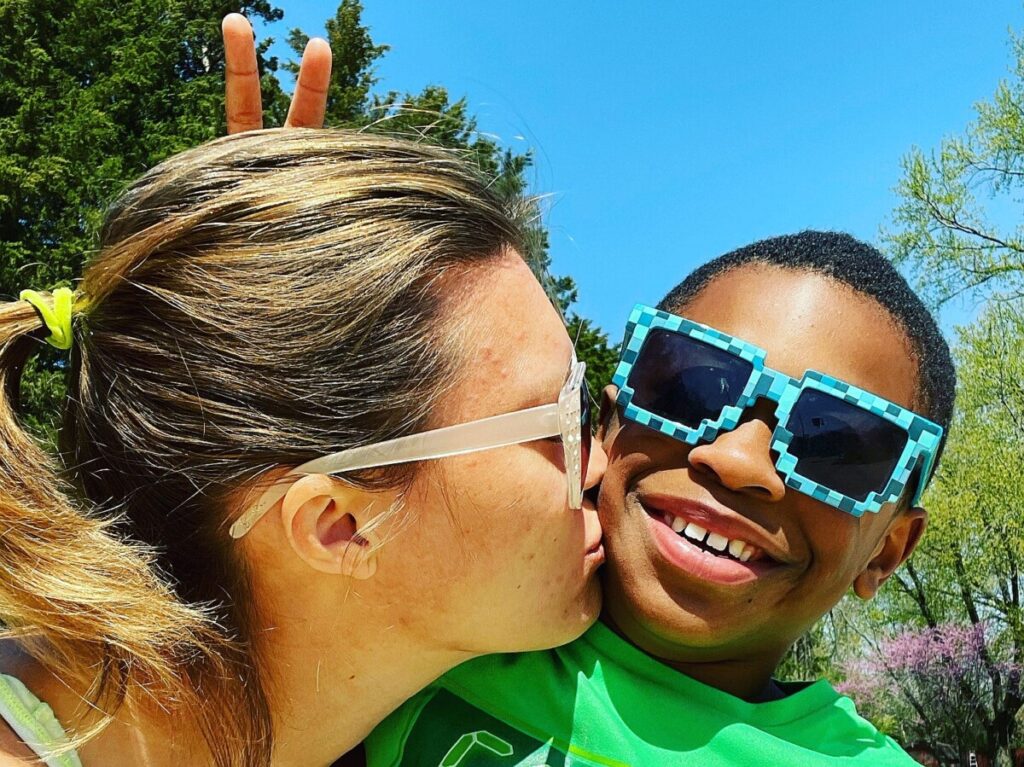
The author and her husband, show here with their four kids, want their children to feel comfortable with taking a step back.
Courtesy of Rachel Garlinghouse
I let my kids quit classes
Once kids reach high school, they have more freedom to change their schedules, even a few weeks into a class. One of my daughters quit a science class because there was far too much math, a subject she struggles with, than she expected there would be. Just because a kid is qualified to take an advanced placement or dual-credit class does not mean the prestige is worth the sacrifices they may have to endure.
As a
college teacher
, I have seen far too many students hit burnout from taking too many classes or enrolling in classes that are over their heads, resulting in plummeting grades and deteriorating mental health. I want my high schoolers to learn to bail now, when necessary, rather than suffer in silence.
There’s also the benefit of them carefully looking at all the pros and cons, weighing their options, and making a decision that works for them. This
builds confidence
and is empowering, propelling them into greater maturity.
I let my kids call in
We are fortunate to live in a state that offers students excused
mental health days
. If my kiddo is feeling overwhelmed, they are allowed to use the days they need, without a penalty from me or the school. Though this technically isn’t quitting, I do think it’s a short-term “quit” for a day to recharge and evaluate what they need moving forward.
In my opinion, perfect attendance awards are inherently ableist. I don’t want my kids to be rewarded for being pushed to (or over) their breaking point. Instead, my children are learning to gauge how their bodies and brains are feeling, attuning to their intuition, and yielding to the warning signs that they need to
take a pause
.
Read the original article on
Business Insider


