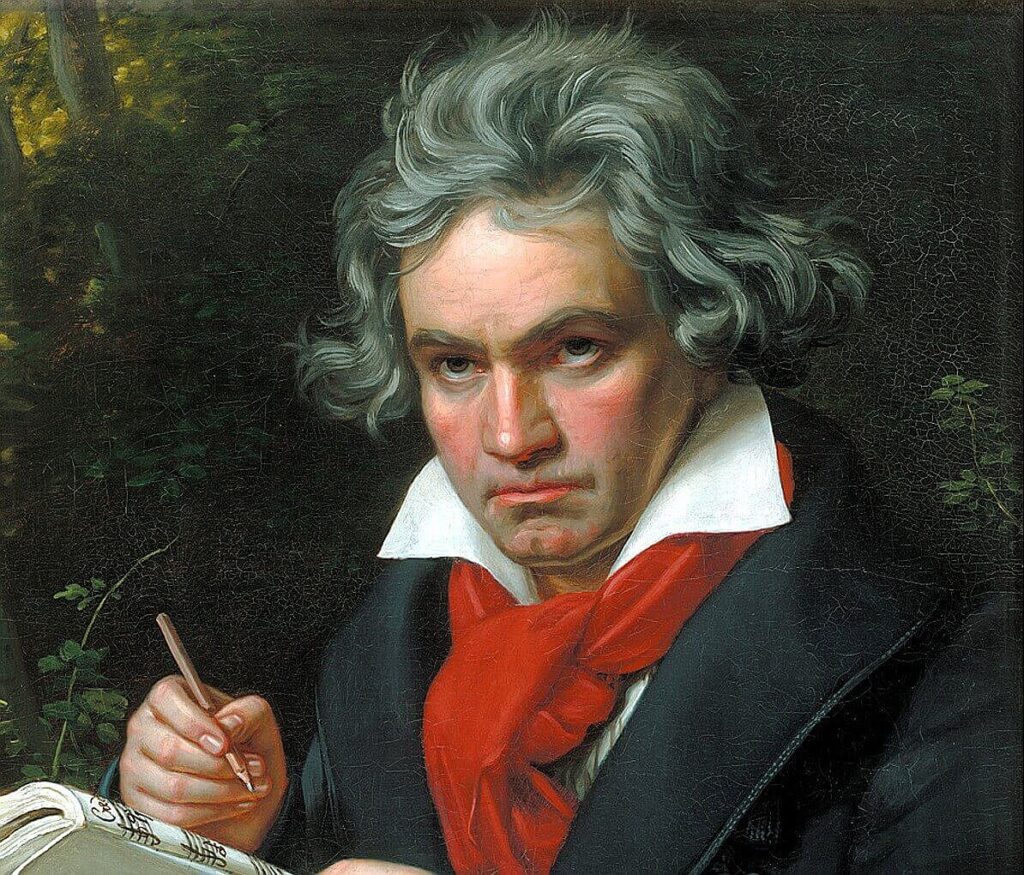
Ludwig van Beethoven
Ludwig van Beethoven (1770 – 1827) stands as a towering figure in the world of classical music, heralded for his revolutionary contributions that transformed the landscape of composition. Born in Bonn, Germany, Beethoven displayed prodigious talent from an early age, eventually moving to Vienna, where he honed his craft and gained recognition. His music marked a significant departure from the conventions of the Classical era, characterized by composers like Haydn and Mozart, who primarily focused on lighter, more structured forms of music intended for entertainment or religious purposes. Beethoven’s approach, however, was groundbreaking; he infused his compositions with deep emotional expression and innovative structures that paved the way for the Romantic era.
Beethoven’s oeuvre is a testament to his genius, encompassing symphonies, sonatas, concertos, and string quartets that reflect a profound understanding of human emotion and experience. His Third Symphony, the “Eroica,” is often cited as a pivotal moment in music history, breaking away from traditional forms and embracing a narrative quality that spoke to the struggles and triumphs of the human spirit. This symphony, originally dedicated to Napoleon Bonaparte, exemplifies Beethoven’s ability to convey complex ideas and emotions through music. Furthermore, his late works, such as the Ninth Symphony, which famously includes the “Ode to Joy,” illustrate his unyielding creativity even as he faced the challenges of deafness. Beethoven’s ability to compose masterfully despite his hearing loss is a powerful narrative of resilience, inspiring countless musicians and composers who followed.
Beethoven’s influence extends beyond his compositions; he reshaped the role of the composer in society. No longer merely a servant to the aristocracy, he asserted the idea of the composer as an artist with a personal voice and vision. This shift not only changed how music was created and appreciated but also laid the groundwork for future generations of musicians to explore their individuality and express their unique perspectives through their art. His legacy continues to resonate today, as his works remain staples in concert halls around the world, captivating audiences with their emotional depth and innovative spirit. As we reflect on Beethoven’s contributions, it becomes clear that his music is not just a collection of notes but a profound exploration of the human condition, reminding us of the power of art to transcend time and connect us all.
https://www.youtube.com/watch?v=W-fFHeTX70Q
Ludwig van Beethoven (1770 – 1827) is one of the greatest composers in history. His work marked a turning point for composers, who had previously written primarily for religious services, to teach, or to entertain at social functions. But Beethoven’s […]