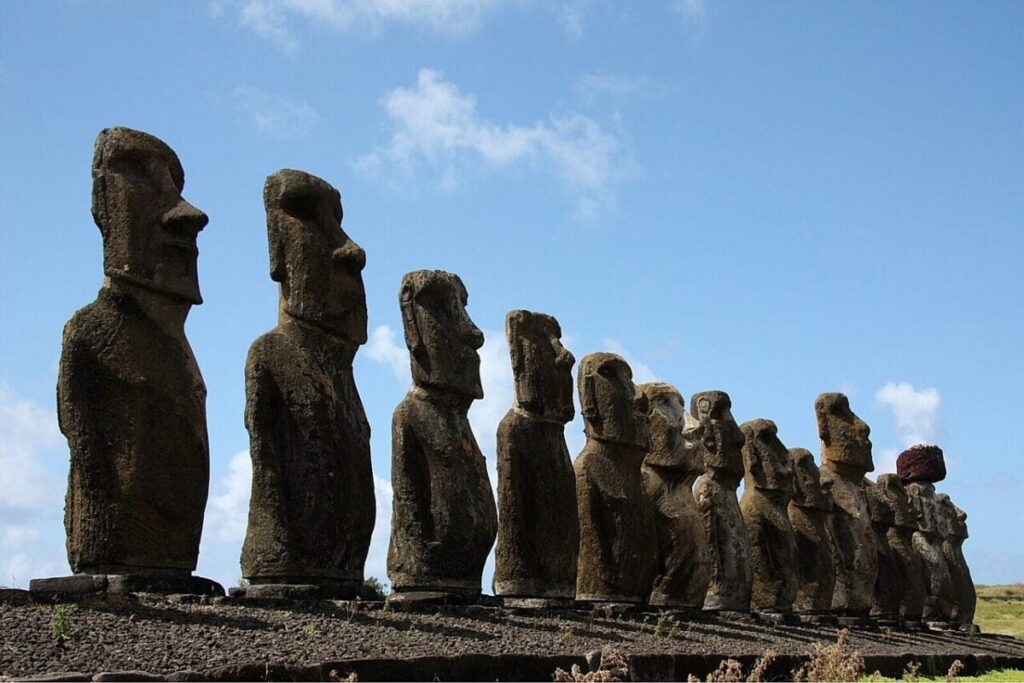
New Study Rewrites the Story of Easter Island’s Mysterious Stone Heads
In a groundbreaking study, researchers have harnessed drone technology to create a detailed 3D model of Rapa Nui, also known as Easter Island, focusing on its main moai quarry. This innovative approach has unveiled new insights into the construction and transportation of the island’s iconic stone statues, known as moai, which have long fascinated historians and archaeologists alike. The moai, which were carved from volcanic tuff, are not only remarkable for their size and craftsmanship but also for their cultural significance to the Rapa Nui people. By utilizing high-resolution drone imagery, the team was able to capture the quarry’s intricate topography and geological features, allowing them to analyze the methods employed by the ancient inhabitants in their monumental stonework.
The 3D model reveals previously hidden aspects of the quarry, including the layout and the specific locations from which the moai were extracted. This advanced visualization technique provides a clearer understanding of how the Rapa Nui people may have transported these massive statues across the island, some weighing as much as 80 tons. The research suggests that the quarry was not merely a site of extraction but also a complex landscape shaped by the cultural practices of the Rapa Nui. For instance, the model indicates potential pathways and methods for moving the statues, which have been subjects of debate among scholars for decades. The findings not only contribute to the ongoing discourse surrounding the construction of the moai but also highlight the ingenuity and resourcefulness of the Rapa Nui civilization in overcoming the challenges posed by their environment.
This study exemplifies the power of modern technology in archaeology, allowing researchers to delve deeper into the past with unprecedented clarity. As the 3D model continues to be analyzed, it promises to shed light on the social and spiritual significance of the moai, as well as the environmental factors that influenced their creation. The implications of this research extend beyond mere academic curiosity; they remind us of the rich history of Rapa Nui and the lessons it holds about sustainability and community resilience in the face of ecological challenges. As we continue to explore and understand the legacies of ancient civilizations, studies like this one pave the way for a more nuanced appreciation of human ingenuity and cultural heritage.
Researchers used drone imagery to construct a 3D model of Rapa Nui’s main moai quarry and reveal its secrets.


