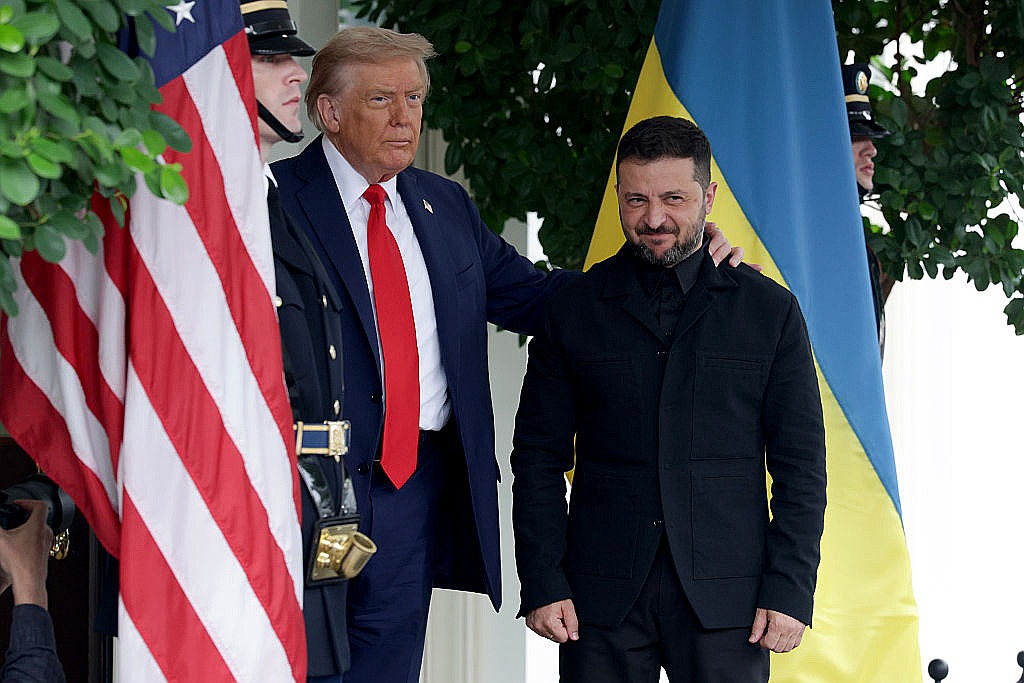
Cal Thomas: We lose, they win
In a striking contrast to President Ronald Reagan’s decisive Cold War stance, President Trump’s recent approach to the ongoing conflict between Russia and Ukraine has sparked significant concern. During a summit in Moscow in 1988, Reagan famously articulated a clear objective: “we win, they lose.” In stark contrast, Trump’s proposed peace plan seems to echo a sentiment of “we lose, they win,” as it appears to capitulate to many of Russian President Vladimir Putin’s demands. The proposal, which has reportedly been influenced by Russian interests, gives Ukrainian President Volodymyr Zelenskyy a deadline of Thanksgiving Day to accept terms that could fundamentally reshape Ukraine’s sovereignty and territorial integrity.
The proposed 28-point plan includes alarming stipulations such as Ukraine surrendering its Eastern Donbas region and Crimea—territories that have been fiercely contested since Russia’s annexation of Crimea in 2014. Moreover, it demands that Ukraine abandon its aspirations for NATO membership, while vaguely offering a “security” force that does little to deter further Russian aggression. Critics argue that this proposal not only undermines Ukraine’s hard-fought independence but also emboldens Putin’s ambitions to reclaim former Soviet territories, raising fears of a broader regional destabilization. The White House, through press secretary Karoline Leavitt, has suggested that the plan reflects the “realities of the situation,” hinting at a troubling acceptance of a status quo that favors Russia’s territorial claims.
As the situation evolves, the implications of Trump’s peace proposal are profound. It risks normalizing Russia’s aggressive expansionism, potentially setting a dangerous precedent for future conflicts. While the U.S. and Ukraine have reportedly agreed to revise the draft of the peace plan, the core issue remains: whether Putin will accept any terms that do not grant him the extensive concessions he seeks. With the potential for Russia to violate the agreement and little in the way of effective deterrents from the West, the proposed deal could serve as an invitation for further hostilities rather than a pathway to lasting peace. As the international community watches closely, the stakes have never been higher for Ukraine and the integrity of its borders.
https://www.youtube.com/watch?v=_cp-AK8ETdg
In 1988, when President Ronald Reagan was asked by a reporter during the summit in Moscow what his goal was in the Cold War, he
said
: “we win, they lose.”
When it comes to today’s Russia and its unprovoked war with Ukraine, President Trump’s goal at least in practice and outcome appears to be “we lose, they win.”
The president has given Ukraine President Volodymyr Zelenskyy until Thanksgiving Day to
accept
his “peace proposal” which reads as if it could have been written by Vladimir Putin. In fact, according to news reports, it may have been. According to the
NY Post
, “Secretary of State Marco Rubio told US senators Saturday that the sweeping peace plan to end the nearly four-year war between Russia and Ukraine was not America’s — but merely a ‘leaked’ Russian ‘wish list.”
Maybe so, but it seems to align with the one-sided pressure Trump has put on Zelenskyy to settle the war since he took office. Trump said Saturday the proposal is not his “
final offer.
”
If the document is from the administration, it is capitulation to most of Putin’s demands and is an invitation for the dictator to continue pursuing his stated goal of re-taking all of the former Soviet satellite countries, which have been free and independent since the end of the Cold War.
According to a draft of the proposal shared publicly by a member of the Ukraine opposition party, the 28-point document would require Ukraine to surrender its Eastern Donbas region, as well as Crimea, the latter of which no previous administration has demanded since Putin invaded Ukraine’s Crimean Peninsula. It also would require Ukraine to forgo NATO membership, though it does loosely promise a “security” force, presumably to prevent Putin from gobbling up more territory. If Zelinskyy bows to U.S. pressure and accepts a deal forced upon him, we might as well get the U.S.S. Missouri out of mothballs and replicate the signing of surrender documents by the Japanese, ending World War II.
In a statement to CBS News, White House press secretary
Karoline Leavitt
said: “This plan was crafted to reflect the realities of the situation, after five years of a devastating war, to find the best win-win scenario, where both parties gain more than they must give.” That sounds like an admission the document came from us.
Among the
provisions
in the proposed deal is that Russia would be allowed to keep much of the territory it now occupies and even take over land Ukraine currently holds, along with regions of Crimea, Donetsk and Luhansk. These would be recognized by the U.S. as de facto Russia territory. Any bets on how long it would take Putin to swallow whole these regions into greater Russia?
The plan creates a neutral “buffer zone” with no Russian forces allowed. Again, place your bets on how long that will last?
Zelenskyy will be required to cap the size of his military (there is no similar requirement for Russia) and promise not to become a NATO member, but it can join the European Union. Does anyone expect the EU to mount a significant resistance should Putin choose to violate the agreement and especially if he invades other countries as he has promised to do to restore the old Soviet satellite countries? It may be the only promise he has ever kept.
There is so much potential for Russia to violate the proposed agreement and so little effective response outlined if it does. These include more sanctions which so far have not worked.
Putin has always had a goal in the war he started, but the U.S. and Europe have vacillated about ours. This proposed peace deal will only encourage vile dictators like Putin. President Trump likes to say he wants to end wars. This agreement will only encourage Putin’s voracious appetite to start new ones as well as eventually finish the one against Ukraine.
Late Sunday, the U.S. and Ukraine
reportedly
agreed to change the draft of the peace plan, but the key is whether Putin will agree to anything that won’t give him everything he wants.
Readers may email Cal Thomas at
tcaeditors@tribpub.com
. Look for Cal Thomas’ latest book “A Watchman in the Night: What I’ve Seen Over 50 Years Reporting on America” (HumanixBooks).


