Elon Musk’s Worthless, Poisoned Hall of Mirrors
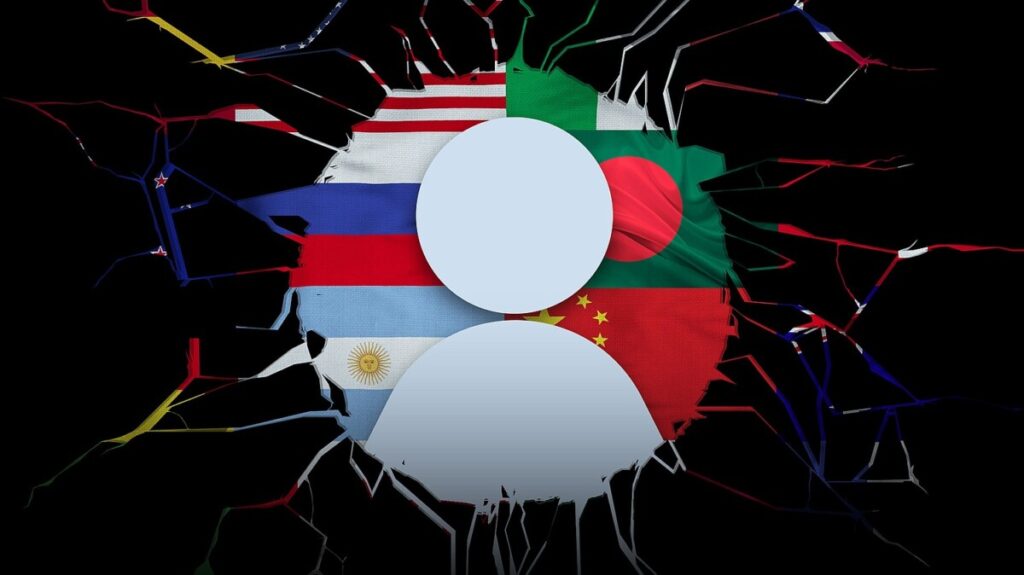
Elon Musk’s social media platform, X (formerly Twitter), recently introduced a new feature called “About This Account,” which aims to enhance transparency by revealing details about users, such as the country of account creation and current location. However, the rollout of this feature quickly spiraled into chaos, exposing a plethora of pro-MAGA accounts that claimed to be run by American patriots but were actually based in countries like Nigeria, Russia, and Bangladesh. For instance, the account @MAGANationX, which boasts nearly 400,000 followers and promotes patriotic content, was found to be operating from “Eastern Europe (Non-EU).” This revelation has sparked widespread discussion on X and Bluesky, with users unearthing numerous instances of misleading accounts that engage in culture-war rhetoric, raising concerns about the platform’s integrity and the authenticity of its political discourse.
While the intention behind the “About This Account” feature was to improve transparency, the immediate fallout has revealed the extent of misinformation and deception on the platform. Prominent figures like Hank Green have reported inaccuracies in their account information, highlighting potential flaws in the feature’s implementation. Critics have pointed out that the feature may inadvertently empower bad actors to dismiss legitimate concerns about their authenticity by claiming incorrect labeling. Moreover, the feature has fueled political debates, with users questioning the reliability of accounts quoted by mainstream media and raising alarms about the prevalence of fake news. The situation underscores the broader challenges X faces in combating misinformation, as the platform’s architecture fosters an environment where performative engagement often overshadows genuine communication.
This chaotic episode reflects a deeper crisis within social media, where the lines between truth and falsehood have blurred significantly. The proliferation of fake accounts and misinformation has transformed platforms like X into arenas of disordered discourse, where the focus is on provocative content rather than factual accuracy. As users grapple with the implications of the “About This Account” feature, it becomes evident that the crisis extends beyond X, touching upon the very foundations of social media as a reliable source of information. The relentless pursuit of engagement and profit has led to a decay in the original ideals of connecting people and fostering meaningful conversations, leaving many to ponder whether opting out of these platforms might be the only rational response to the pervasive chaos and manipulation.
https://www.youtube.com/watch?v=dRPNp7mcAMI
Over the weekend, Elon Musk’s X rolled out a feature that had the immediate result of sowing maximum chaos. The update, called “About This Account,” allows people to click on the profile of an X user and see such information as: which country the account was created in, where its user is currently based, and how many times the username has been changed. Nikita Bier, X’s head of product,
said
the feature was “an important first step to securing the integrity of the global town square.” Roughly four hours later, with the update in the wild, Bier sent another
post
: “I need a drink.”
Almost immediately, “About This Account” stated that many prominent and prolific pro-MAGA accounts, which
signaled
that they were run by “patriotic” Americans, were based in countries such as Nigeria, Russia, India, and Thailand. @MAGANationX, an account with almost 400,000 followers and whose bio says it is a “Patriot Voice for We The People,” is based in “Eastern Europe (Non-EU),” according to the feature, and has changed its username five times since the account was made, last year. On X and Bluesky, users dredged up countless examples of fake or misleading rage-baiting accounts posting aggressive culture-war takes to large audiences. An account
called
“Maga Nadine” claims to be living in and posting from the United States but is, according to X, based in Morocco. An “America First” account with 67,000 followers is apparently based in Bangladesh. Poetically, the X handle @American is based in Pakistan, according to the feature.
At first glance, these revelations appear to confirm what researchers and close observers have long known: that foreign actors (whether bots or humans) are posing as Americans and piping political-engagement bait, mis- and disinformation, and spam into people’s timeline. (X and Musk did not respond to my requests for comment.)
X’s decision to show where accounts are based is, theoretically, a positive step in the direction of transparency for the platform, which has let troll and spam accounts proliferate since Musk’s purchase, in late 2022. And yet the scale of the deception—as revealed by the “About” feature—suggests that in his haste to turn X into a political weapon for the far right, Musk may have revealed that the platform he’s long
called
“the number 1 source of news on Earth” is really just a worthless, poisoned hall of mirrors.
[
Read: Elon Musk is trying to rewrite history
]
If only it were that simple. Adding to the confusion of the feature’s rollout are multiple
claims
from users that the “About” function has incorrectly labeled some accounts. The X account of Hank Green, a popular YouTuber, says his account is based in Japan; Green told me Sunday that he’d never been to Japan. Bier
posted
on X that there were “a few rough edges that will be resolved by Tuesday,” referring to potentially incorrect account information. (On some accounts, a note is appended pointing out that the user may be operating X through a proxy connection, such as a VPN, which would produce misleading information.) For now, the notion that there might be false labels could give any bad actor the ability to claim they’ve been mislabeled.
This is the final post-truthification of a platform that long ago pivoted toward a maxim
used
by the journalist Peter Pomerantsev to refer to post-Soviet Russia: Nothing is true and everything is possible. This is how you get people apparently faking that the Department of Homeland Security’s account was
created
in Israel (a claim that has 2 million views and counting); both DHS and Bier had to
intervene
and assure users that the government’s account was not a foreign actor. High-profile right-wing accounts that previously served as yes-men for Musk—such as Ian Miles Cheong, a Malaysian who purportedly lives in the United Arab Emirates and posts incessant, racist drivel about American politics—have melted down over the platform’s decision to
dox
users.
Across the site, people are using the feature to try to score political points. Prominent posters have argued that the mainstream
media
have
quoted
mislabeled accounts without “minimum due diligence.” This nightmare is not limited to trolls or influencers. On Sunday, the Israel Foreign Ministry
posted
a screenshot of an account that purported to be reporting news from Gaza, next to a screenshot saying it was based in Poland. “Reporting from Gaza is fake & not reliable. Makes you wonder how many more fake reports have you read?” In response, the person in question
posted
a video on X on Sunday evening insisting he was in Gaza, living in a tent after military strikes killed his wife and three children. “I’ve been living in Gaza, I am living now in Gaza, and I will continue living in Gaza until I die.”
Watching all of this unfold has been dizzying. On Sunday, I
encountered
a post claiming that, according to the “About” feature, a popular and verified Islamophobic, pro-Israel account (that posts aggressively about American politics, including calling for Zohran Mamdani’s deportation) was based in “South Asia” and had changed its username 15 times. When I went to X to verify, I noticed that this same account had spent Saturday posting
screenshots
of
other
political accounts, accusing
them
of being
fake
“Pakistani Garbage.” This is X in 2025: Potentially fake accounts crying at other potentially fake accounts that they aren’t real, all while refusing to acknowledge that they themselves aren’t who they say they are—a Russian nesting doll of bullshit.
There are a few ways to interpret all of this. First is that this is a story about incentives. Platforms not only goad users into posting more and more extreme and provocative content by rewarding them with attention; they also help people
monetize
that attention. Just before the 2016 election,
BuzzFeed
’s Craig Silverman and Lawrence Alexander
uncovered
a network of Macedonian teens who recognized that America’s deep political divisions were a lucrative vein to exploit and pumped out bogus news articles that were designed to go viral on Facebook, which they then put advertisements on. Today it’s likely that at least some of these bogus MAGA accounts make pennies on the dollar via X’s Creator
program
, which rewards engaging accounts with a cut of advertising revenue; many of them have the telltale blue check mark.
As
Bellingcat
’s Eliot Higgins
noted
on Bluesky, X’s architecture turns what should be an information ecosystem into a performative one. “Actors aren’t communicating; they’re staging provocations for yield,” he wrote. “The result is disordered discourse: signals detached from truth, identity shaped by escalation, and a feedback loop where the performance eclipses reality itself.” Beyond the attentional and financial rewards, platforms such as X have gutted their trust-and-safety or moderation teams in service of a bastardized notion of free-speech maximalism—creating the conditions for this informational nightmare.
The second lesson here is that X appears to be inflating the culture wars in ultimately unknowable but certainly important ways. On X this weekend, I watched one (seemingly real) person
coming
to terms with this fact. “Fascinating to look through every account I’ve disagreed with and find out they’re all fake,” they posted on Saturday. To be certain, X is not the main cause for American political division or arguing online, but it is arguably one of its greatest amplifiers. X is still a place where many journalists and editors in newsrooms across America share and consume political news. Political influencers, media personalities, and even politicians will take posts from supposed ordinary accounts and hold them up as examples of their ideological opponents’ dysfunction, corruption, or depravity.
How many of these accounts, arguments, or news cycles were a product of empty rage bait, proffered by foreign or just fake actors? Recent examples suggest the system is easily gamed: 32 to 37 percent of the online activity around Cracker Barrel’s controversial logo change this summer was driven by
fake accounts
, according to consultants hired by the restaurant chain. It’s impossible to know the extent of this manufactured outrage, but it doesn’t necessarily matter—the presence of so much fakery makes it possible to cast aspersions on any piece of information, any actor, or any conversation to the point that the truth is effectively meaningless.
[
Read: The internet is worse than a brainwashing machine
]
It’s worth stepping back to see this for what it is: the complete perversion of the actual premise of not just social media but the internet. Although this crisis centers on X, most major social-media networks have fallen victim to variants of this problem. Fakery and manipulation are inevitable for platforms at this scale. Even when Twitter and Facebook were more committed to battling outside influence or enforcing platform rules, they were playing whack-a-mole. The idealism that these companies were founded with—Mark Zuckerberg wanted to connect the world, and Musk has said he wants to maximize free speech (Twitter’s original founders
used
similar language)—has decayed as they steered their products toward maximizing profits and
playing politics
. The self-proclaimed techno-utopians in Silicon Valley who have helped build, invest in, or cheerlead for these companies have enabled this ruin. They’ve traded reality for profit and prioritized technologies that aren’t just soulless and amoral, but
inhuman
in the most literal sense of the word.
A rational response to all of this would be for people to log off. Indeed, that now seems like the least likely, but most optimistic, conclusion—that a group of people who realize they’re being goaded into participation in an algorithmic fun house decide to opt out of a psychologically painful discourse trap altogether. We should all be so lucky.


