‘Without prejudice’: What this 2-word legalese means for the dismissed charges against James Comey and Letitia James
On November 24, 2025, a federal judge dismissed the indictments against former FBI Director James Comey and New York Attorney General Letitia James, marking a significant legal setback for the Department of Justice (DOJ) in its attempts to prosecute two prominent figures perceived as adversaries of former President Donald Trump. U.S. District Judge Cameron McGowan Currie ruled that the appointment of interim U.S. Attorney Lindsey Halligan, who initiated the indictments, was unlawful. In her decision, Currie emphasized that the dismissals were made “without prejudice,” a legal term indicating that the prosecution can attempt to refile the cases if they rectify the procedural issues identified by the court.
Judge Currie’s ruling hinged on the interpretation of federal law regarding the appointment of U.S. attorneys. According to her findings, the Trump administration’s appointment of Halligan was invalid because, after the resignation of her predecessor, U.S. Attorney Erik Siebert, the authority to appoint an interim prosecutor reverted to the district judges of the Eastern District of Virginia. This procedural misstep rendered the indictments against Comey and James void, as Halligan lacked the legal authority to present them. While the DOJ has the option to appeal the ruling or refile the charges once a new U.S. attorney is appointed, the clock may have run out for the case against Comey due to the statute of limitations, which does not pause for invalid indictments.
This legal development not only reflects the complexities of prosecutorial authority but also underscores the ongoing tensions surrounding the Trump administration’s legacy. The dismissals represent a pivotal moment in the ongoing narrative of political accountability and the judicial system’s role in addressing allegations against high-profile figures. As the DOJ contemplates its next steps, including potential appeals or refiling efforts, the implications of Judge Currie’s ruling will likely resonate within legal and political circles for some time to come.
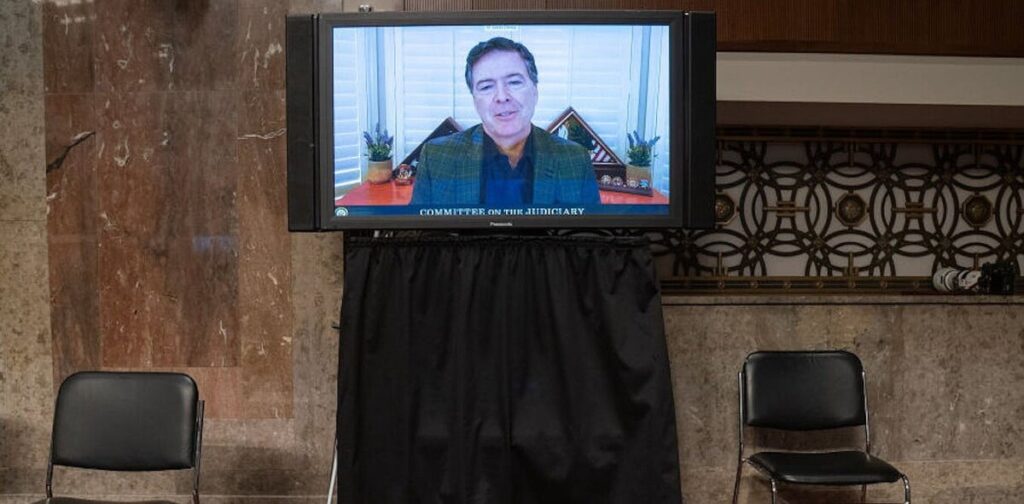
Former FBI Director James Comey is sworn in remotely at a hearing of the Senate Judiciary Committee in Washington on Sept. 30, 2020.
Ken Cedeno-Pool/Getty Images
A federal judge on Nov. 24, 2025, dismissed the indictments against former
FBI Director James B. Comey
and
New York Attorney General Letitia James
, blocking the Department of Justice’s efforts to prosecute two of President Donald Trump’s
perceived adversaries
.
But U.S. District Judge Cameron McGowan Currie qualified her dismissals, saying she did so “without prejudice.”
What does that legal term mean?
Unaddressed charges
In her ruling, Currie concluded that the appointment of interim U.S. Attorney Lindsey Halligan, who filed the cases against Comey and James, was unlawful.
Currie wrote
:
“Because Ms. Halligan had no lawful authority to present the indictment, I will grant Mr. Comey’s motion and dismiss the indictment without prejudice.”
She wrote the same
about the case against James
.
Currie’s “without prejudice” reference means the dismissal did not address what legal scholars
like me
call the merits or substance of the underlying criminal charges.
A “without prejudice” dismissal is legalese for “you can try again if you can fix the problems with your case.” Had the judge ruled that the dismissals were “with prejudice,” that would have meant the government could not have brought the cases again.
Here’s what prosecutors would need to fix to be able to bring cases against Comey and James again.
Federal law provides
that whenever a U.S. attorney’s position is vacant, the attorney general may appoint an interim U.S. attorney for a period of 120 days. At the end of that period, it’s up to the federal judges of the district where that position is vacant to appoint someone to continue in that role unless and until the president nominates, and the Senate confirms, a U.S. attorney through the normal appointments process.
New York Attorney General Letitia James speaks outside U.S. District Court on Oct. 24, 2025, in Norfolk, Va.
AP Photo/John Clark
The Trump administration appointed Halligan’s predecessor,
U.S. Attorney Erik Siebert
, in that interim role in January 2025. And when the 120 days from his appointment lapsed, the district judges of the Eastern District of Virginia selected him to continue on in his interim role.
Currie found that when Siebert resigned after his reappointment, that did not empower the Trump administration to appoint a new interim prosecutor. The power still resided with the District Court judges. Because of that, Halligan’s appointment and her efforts to secure the Comey and James indictments were void.
The end of the beginning
The
Department of Justice can certainly appeal these rulings
and could get them reversed on appeal, or it could refile them after a new U.S. attorney is named in accordance with law.
It may be too late for the case against Comey, however, because the statute of limitations on those charges has already run out. As
Currie noted in her Comey ruling
, while the statute of limitations is generally suspended when a valid indictment has been filed, an invalid indictment, like the one against Comey, would not have the same effect on the statute of limitations.
That means the time has likely run out on the claims against the former FBI director.
If Currie’s rulings stand, the Justice Department can’t just file the cases again, with Halligan still in this role, unless the Trump administration follows the procedures set forth in the law for her proper appointment.
While this is not the beginning of the end for these prosecutions, it is, at least, the end of the beginning.
Ray Brescia does not work for, consult, own shares in or receive funding from any company or organization that would benefit from this article, and has disclosed no relevant affiliations beyond their academic appointment.


